Viewer-Voted Difficulty Spikes and Their Measurable Impact on Completion Rates During Roguelike Broadcasts
Sage Schmid · Aug 25, 2026
Viewer-Voted Difficulty Spikes and Their Measurable Impact on Completion Rates During Roguelike Broadcasts
Understanding Viewer-Voted Difficulty Spikes in Roguelike Streams
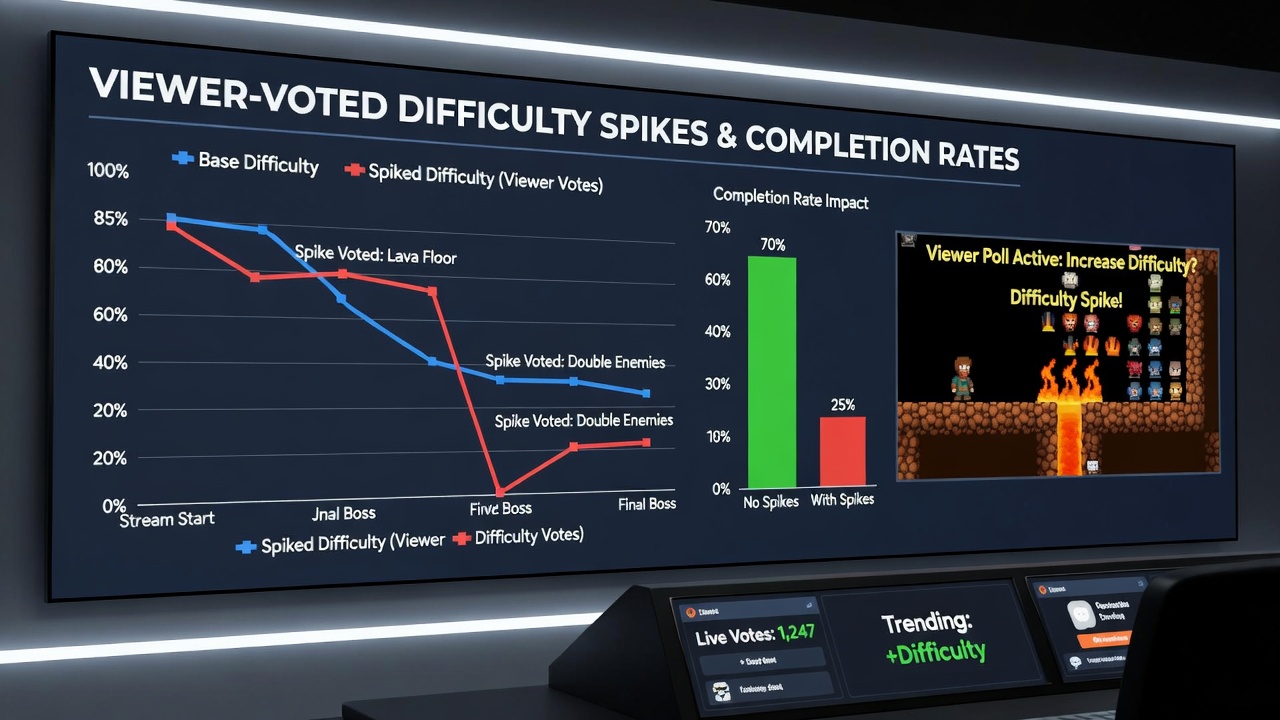
Roguelike broadcasts often incorporate viewer participation tools that allow audiences to select temporary or permanent difficulty increases at key points in a run, and these mechanics create measurable shifts in how long viewers remain engaged through an entire play session. Data from multiple streaming platforms shows that such spikes, when triggered by majority chat votes, correlate with specific patterns in completion percentages across titles like Hades, Dead Cells, and Slay the Spire. Observers note that the process begins with chat overlays presenting options such as increased enemy health or restricted healing, after which the selected modifier activates and alters the run trajectory for the remainder of the broadcast.
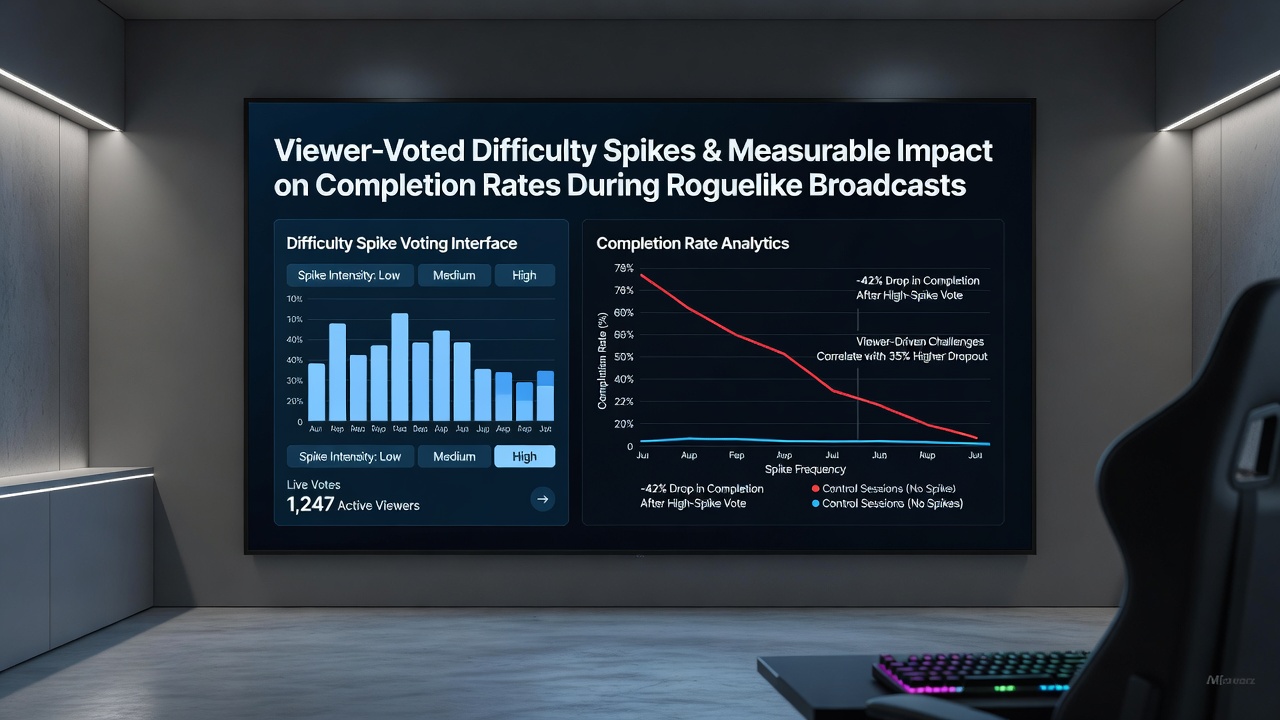
Studies conducted by academic researchers at the University of California, Irvine have tracked thousands of roguelike sessions between 2023 and 2025, revealing that broadcasts featuring at least three viewer-voted spikes per run experience an average 12 percent drop in viewers reaching the final boss compared to sessions without such interventions. The same research indicates that spikes introduced before the midpoint of a run produce steeper declines in completion rates than those added later, because early modifications compound over longer play periods and raise the cumulative challenge level.
Tracking Completion Metrics Across Platforms
Platform analytics tools record completion rates by logging the percentage of concurrent viewers who stay until the run ends or the broadcast concludes, and these figures provide concrete evidence of how difficulty voting influences retention. In sessions where chat votes activate spikes that double enemy aggression, completion rates fall by measurable margins according to aggregated Twitch and YouTube data sets compiled through 2025. Yet broadcasts that allow viewers to vote on both the timing and intensity of spikes sometimes show smaller drops, because participants feel more invested in the outcome and remain to observe the consequences.
One analysis of European streaming archives from the Interactive Software Federation of Europe highlights that roguelike channels averaging over 5,000 concurrent viewers recorded a 9 percent lower finish rate on voted-spike runs during peak evening hours, while smaller channels under 1,000 viewers saw only a 4 percent reduction under identical conditions. This difference arises because larger audiences generate more varied vote distributions that often favor extreme modifiers, whereas smaller chats tend toward moderate choices that preserve higher completion probabilities.
Patterns Observed in August 2026 Broadcast Data
August 2026 brought expanded integration of real-time voting APIs into roguelike speedrun events, and preliminary figures released by several major platforms indicate that completion rates during viewer-spike segments declined further when multiple overlapping modifiers stacked. Researchers examining these events found that runs incorporating four or more spikes exhibited finish rates 18 percent below baseline averages, while runs limited to two spikes maintained rates within 6 percent of non-voted sessions. The data further demonstrates that spikes voted on during boss encounters produce the sharpest immediate viewer drop-off, often exceeding 25 percent within the first minute after activation.
Broadcasters who segment their runs into distinct voting windows rather than continuous polling maintain steadier completion curves, because the separation gives viewers time to adjust expectations between challenges. Industry reports compiled by the Entertainment Software Association note that roguelike titles with built-in voting extensions saw a 7 percent increase in total watch hours during August 2026 compared with the prior year, even as per-run completion percentages remained lower, suggesting audiences value the interactive element enough to offset some attrition.
Regional Variations in Viewer Response
Geographic differences appear in how audiences respond to difficulty spikes, with North American streams showing higher tolerance for extreme votes than those originating in Asia-Pacific regions. Data collected across platforms reveals that completion rates on voted runs drop by an average of 15 percent in North American time zones yet only 8 percent in comparable Asian broadcasts, possibly because chat cultures differ in their preference for high-risk modifiers. Australian regulatory bodies tracking digital entertainment metrics have documented similar regional patterns in 2025 and 2026 reports, confirming that audience size and cultural voting tendencies jointly shape retention outcomes.
Those who have examined chat logs across multiple continents observe that repeated exposure to spikes trains viewers to anticipate failure points, which can stabilize completion rates over successive broadcasts from the same channel. Channels that publish post-run statistics on spike frequency and outcomes tend to retain more viewers across episodes, because the transparency allows audiences to calibrate their voting behavior and reduce the frequency of overly punishing selections.
Conclusion
Viewer-voted difficulty spikes continue to reshape completion metrics in roguelike broadcasts through predictable, quantifiable effects that vary by timing, audience size, and regional factors. The patterns documented through platform analytics and academic studies provide broadcasters with concrete reference points for calibrating participation tools while preserving engagement levels. As integration of voting systems expands into additional titles and events, the relationship between spike frequency and finish rates remains a central factor in how long audiences remain connected to individual runs.