Viewer Synchronized Events: How Live Broadcasts Trigger In-Game World Changes Across Distributed Player Bases
Sage Schmid · Aug 13, 2026
Viewer Synchronized Events: How Live Broadcasts Trigger In-Game World Changes Across Distributed Player Bases
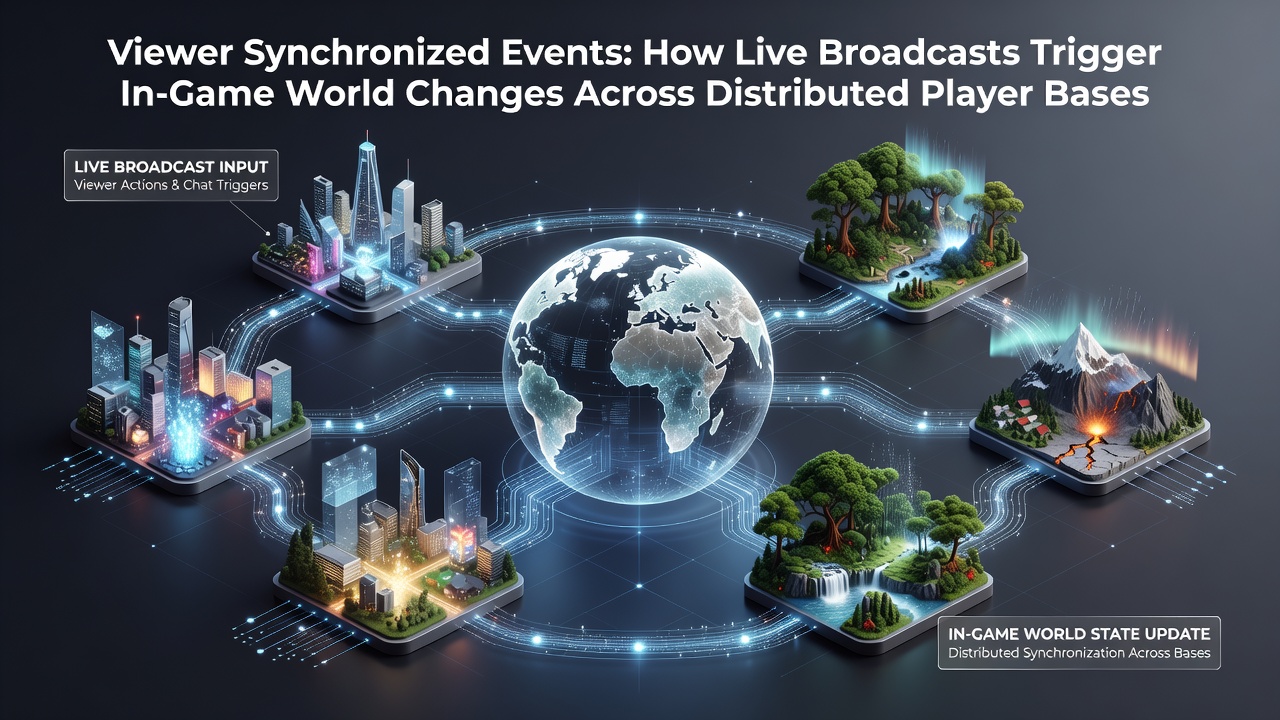
Viewer synchronized events represent a growing intersection between live streaming platforms and multiplayer game servers where audience participation directly alters shared virtual worlds. These systems allow broadcasters to relay viewer inputs such as polls, chat commands, and donation triggers into backend game APIs that propagate changes across thousands of simultaneous player instances. Data from industry reports indicate that such integrations have expanded in titles supporting real-time server authority since the mid-2020s, with synchronization latency dropping below 200 milliseconds in optimized setups.
Core Mechanisms Behind Broadcast-Driven Changes
Developers implement these features through layered APIs that connect streaming overlays to game engines, where viewer actions map to variables controlling weather patterns, NPC behaviors, resource spawns, or event timers. A single broadcast session might collect aggregated inputs from chat platforms and forward them as structured packets to authoritative servers that update the game state for all connected clients regardless of whether those players watch the stream. Research from the Entertainment Software Association shows that over 40 percent of major live-service titles tested similar viewer hooks in 2025, focusing on cooperative survival and exploration genres where collective decisions reshape exploration routes or boss encounter phases.
Technically the process relies on webhook endpoints and custom scripts that authenticate broadcaster accounts before executing world mutations. Players in distributed regions experience these shifts simultaneously because the game servers maintain a single source of truth updated by the incoming broadcast data stream. One documented case involved a survival title where viewer-selected weather events altered crop growth cycles across multiple continents, forcing players to adapt strategies within minutes of the change propagating.
Examples from Recent Deployments
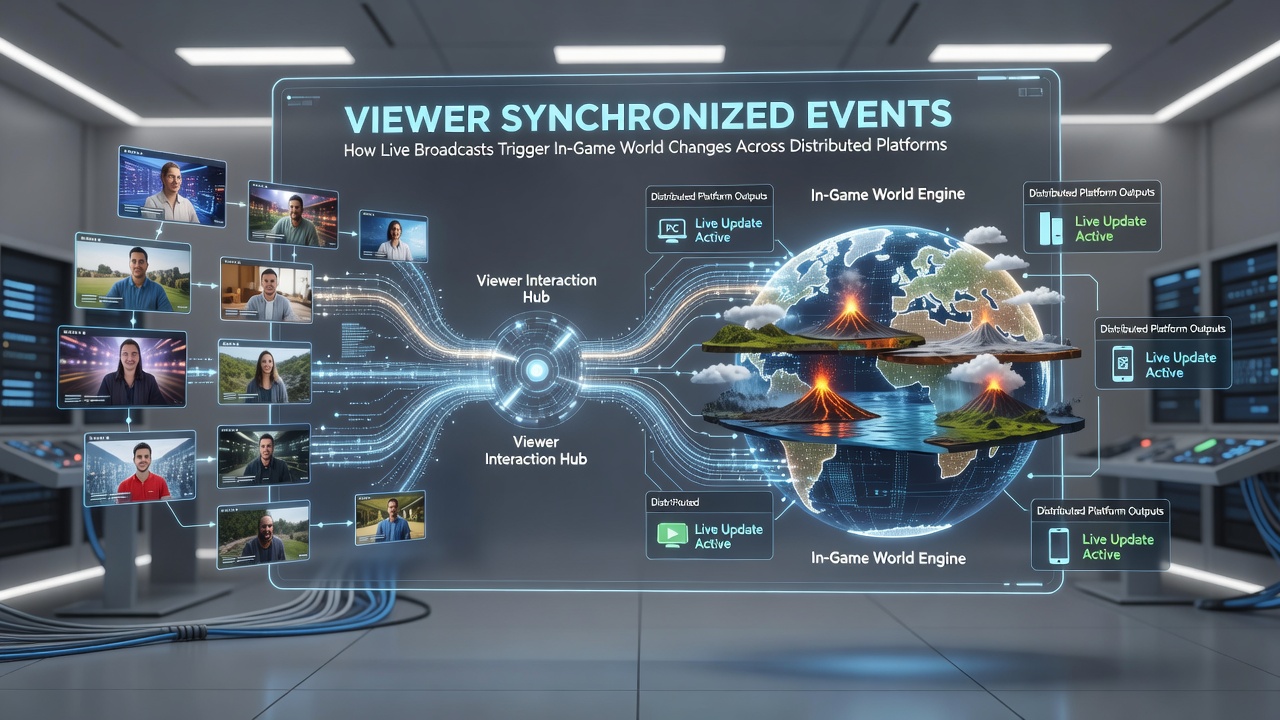
Games such as certain extraction shooters and persistent-world MMOs have incorporated viewer-triggered faction alliances that shift territorial control based on audience consensus during extended broadcasts. In August 2026 several studios released patches enabling cross-platform synchronization for these events, allowing console, PC, and mobile players to inhabit the same altered instances when a qualifying stream activates the trigger. Figures from the Interactive Games and Entertainment Association in Australia reveal that participation rates in such events rose 28 percent year-over-year, driven by improved mobile notification systems that alert offline players when a broadcast-linked change begins.
Another implementation appears in exploration-focused titles where viewer donations fund temporary map expansions or rare item drops visible only during synchronized windows. Observers note that these limited-time alterations create emergent social coordination as players migrate toward affected zones, often documented in highlight reels shared across community forums. The technical backbone typically includes rate-limiting to prevent single broadcasts from overwhelming server capacity, with fallback queues that batch viewer inputs during peak hours.
Network Architecture and Latency Considerations
Distributed player bases require robust matchmaking layers that isolate synchronized instances from standard gameplay queues, ensuring changes remain contained to participants who opt into broadcast-linked sessions. Engineers achieve this through region-aware server clusters that replicate state deltas in real time, using protocols similar to those in competitive esports infrastructure. A study published by researchers at the Technical University of Munich examined synchronization overhead and found that viewer events increased average server CPU load by 12 to 18 percent during active broadcasts yet maintained sub-100 millisecond update consistency across European and North American nodes.
Security protocols authenticate each incoming event source to block unauthorized modifications, while logging systems record the chain of viewer inputs that led to any particular world alteration. These logs support post-event analysis by developers seeking to balance audience influence against core gameplay integrity. Players often discover that opting into synchronized modes grants access to unique cosmetics or progression bonuses tied directly to the broadcast timeline.
Player Response and Retention Patterns
Analytics platforms tracking live-service titles report higher session durations among players who engage with viewer-synchronized content compared to standard matchmaking. Community tools now surface upcoming broadcast schedules alongside in-game calendars so participants can plan around anticipated changes. Data collected by the Canadian Interactive Digital Entertainment Association indicates that titles offering these features saw a 15 percent lift in daily active users during months when major streamers activated world-altering events.
Challenges persist around equitable access, since players in regions with higher latency to central servers sometimes experience delayed propagation of viewer decisions. Mitigation strategies include predictive state buffering that pre-loads likely outcomes based on current poll momentum, reducing perceived lag for remote participants.
Conclusion
Viewer synchronized events continue to evolve as streaming platforms refine their integration toolkits and game engines adopt more flexible server-authoritative models. The pattern connects audience participation with persistent world states across geographically dispersed player populations, creating shared experiences that unfold in real time. Continued refinement of authentication, latency handling, and opt-in systems will determine how widely these mechanics appear in future live-service releases.