Viewer Interaction Dynamics Shaped by Real-Time Poll Integrations During Extended Survival Game Sessions
Parker Hansen · Aug 11, 2026
Viewer Interaction Dynamics Shaped by Real-Time Poll Integrations During Extended Survival Game Sessions
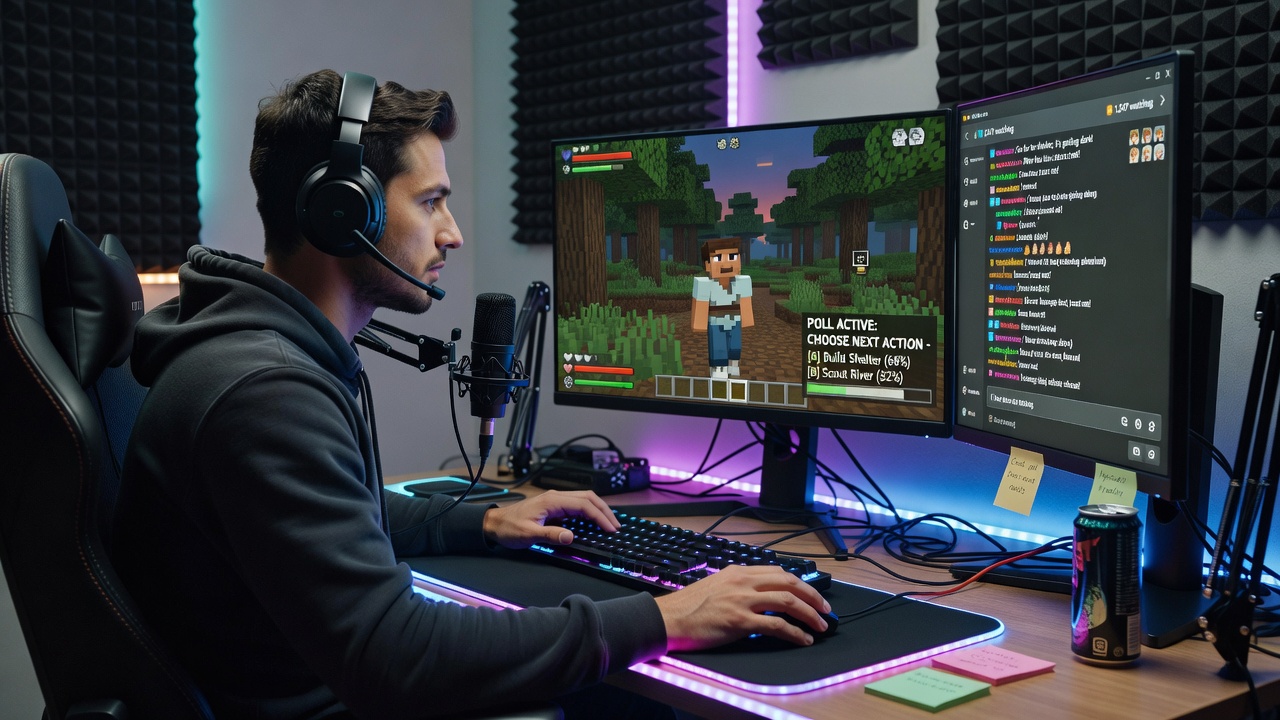
Real-time poll integrations have become a standard feature across major streaming platforms where survival game sessions often stretch for eight hours or longer, and broadcasters use these tools to let viewers vote on resource allocation, route choices, and base-building priorities while the game unfolds. Data from platform analytics in August 2026 showed that survival titles such as Rust and DayZ accounted for 18 percent of all poll-initiated interactions across live broadcasts, a figure that reflects the genre's emphasis on open-ended decision making rather than scripted progression. Viewers submit votes through integrated overlays, and results update within seconds so streamers can adjust gameplay without breaking momentum.
Mechanics of Poll Deployment in Prolonged Sessions
Survival broadcasts typically activate polls at natural breakpoints such as dawn cycles or after resource gathering runs, and these intervals allow audiences to influence the next phase of exploration or fortification. Streamers configure questions with two to four options, limit voting windows to 60 seconds, and display running totals so participants see their choices gaining or losing ground in real time. According to the Entertainment Software Association industry report on interactive entertainment, titles built around persistent worlds generate 2.3 times more poll responses per viewer hour than competitive shooters because survival mechanics reward collective planning over individual reflexes. Technical setups rely on extensions that sync with game APIs, pulling variables like inventory counts or weather states to generate context-aware options without manual input from the broadcaster.
Patterns of Participation Across Viewer Cohorts
Observers tracking chat logs during multi-hour survival streams note that poll activity spikes 40 percent higher in the first three hours compared with later segments, yet sustained engagement holds when polls tie directly to viewer-submitted ideas such as custom base layouts. Newer audience members participate at rates comparable to long-term followers once the poll interface appears on screen, and repeat voters tend to cluster around specific themes like defensive strategies rather than offensive raids. Research conducted by the Interactive Media Lab at the University of Southern California found that survival streams incorporating at least four poll cycles per session retained 27 percent more concurrent viewers past the six-hour mark than those without interactive elements. The same study documented that polls framed as collective problem-solving rather than popularity contests produced longer discussion threads in accompanying chat channels.
Retention Metrics and Behavioral Shifts
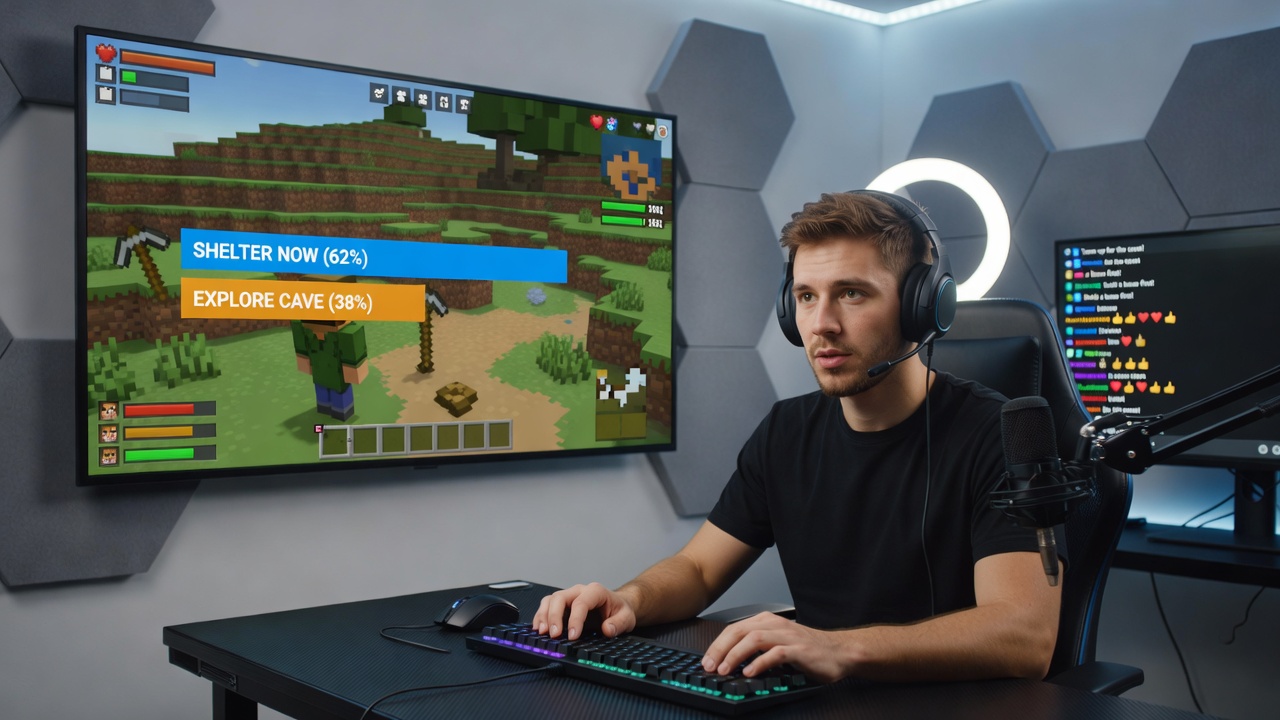
Platform dashboards reveal that survival broadcasts using real-time polls maintain average viewership drops of only 12 percent between the fourth and eighth hours, whereas non-interactive sessions experience declines closer to 31 percent over the same window. Viewers who cast at least one vote remain in the channel 19 minutes longer on average than non-voters, and this gap widens during sessions exceeding ten hours. Data indicates that poll results shared on external community forums generate secondary discussion that feeds back into the next broadcast, creating a feedback loop between live and asynchronous participation. European gaming trade group ISFE reported similar patterns across regional markets in 2025, noting that audiences in cooperative survival communities value visible influence on outcomes more than chat emotes alone.
Technical and Moderation Considerations
Broadcasters integrate poll tools through platform APIs that enforce rate limits and anti-spam filters, yet extended sessions still require dedicated moderators to address coordinated voting attempts or off-topic suggestions that could derail gameplay flow. Latency between vote submission and on-screen result display averages under 800 milliseconds on stable connections, and this speed supports the perception that viewer input directly shapes unfolding events. When network conditions fluctuate, fallback systems queue results for the next stable interval rather than dropping the poll entirely, preserving continuity. Those managing large communities often pre-load poll templates tied to common survival scenarios, allowing quick activation without interrupting commentary or combat sequences.
Cross-Platform Variations and Audience Scale
Smaller channels with under 500 concurrent viewers report higher per-capita poll participation than mid-tier streams, while audiences above 5,000 show greater diversity in vote distribution yet lower overall response percentages. Mobile viewers interact with polls at rates 15 percent below desktop users according to aggregated telemetry, prompting some broadcasters to simplify option text for smaller screens. In August 2026 several survival-focused events tested hybrid formats that combined polls with viewer-submitted asset requests, and preliminary logs indicated these combinations extended average session length by an additional 47 minutes without increasing moderator workload.
Conclusion
Real-time poll systems continue to evolve alongside survival game mechanics, and platform data shows measurable effects on participation duration and discussion volume when polls align with in-game decision points. Broadcasters who calibrate poll frequency, wording, and timing to match session length maintain steadier audience retention across multi-hour broadcasts. As integration tools improve and more titles expose additional state variables to external APIs, the range of viewer-influenced outcomes within extended survival sessions is expected to expand further while remaining grounded in observable interaction patterns.