Viewer-Driven Narrative Branching in Interactive Fiction Streams via Real-Time Poll Integration
Tina Schmitt · Aug 20, 2026
Viewer-Driven Narrative Branching in Interactive Fiction Streams via Real-Time Poll Integration
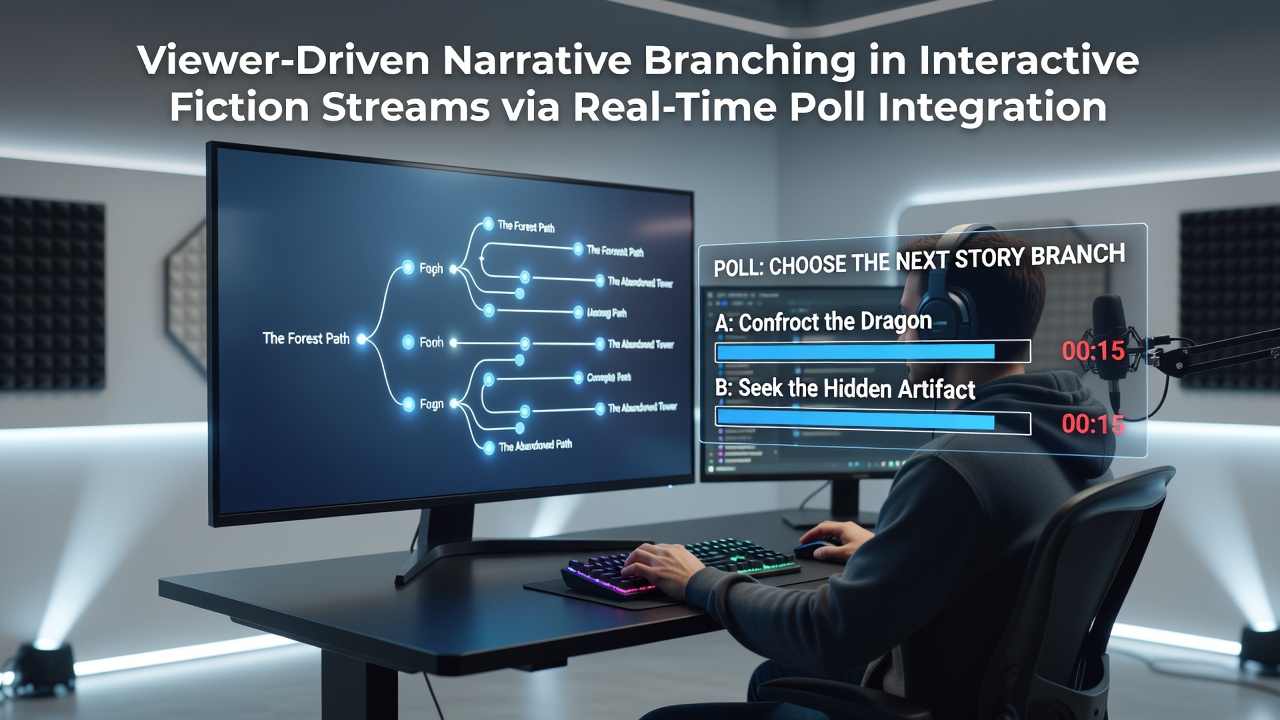
Viewer-driven narrative branching relies on real-time poll integration that lets audiences select story paths during live interactive fiction streams, and platforms have expanded these tools steadily since 2024. Broadcasters embed poll widgets directly into chat interfaces or custom overlays, which collect votes within set time windows before the narrative advances based on majority selection. Data from multiple streaming services show participation rates climbing when polls appear every three to five minutes, especially in titles built around choice-heavy plots such as mystery adventures and alternate-history simulations.
Mechanics of Poll Integration
Real-time polling systems connect to streaming APIs that read chat commands or button clicks from viewers, then tally results through lightweight scripts running on the broadcaster side. When a poll closes, the selected branch loads from pre-authored narrative segments stored on the server, and the stream continues without visible interruption. Observers note that developers often prepare four to six possible outcomes per decision point to maintain variety while keeping production manageable. Tools such as custom Twitch extensions and open-source poll bots handle the timing, display vote percentages on screen, and trigger the next scene automatically once thresholds are met.
Platform Support and Technical Setup
Most major live platforms now include native poll features that creators activate through dashboard settings, while third-party services add advanced branching logic for fiction-specific needs. A broadcaster configures decision nodes in advance, assigns each node to a poll, and maps outcomes to video files or scene triggers. Integration with game engines like Unity or Ren'Py allows seamless switches between branches during the live session. In August 2026 several services released updated APIs that reduced latency between poll closure and scene change to under two seconds, according to documentation released by platform engineering teams.
Viewer Participation Patterns
Studies conducted by academic research groups indicate that streams using poll-driven branching retain audiences for longer average session lengths compared with linear storytelling formats. Participation tends to spike when viewers see immediate visual feedback such as animated vote counters or character reactions that acknowledge the collective choice. Researchers at institutions across North America and Europe have documented higher repeat viewership among participants who voted in at least one prior decision. Demographic data collected through platform analytics reveal broad age ranges joining these streams, with notable clusters in the 18-34 and 35-49 brackets depending on the fiction genre.
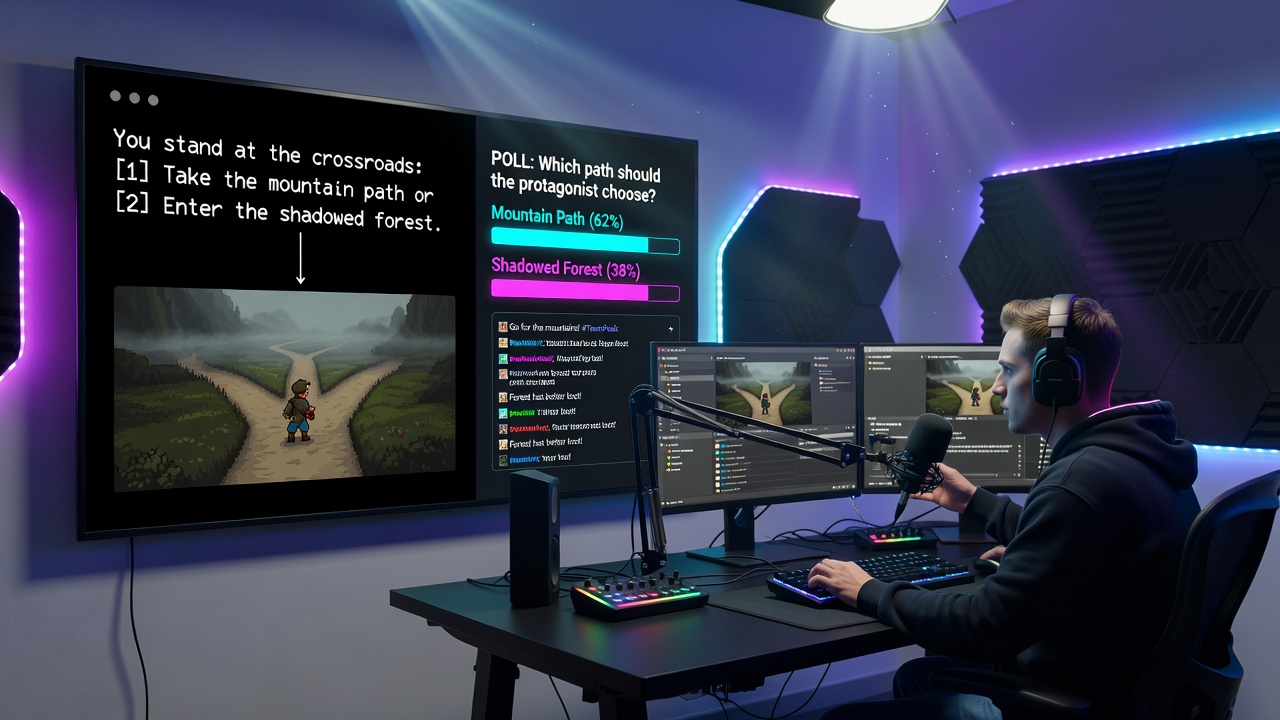
One documented case involved a weekly mystery series that presented five key decisions per episode, and aggregate logs showed consistent vote totals exceeding 70 percent of concurrent viewers. Broadcasters report preparing contingency branches for tie votes, often defaulting to a neutral narrative path or rerunning the poll for thirty seconds. The process keeps the stream moving while preserving the sense that every viewer input matters.
Content Production Considerations
Teams producing interactive fiction streams typically write multiple parallel scripts that converge at later milestones to control overall runtime. Writers map decision trees in specialized software that tracks variable states such as character relationships or inventory items across branches. Voice actors record lines for each possible path, and editors assemble modular video assets that the streaming software can load on demand. Production budgets rise with the number of branches, yet many creators offset costs by reusing background art and music across several outcomes.
Engagement Metrics and Industry Data
Figures released by industry organizations such as the Entertainment Software Association show rising investment in interactive streaming formats through 2025 and into 2026. A separate report from the Canadian Interactive Digital Media Association highlights increased sponsorship interest when viewer polls generate measurable engagement spikes. These metrics help creators demonstrate value to advertisers seeking direct audience interaction data.
Challenges in Implementation
Technical hurdles include maintaining synchronization across viewers who join mid-stream and handling sudden spikes in chat volume during high-stakes decisions. Some platforms impose rate limits on poll frequency, requiring creators to space decisions strategically. Narrative designers must also guard against choice overload that can dilute story coherence, and several documented productions introduced recap segments after major branches to bring new viewers up to speed.
Security considerations involve preventing vote manipulation through coordinated chat raids, and moderation teams often deploy additional filters during live events. Research published through ACM conferences on interactive media describes mitigation techniques such as weighted voting and verified user participation that reduce the impact of organized interference.
Conclusion
Real-time poll integration has become a standard method for enabling viewer-driven narrative branching in interactive fiction streams, supported by evolving platform tools and production workflows. Data continue to track participation levels and retention patterns across regions, while technical refinements announced in mid-2026 further streamlined the connection between audience input and story progression. The format now appears regularly in both independent and platform-sponsored broadcasts, with ongoing development focused on reducing latency and expanding narrative complexity.