Tracing Algorithmic Discovery Paths for Niche Multiplayer Titles via Community Highlight Reels
Tina Schmitt · Jul 14, 2026

Tracing Algorithmic Discovery Paths for Niche Multiplayer Titles via Community Highlight Reels
Community highlight reels serve as primary data sources for algorithmic systems that surface niche multiplayer titles to wider audiences, and these systems process thousands of short-form clips daily to identify emerging patterns in player behavior and game mechanics. Researchers at institutions across multiple regions have documented how platforms integrate video analysis with engagement metrics to trace discovery pathways, while data from industry reports shows that titles with active highlight communities experience measurable increases in visibility within recommendation engines.
Mechanics of Algorithmic Processing
Platforms deploy machine learning models that extract features from highlight reels including movement patterns, interaction density, and cooperative strategies, and these models compare extracted data against established player preference profiles to generate targeted suggestions. Studies conducted by the Interactive Software Federation of Europe indicate that such processing occurs in real time across distributed server networks, whereas analysts note that metadata tags added by community uploaders further refine the classification accuracy for lesser-known games.
Engineers at major distribution services configure neural networks to weigh temporal elements like clip duration and upload frequency, and this configuration allows the system to prioritize reels that demonstrate consistent community interest over isolated spikes. One case examined by academics at the University of Melbourne revealed that multiplayer survival games gained traction when highlight sequences captured rare emergent events, and the resulting algorithmic amplification occurred within hours of initial uploads.
Community Contributions to Data Sets
Players and content creators generate highlight reels that function as organic training data for discovery algorithms, while platform policies require explicit consent for data usage in model training pipelines. Figures released by the Entertainment Software Association in July 2026 documented a 28 percent rise in clips originating from independent multiplayer servers, and this increase correlated with expanded reach for titles outside mainstream publisher catalogs.
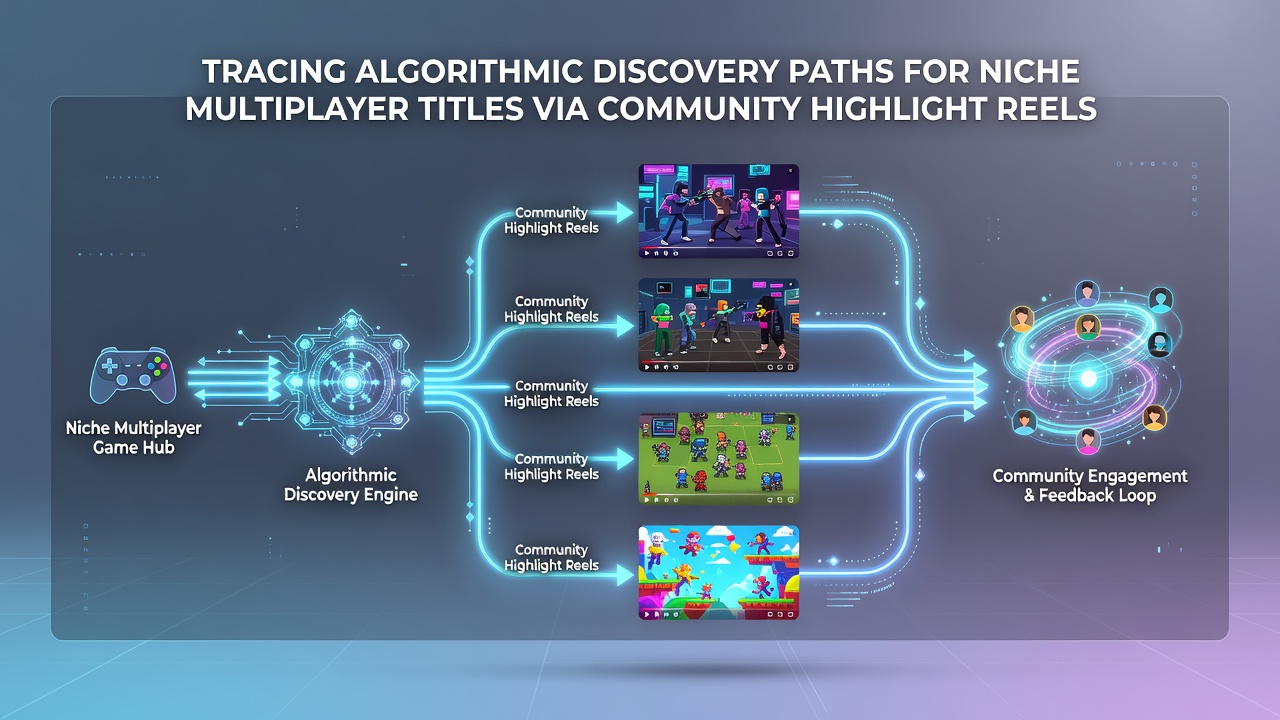
Moderators within gaming communities often curate highlight collections to emphasize unique mechanics, and these curated sets provide cleaner signals than raw footage for training purposes. Observers at research centers in Canada have tracked how volunteer tagging practices influence downstream recommendations, whereas automated systems cross-reference those tags with behavioral logs to validate relevance before propagating suggestions to new users.
Path Tracing and Visibility Metrics
Developers implement path-tracing tools that map the sequence of algorithmic decisions leading from a single highlight reel to user discovery events, and these tools log intermediate steps such as feature vector comparisons and similarity scoring. Reports compiled by the Australian Classification Board show that titles achieving early highlight traction in regional servers frequently expand to international audiences through chained recommendation loops, while developers receive aggregated reports detailing which reel elements triggered each expansion stage.
Network analysis techniques applied by university teams identify clusters where multiple niche titles share overlapping highlight characteristics, and such clusters enable cross-promotion within algorithmic outputs. Data collected during 2025 and 2026 indicates that cooperative shooter communities produced reels that collectively influenced recommendation diversity scores across three major platforms.
Technical Adaptations in 2026
Platform updates rolled out in early 2026 incorporated improved optical flow analysis for detecting synchronized player actions in highlight reels, and these adaptations addressed previous limitations in processing fast-paced multiplayer footage. Engineers integrated additional privacy filters that anonymize identifiable player data before clips enter training sets, and compliance documentation from European regulatory bodies confirms adherence to updated digital services standards.
Third-party analytics firms now offer services that help independent developers interpret path-tracing outputs, while these services aggregate anonymized data from multiple sources to produce comparative reports on discovery efficiency. One documented example involved a small-team survival game that adjusted its core loop after reviewing which highlight elements consistently appeared in successful recommendation chains.
Conclusion
Algorithmic discovery pathways continue to evolve as highlight reel volume grows and processing techniques refine, and stakeholders across the industry monitor these developments through shared data frameworks. Continued collaboration between platform operators, academic researchers, and community organizers supports transparent tracing methods that maintain visibility for niche multiplayer titles while respecting data governance requirements.