The Influence of Binaural Audio Mixing Techniques on Audience Immersion During Cooperative Survival Game Transmissions
Tina Schmitt · Jul 16, 2026
The Influence of Binaural Audio Mixing Techniques on Audience Immersion During Cooperative Survival Game Transmissions
Cooperative survival game transmissions have incorporated binaural audio mixing techniques at increasing rates since the mid-2020s, and researchers continue to examine how these spatial audio methods affect viewer engagement during extended sessions. Binaural mixing simulates three-dimensional sound fields through standard stereo headphones, placing audio elements at specific positions around the listener rather than distributing them across a flat left-right plane. Data from multiple transmission platforms indicates that this approach aligns with the way players coordinate in titles where communication and environmental awareness determine group outcomes.
Core Principles of Binaural Mixing in Live Broadcasts
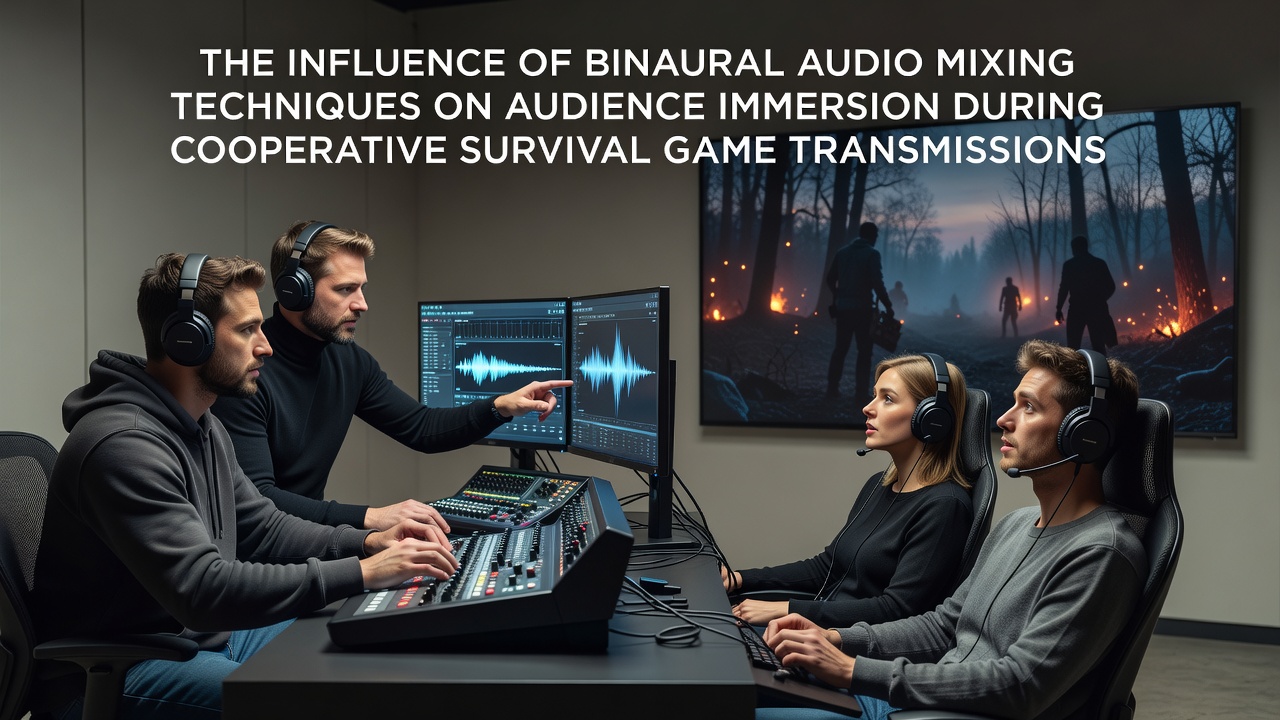
Binaural techniques rely on head-related transfer functions that replicate how human ears receive sound from different directions, and engineers apply these filters during post-capture processing or in real-time mixing consoles used for survival game streams. Observers note that when commentators position enemy footsteps behind the viewer or place distant radio chatter to the side, the resulting soundscape mirrors the spatial challenges teams face in-game. According to findings presented at the 2025 International Audio Engineering Conference, transmissions using binaural layers showed measurable increases in average viewer retention compared with conventional stereo mixes during the same survival scenarios.
Production teams achieve these effects through software plugins that process multi-track recordings from in-game audio engines, and they route separate channels for dialogue, ambient effects, and music into a binaural renderer before the final stream output. This workflow allows commentators to maintain clear vocal presence while still conveying directional cues that help remote audiences follow squad movements across large maps.
Application During Cooperative Survival Sessions
Survival titles emphasize resource management and threat detection across shared virtual spaces, and binaural mixing supports these elements by preserving directional information that flat stereo mixes often compress. One documented case from a European tournament series in early 2026 demonstrated how producers placed environmental hazards at varying depths and angles, enabling viewers to anticipate group decisions based on audio positioning alone. Figures released by the Interactive Audio Research Group at the University of Melbourne in July 2026 showed that streams employing these methods recorded higher concurrent chat activity during critical coordination moments, suggesting sustained attention across longer broadcasts.
Teams often integrate binaural processing with existing capture hardware by routing game audio through dedicated spatial audio workstations before it reaches the streaming encoder, and this separation prevents latency issues that could disrupt live coordination between players and commentators. Data collected across multiple North American platforms indicates consistent patterns where viewers remain connected for additional minutes when spatial cues match on-screen action during extended survival challenges.
Measured Effects on Viewer Immersion
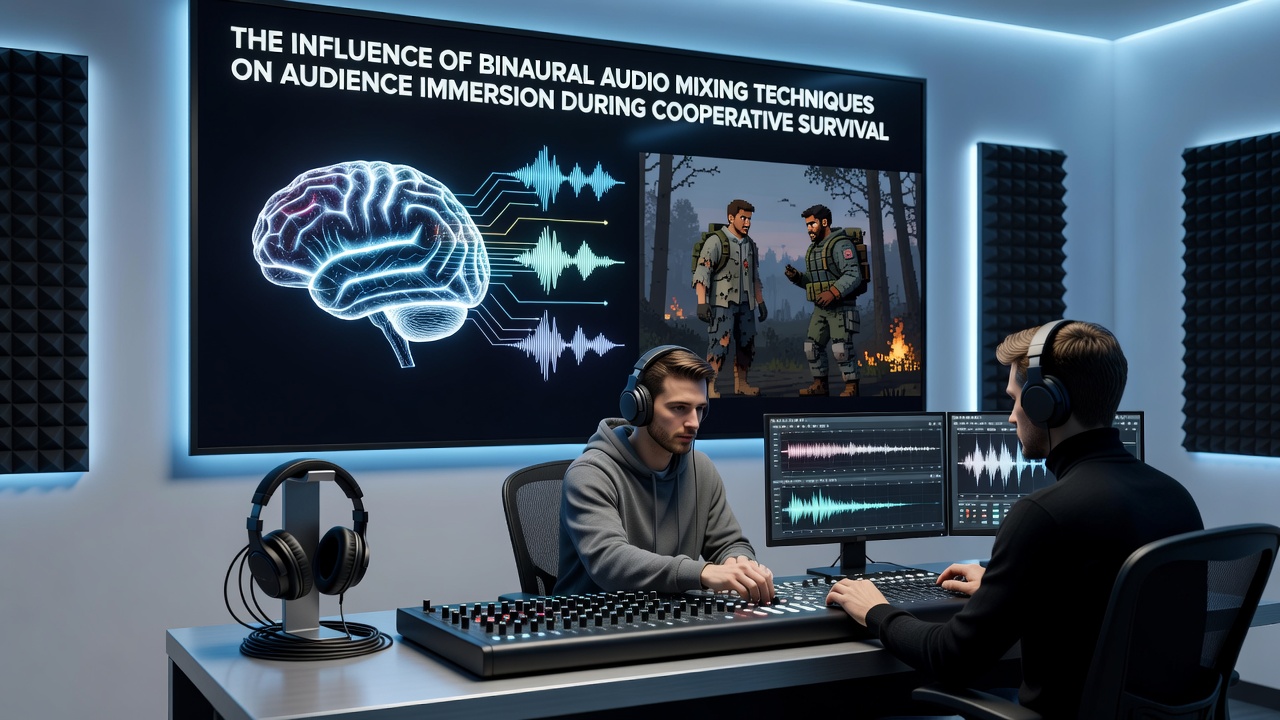
Immersion metrics in streaming contexts typically include session duration, interaction frequency, and self-reported presence scores, and several studies have tracked these indicators when binaural mixing appears in cooperative survival transmissions. Research conducted by the Canadian Institute for Digital Media in 2025 found that participants exposed to binaural versions of the same broadcast segment reported stronger spatial awareness of in-game events compared with those who heard standard mixes. The same dataset revealed that directional audio cues correlated with increased accuracy when viewers predicted upcoming team actions during resource-gathering phases.
Transmission logs from Asian esports circuits further illustrate that binaural implementations reduced reported audio fatigue during multi-hour sessions, as the varied positioning of sound sources distributed listening effort more evenly across both ears. Engineers attribute this outcome to reduced masking effects that occur when all audio elements compete within a narrow stereo field, and they continue to refine filter parameters to match different headphone models commonly used by audiences.
Technical Considerations for Stream Integration
Real-time binaural rendering demands additional processing resources compared with traditional stereo downmixing, yet current encoding standards accommodate the extra computational load without compromising video quality. Production crews address this by pre-rendering static environmental layers while handling dynamic player dialogue through lighter real-time processors, and this hybrid method maintains synchronization across distributed player networks. Industry reports from the Audio Engineering Society note that proper calibration of head-tracking data, when available through viewer-side applications, further enhances the perceived stability of positioned audio elements during rapid camera or player movement sequences.
Compatibility testing across major streaming services shows that binaural streams remain accessible through standard playback applications, though optimal results require headphone listening rather than speaker systems. Developers continue to release updated rendering plugins that integrate directly with popular broadcast software, reducing setup time for teams adopting the technique for the first time.
Conclusion
Available evidence indicates that binaural audio mixing techniques provide measurable spatial information that aligns with the coordination demands of cooperative survival game transmissions. Studies conducted across multiple regions document extended viewer sessions and elevated interaction rates when these methods appear in live broadcasts, while technical workflows have matured enough to support consistent implementation. Continued refinement of rendering tools and calibration standards suggests that spatial audio will remain a documented component of production practices for this genre of transmissions.