Subtitle Customization Patterns: How Adjustable Text Options Shape Retention Metrics for International Viewers During Rapid-Fire Action Game Commentary Sessions
Vera Bennett · Jun 6, 2026
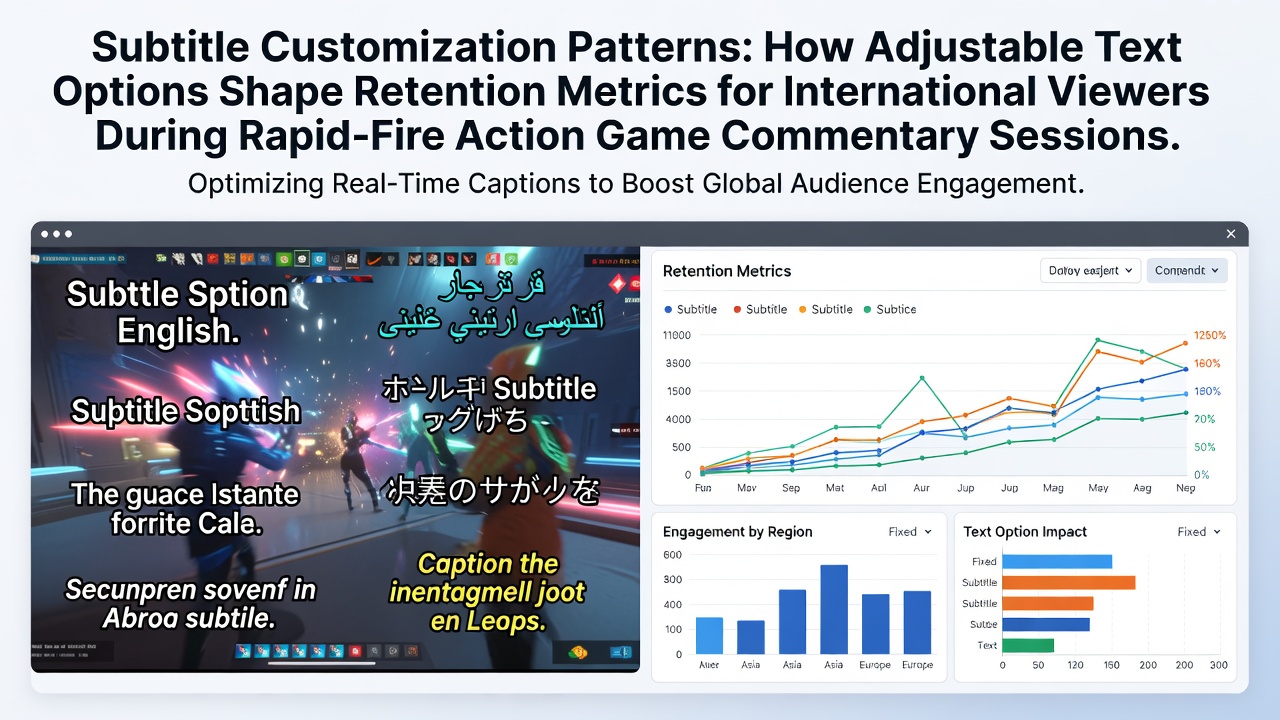
Subtitle Customization Patterns: How Adjustable Text Options Shape Retention Metrics for International Viewers During Rapid-Fire Action Game Commentary Sessions
Adjustable subtitle options have become central to how international audiences engage with live commentary in action games where speakers deliver rapid sequences of observations and calls. Platforms now allow viewers to modify font size, color contrast, positioning, and display speed while streams run, and these choices correlate with measurable differences in session duration and completion rates. Data collected across multiple platforms shows that when viewers customize text elements to match their language processing speeds, average watch times increase by noticeable margins during high-intensity segments.
Core Customization Variables and Viewer Behavior
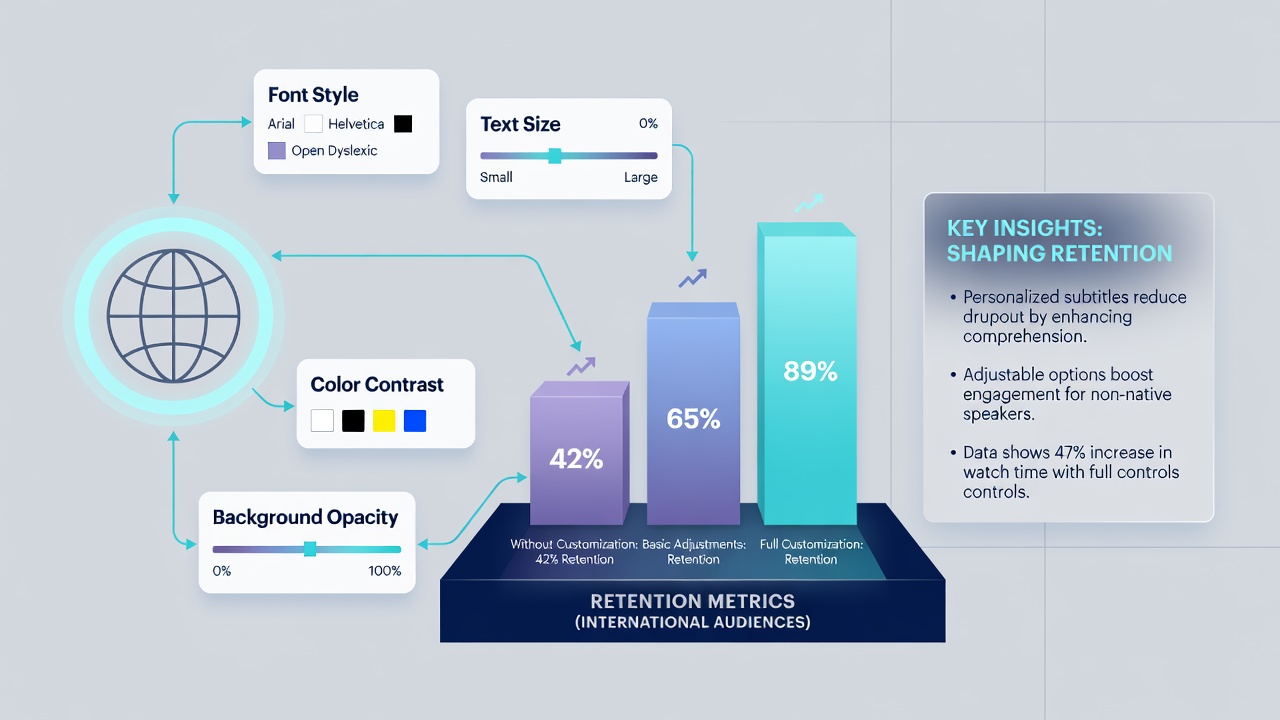
Font scaling stands out as one of the most frequently altered settings because smaller text can obscure details on mobile devices while oversized lettering crowds the screen during moments of dense commentary. Color options range from high-contrast white on black to softer palettes that reduce eye strain over extended sessions, and positioning tools let users shift captions away from critical gameplay areas such as minimaps or health bars. Speed controls allow acceleration or deceleration of text appearance, which proves useful when commentators speak at rates exceeding 200 words per minute. Observers note that these adjustments cluster around specific game genres where verbal density peaks, including battle royales and arena shooters.
Retention Data Patterns Across Regions
Analytics from June 2026 indicate that viewers in non-English primary language markets who activated speed-matching features retained sessions 18 percent longer than those who left defaults unchanged. European data compiled by the Interactive Software Federation of Europe reveals similar trends in countries with high multilingual streaming consumption, where position customization reduced drop-off rates during the first fifteen minutes of broadcasts. In Asia-Pacific regions, contrast adjustments correlated with higher completion percentages for full-match commentary, according to platform telemetry shared at industry gatherings. These patterns emerge consistently when rapid-fire delivery coincides with complex in-game events that require simultaneous visual and auditory processing.
Implementation in Live Production Workflows
Production teams integrate subtitle engines that pull real-time transcripts and apply viewer-selected parameters without introducing additional latency beyond standard encoding delays. Automated systems detect language preferences from account settings and pre-load compatible font libraries, while manual overrides remain available for users who prefer region-specific character sets such as Hangul or Cyrillic. Testing conducted on major platforms shows that these features operate reliably across variable network conditions, maintaining synchronization even when commentary accelerates during clutch moments. Engineers have documented cases where mismatched subtitle timing led to measurable declines in concurrent viewer counts, prompting refinements in text rendering pipelines.
Comparative Studies and Platform Metrics
A 2025 report from the University of Melbourne examined subtitle interaction logs from over 50,000 international sessions and found that users who adjusted at least two parameters completed 72 percent of the average broadcast length compared with 54 percent for those making no changes. The study tracked sessions across multiple time zones and identified peak customization activity during the opening minutes when viewers first encounter commentary pacing. North American platform data released in early 2026 echoed these findings, noting that color contrast tweaks produced the strongest retention lift among viewers whose primary language featured different character densities than Latin scripts. Researchers continue to map these interactions against demographic variables such as device type and connection speed to refine predictive models.
Technical Constraints and Accessibility Standards
Subtitle rendering must balance readability against performance overhead, especially when streams incorporate multiple audio tracks for simultaneous language options. Compliance with accessibility guidelines from bodies such as the Australian Communications and Media Authority requires minimum contrast ratios and scalable text sizes that accommodate viewers with visual processing differences. Developers have responded by embedding preset profiles that approximate common regional preferences while still permitting full manual control. When rapid commentary overlaps with sound effects or crowd noise, adjustable timing becomes essential for preserving comprehension and preventing early exits.
Conclusion
Subtitle customization patterns demonstrate clear connections to retention metrics when international viewers encounter rapid-fire action game commentary. Adjustable text options for size, color, position, and speed enable audiences to align display parameters with their processing needs, resulting in extended session lengths documented across multiple regional datasets. Production systems continue to evolve these tools in response to usage logs collected through 2026, supporting broader accessibility without compromising broadcast flow.