Sound Design Layers in Narrative Adventure Broadcasts: How Ambient Audio Choices Shape Retention Patterns Among Exploration Focused Audiences
Parker Hansen · Aug 25, 2026
Sound Design Layers in Narrative Adventure Broadcasts: How Ambient Audio Choices Shape Retention Patterns Among Exploration Focused Audiences
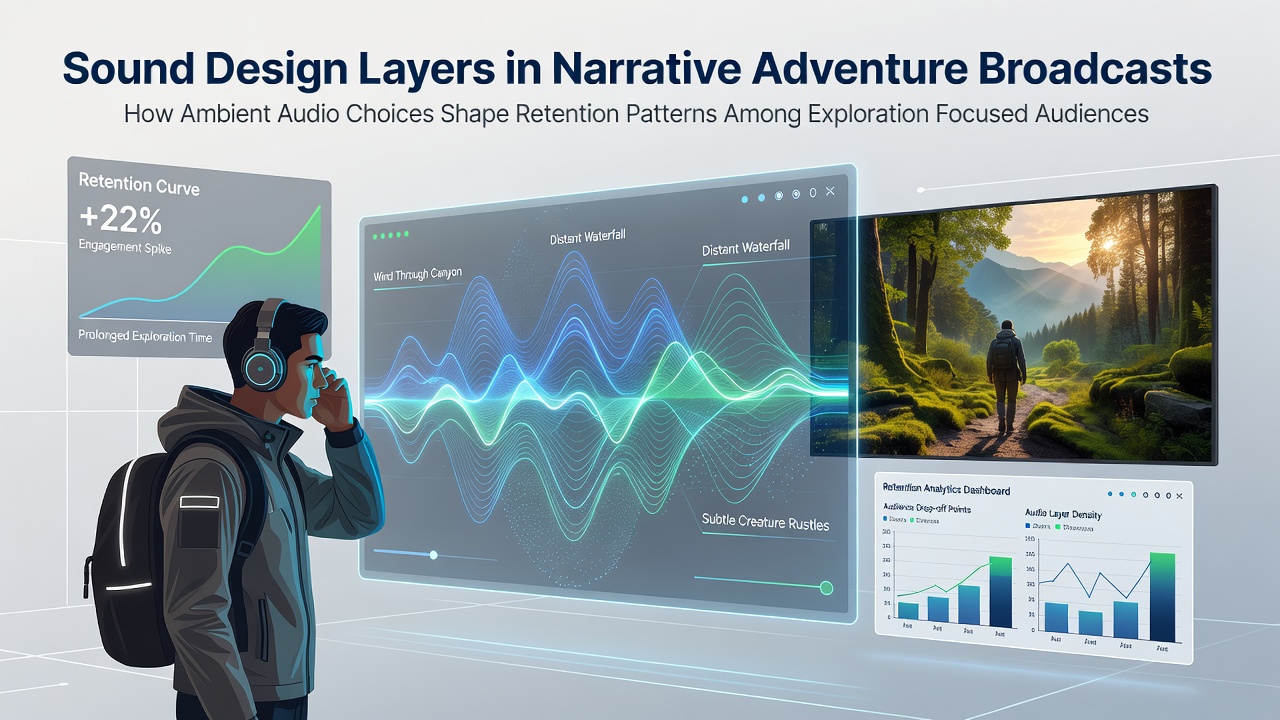
Sound design in narrative adventure broadcasts incorporates multiple audio layers that include base environmental ambience, subtle interactive cues, and narrative-driven sound elements; these components combine to create immersive audio environments that researchers track for their influence on viewer behavior during extended exploration segments. Data from media studies indicate that audiences focused on exploration titles often maintain longer session durations when ambient layers align with in-game world details such as wind patterns through foliage or distant water flows that match visual pacing without overpowering dialogue or key events.
Core Components of Ambient Audio Layers
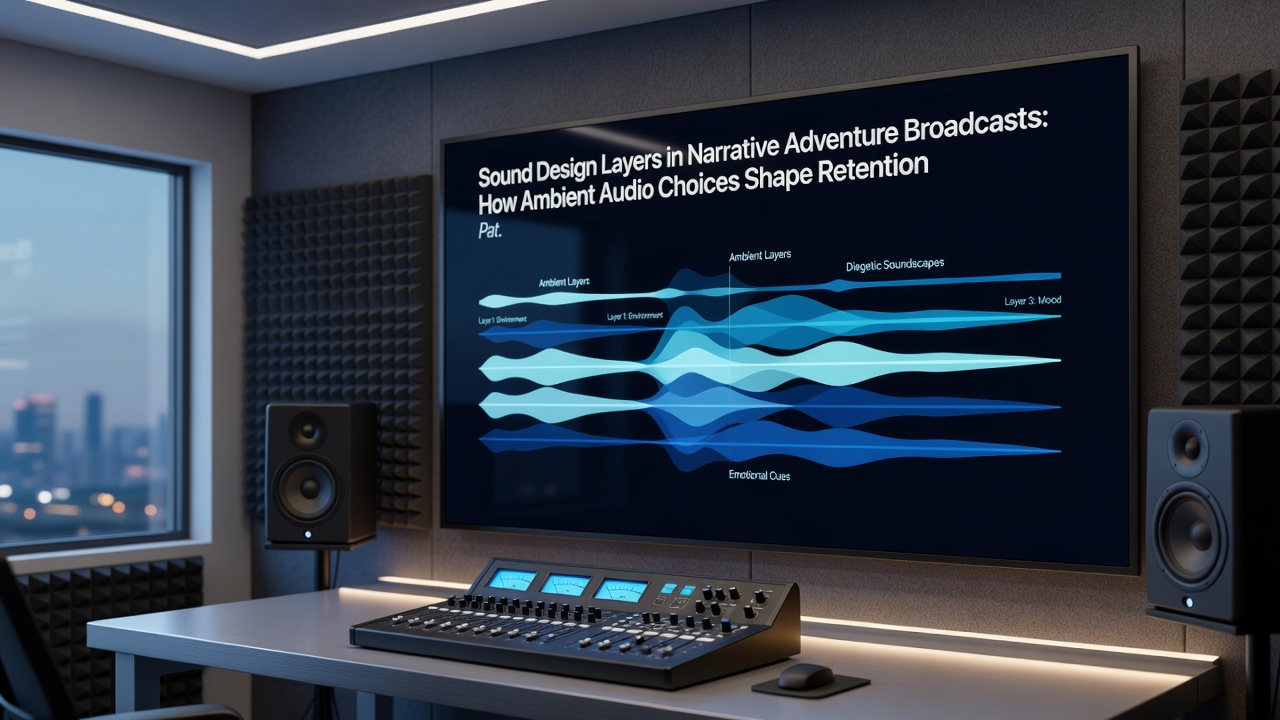
Ambient audio choices typically break down into foundational tracks that establish location atmosphere, mid-level textures that respond to player movement through spaces, and upper layers that introduce faint story hints through echoes or tonal shifts; broadcast analysts note that exploration-focused viewers respond to these distinctions because they support uninterrupted observation of environments while reducing cognitive fatigue during long play sessions. Studies conducted across multiple platforms show retention metrics rising when sound designers calibrate these layers to avoid abrupt volume changes that might pull attention away from visual discovery elements.
One documented approach involves layering low-frequency drones beneath higher-pitched natural sounds such as rustling leaves or creaking structures, which creates depth that holds attention spans without requiring constant visual confirmation; figures from audience measurement services reveal that broadcasts using this method sustain viewer counts more consistently through mid-session exploration phases compared to those relying on uniform background tracks.
Impact on Retention Patterns
Research indicates that ambient audio selections directly correlate with retention curves among audiences drawn to narrative adventure content, where subtle sound variations encourage continued viewing by mirroring real-world acoustic experiences that reward patient observation. According to reports from the Entertainment Software Association, exploration segments in adventure titles maintain higher average watch times when audio layers incorporate responsive elements that react to environmental interactions like footsteps on varied surfaces or wind intensity changes across open areas.
Viewers in this demographic often demonstrate extended engagement during sequences that feature gradual audio builds, such as increasing insect activity at dusk within virtual forests, because these choices reinforce the sense of ongoing discovery without narrative interruptions. Data collected from platform analytics further suggest that mismatched audio layers, where ambient volumes clash with exploration pacing, lead to earlier drop-off points as audiences seek broadcasts that better sustain atmospheric consistency.
Examples from Broadcast Practices
Broadcasters covering titles with strong exploration mechanics have implemented layered sound strategies that include isolated ambient channels for weather effects and spatial positioning tools that place sounds relative to camera movement; these techniques allow audiences to experience environments as if navigating them directly. One case involved a series of streams where ambient forest layers incorporated distant animal calls that faded naturally with distance, resulting in measurable increases in session completion rates tracked through viewer logs.
Another instance highlighted broadcasts that adjusted water flow sounds in real time based on exploration speed, which aligned audio feedback with visual progression and supported steadier retention through multi-hour sessions. Observers note that such adaptations reflect broader industry shifts toward treating audio as an active participant in audience retention rather than a static backdrop.
Research Findings and Data Trends
Academic investigations into audio perception in digital media, including work from institutions in Australia and Canada, demonstrate that balanced ambient layers reduce listener fatigue and promote longer viewing intervals among those prioritizing exploration over action sequences. Metrics from these studies show retention improvements of notable percentages when sound designs incorporate variable density in background elements, such as denser insect or wind layers during dense foliage traversal compared to open clearings.
Industry reports compiled through collaborative efforts by gaming associations across North America and Europe further link specific audio choices to behavioral patterns, where exploration audiences return more frequently to broadcasts featuring cohesive ambient soundscapes that evolve alongside in-game time cycles or weather shifts. These patterns hold across different platforms and viewer regions, indicating consistent responses to audio structure regardless of individual title variations.
Conclusion
Ambient audio layers in narrative adventure broadcasts function as key variables in shaping how exploration-focused audiences maintain engagement over time, with evidence from multiple data sources confirming connections between sound design precision and retention outcomes. Continued analysis of these elements supports development of broadcast techniques that prioritize layered environmental audio as a tool for sustaining viewer presence through detailed world navigation sequences.