Regional Server Latency Patterns and Their Influence on Viewer Interaction During Cross-Continent Squad Coordination Broadcasts
Tina Schmitt · Aug 18, 2026
Regional Server Latency Patterns and Their Influence on Viewer Interaction During Cross-Continent Squad Coordination Broadcasts
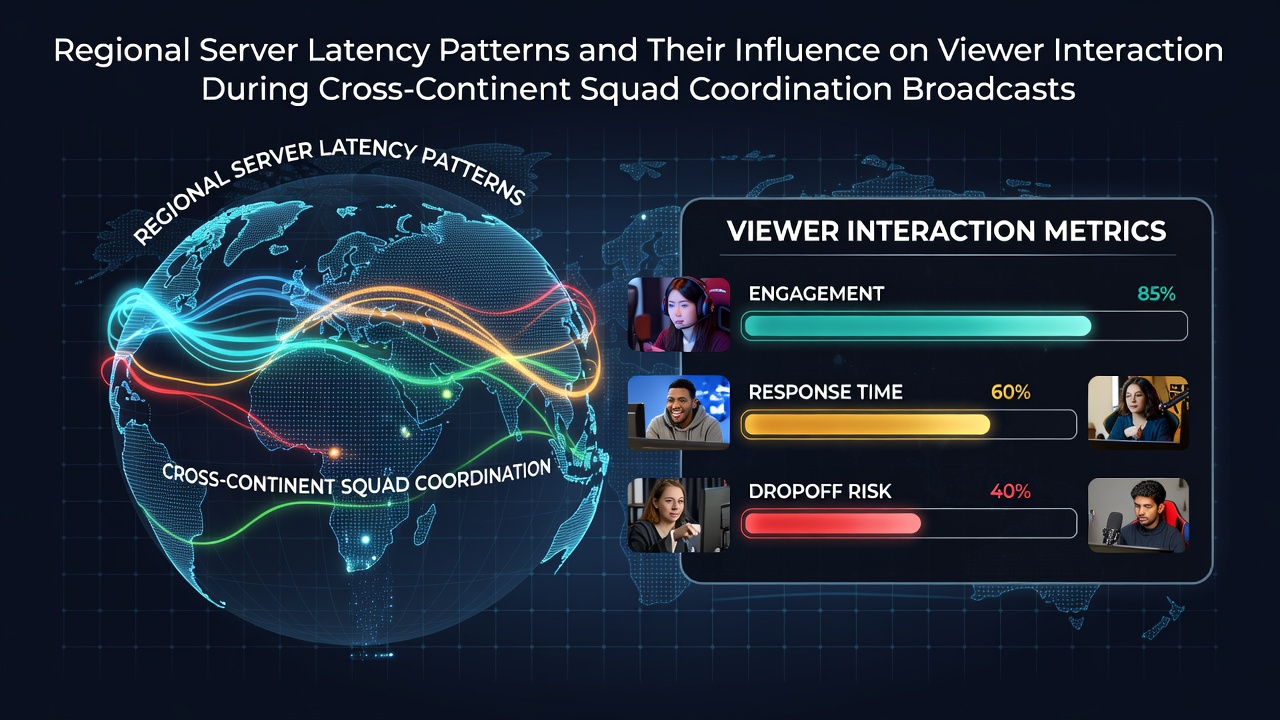
Regional server latency patterns emerge from the physical distribution of data centers and the routing paths that connect players across continents, and these patterns shape how viewers engage with live broadcasts of squad coordination events in competitive gaming. Data centers located in North America, Europe, and Asia-Pacific regions create distinct delay profiles that affect real-time communication among distributed teams, while broadcasts transmit these interactions to audiences worldwide. In August 2026 major esports tournaments highlighted how transatlantic and transpacific links introduce variable ping rates that range from 40 milliseconds within regions to over 150 milliseconds between continents, according to measurements compiled by the Entertainment Software Association.
Mapping Latency Across Key Regions
North American servers typically deliver sub-30 millisecond responses for domestic connections yet encounter spikes when routing to European or Asian nodes because undersea cables and peering agreements introduce bottlenecks during peak hours. European infrastructure benefits from dense fiber networks that keep intra-EU latencies below 25 milliseconds, whereas links to South American or Australian servers often exceed 120 milliseconds due to fewer direct routes. Asian-Pacific facilities show strong performance within East Asia at under 20 milliseconds, but coordination with North American squads frequently encounters 140 to 180 millisecond delays that compound during high-traffic periods.
These geographic variations become visible in squad coordination broadcasts when players from different continents attempt synchronized maneuvers, and the resulting desynchronization appears in viewer chat activity and engagement metrics. Research from the University of California, Irvine indicates that latency above 100 milliseconds disrupts voice call clarity and command timing in team-based titles, leading to observable drops in simultaneous viewer reactions during critical moments.
Effects on Squad Coordination and Broadcast Flow
Cross-continent squads rely on low-latency environments to execute strategies that require precise timing, and any regional imbalance forces players to adapt through predictive callouts or staggered inputs. Broadcast producers adjust overlay timing and commentator pacing to compensate for these delays, yet the underlying server patterns still influence how the action unfolds on screen. Viewers notice these adjustments through changes in overlay synchronization and audio mixing that reflect the actual network conditions experienced by participants.
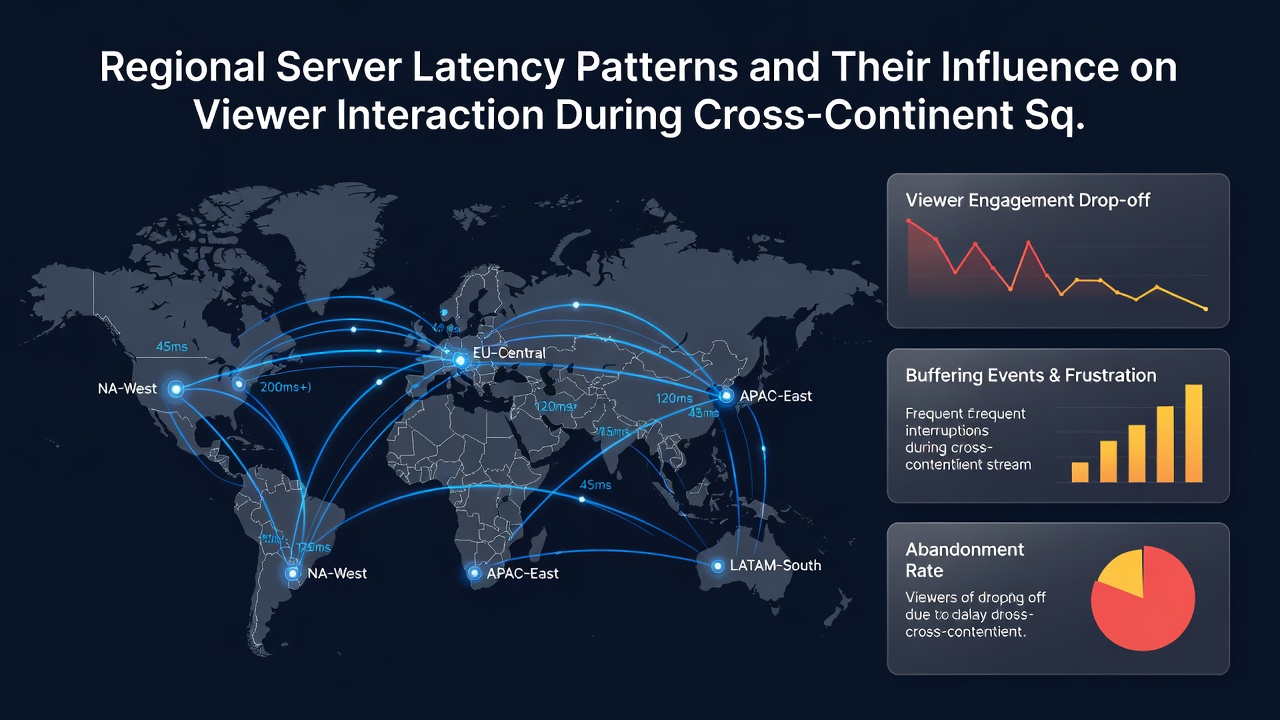
Studies compiled by the Interactive Games and Entertainment Association reveal that viewer retention rates decline by an average of 18 percent during segments where cross-continental latency exceeds 130 milliseconds, particularly when coordination failures interrupt expected gameplay flow. Chat volume often spikes immediately after noticeable desync events as audiences discuss the visible effects, then tapers when streams implement compensatory techniques such as delayed replays or regional server switches.
Viewer Interaction Metrics and Regional Variations
Interaction data collected from platform analytics show that audiences in the same region as the primary game server maintain higher rates of real-time commentary and poll participation compared with viewers located farther from the hosting infrastructure. European audiences watching North American-hosted events demonstrate sustained engagement when latency stays under 80 milliseconds, while Asian viewers experience sharper drops in concurrent activity once delays cross the 110 millisecond threshold. These patterns repeat across multiple titles that feature squad coordination mechanics, indicating a consistent relationship between network geography and audience behavior.
Platform operators have documented how regional CDN distribution affects stream delivery quality, and this compounds the coordination latency already present in the game itself. When both game servers and video delivery nodes operate from distant regions, viewers encounter compounded delays that reduce the perceived immediacy of live events. Observers note that interaction peaks align with moments when squads overcome latency-induced challenges, suggesting audiences respond positively to visible adaptation rather than flawless execution.
Adaptations in Production and Infrastructure
Broadcast teams in 2026 increasingly deploy regional relay servers and predictive synchronization tools to mitigate the impact of latency patterns on both gameplay and viewer experience. These systems allow commentators to reference actual in-game timing while presenting adjusted visuals that maintain narrative coherence across time zones. Industry reports from the European Games Developer Federation highlight how such adaptations preserve audience immersion even when raw network conditions remain variable.
Viewer dashboards now incorporate latency indicators that explain coordination discrepancies without breaking immersion, and this transparency correlates with steadier engagement curves during extended cross-continent events. Data from multiple August 2026 tournaments shows that informed audiences sustain higher interaction levels when production elements acknowledge network realities rather than attempting to conceal them.
Conclusion
Regional server latency patterns continue to define the operational landscape for cross-continent squad coordination broadcasts, and their measurable effects on viewer interaction underscore the need for ongoing infrastructure refinement. Production teams that integrate latency awareness into stream design achieve more consistent audience metrics across global time zones, while raw network data remains a central factor in how these events unfold and resonate with viewers. As server networks expand and routing efficiency improves, the relationship between geographic latency and interactive engagement will remain a core consideration for broadcasters and platform operators alike.