Regional Dialect Influences on Commentary Styles in International Esports Coverage
Zara Franke · May 30, 2026
Regional Dialect Influences on Commentary Styles in International Esports Coverage
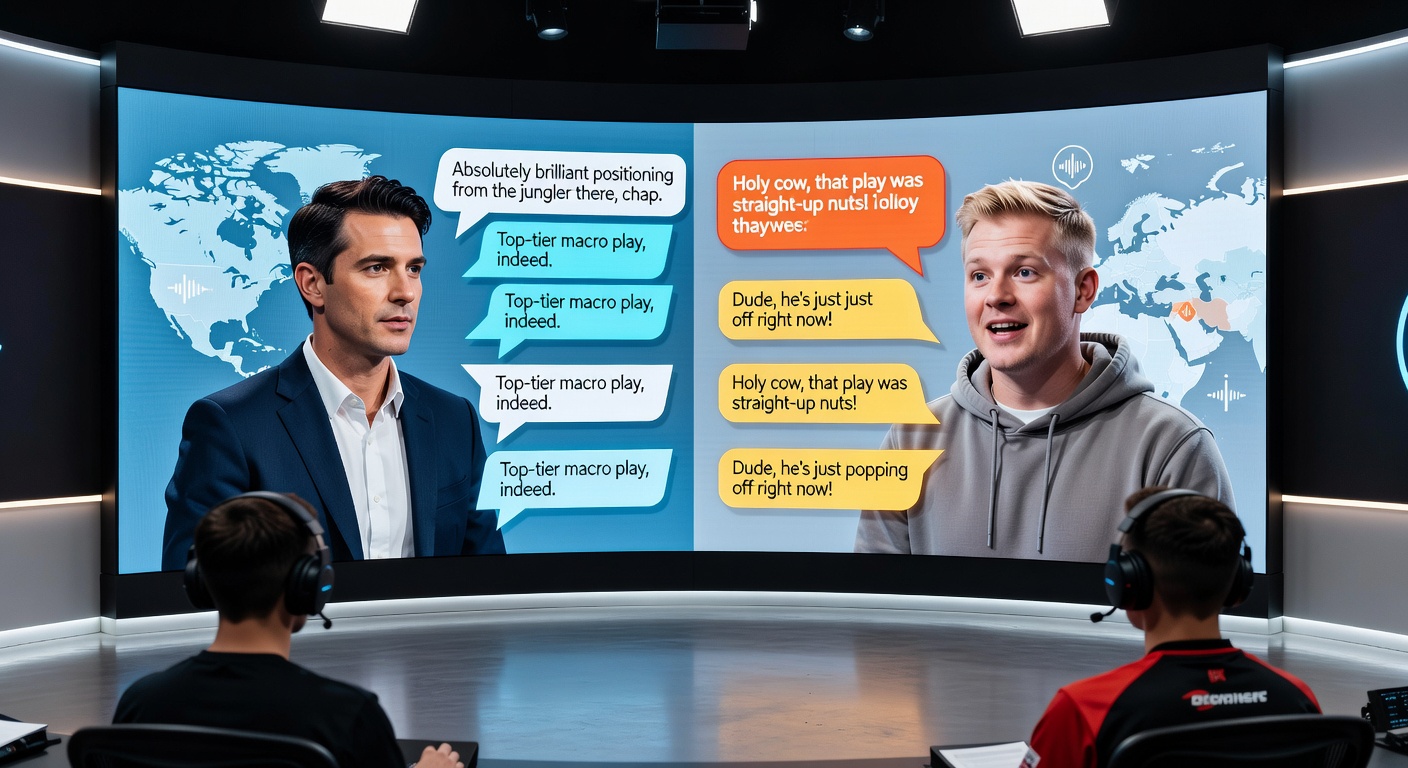
Regional dialects shape how commentators deliver play-by-play analysis and color commentary across international esports events, with linguistic patterns from specific geographic areas carrying over into global streams and broadcasts. Data from major tournaments shows that these influences affect pacing, vocabulary choices, and audience engagement techniques, while broadcasters adapt their delivery to reach viewers from multiple language backgrounds. In May 2026, coverage of the League of Legends Mid-Season Invitational highlighted several of these adaptations as teams from North America, Europe, and Asia competed under unified production teams.
North American English Patterns in Broadcast Delivery
Commentators trained in North American markets often incorporate rapid shifts between excitement peaks and analytical breakdowns, drawing from regional speech rhythms that favor direct phrasing and slang borrowed from local sports traditions. Research from the University of Waterloo indicates these styles emphasize team nicknames and immediate reactions, which translators then adjust for non-English audiences during simultaneous interpretation feeds. Observers note that this approach maintains momentum through extended matches, and the style integrates well with overlay graphics that display player statistics in real time.
East Asian Commentary Rhythms and Terminology
Broadcasters from South Korea and China frequently use dense clusters of specialized terms that reflect competitive gaming culture developed in those regions, where commentary moves at a clipped pace to match fast mechanical gameplay. Studies compiled by the Asia Esports Federation reveal that honorific structures and group reference phrases appear regularly even in English-language international feeds, creating hybrid sentences that blend local idioms with standardized esports jargon. Production teams in May 2026 events paired these commentators with English-speaking partners to clarify context for global viewers without slowing the overall flow.
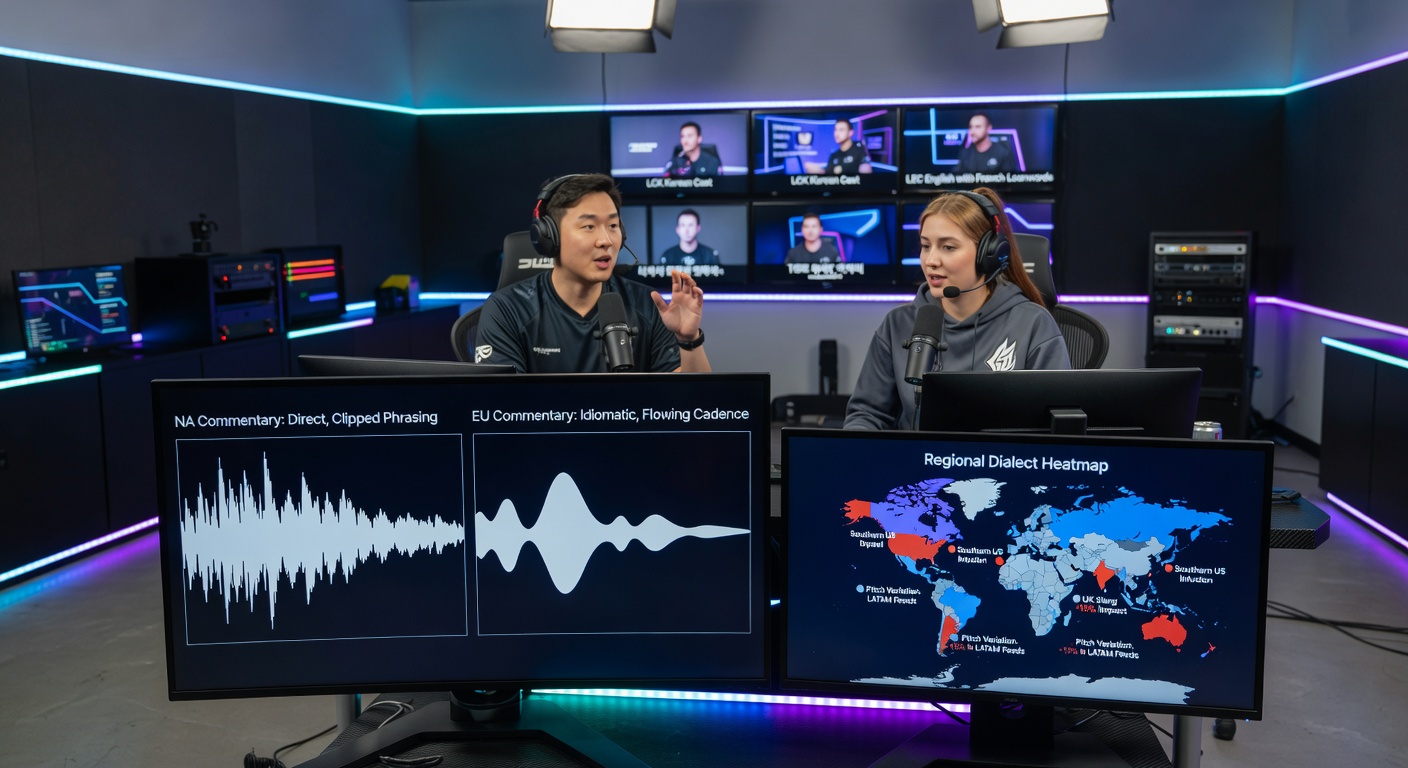
What's interesting is how these East Asian patterns influence timing cues, such as extended pauses for dramatic effect that carry cultural weight in origin markets. Teams coordinate these elements through shared scripts that mark expected reaction windows, allowing seamless switches between languages mid-match.
Latin American Spanish Variations and Energy Levels
Spanish-language commentary originating from Brazil and Mexico tends toward longer descriptive passages and collective audience address, reflecting speech patterns common in regional football broadcasts. Figures from tournament analytics show higher rates of repetition for key events, which helps maintain clarity when streams reach viewers across multiple time zones. Production guidelines now include specific markers for these styles so that directors can cue graphics or replays at matching intervals, and this coordination appears in events where Portuguese and Spanish talent share desks.
Adaptation Strategies Across Global Productions
International broadcast teams address dialect differences through pre-event workshops that map regional speech habits onto unified terminology lists, and these sessions often include linguists who track how certain phrases translate across dialects. Data collected during 2025-2026 seasons indicates that hybrid commentary pairs, one from each major region, reduce miscommunication incidents by measurable margins compared to single-dialect teams. Broadcasters also employ real-time glossaries that update during matches to handle emerging slang from player communities.
Yet the process continues to evolve as more regions enter the competitive circuit, and May 2026 schedules already list additional training modules focused on Southeast Asian English variations and their impact on timing. Organizations track these developments through shared databases that log successful phrasing examples from past events.
Conclusion
Regional dialect influences continue to inform commentary delivery in international esports, with each geographic area contributing distinct pacing, vocabulary, and engagement methods that production crews integrate into unified broadcasts. Ongoing data collection from events like those held in May 2026 demonstrates measurable effects on audience retention and cross-language comprehension, while adaptation techniques grow more refined each season. These patterns remain central to how global coverage maintains both authenticity and accessibility across diverse viewer bases.