Game API Integrations Enabling Spectator Influence on Co-op Outcomes in Live Indie Broadcasts
Parker Hansen · Jul 11, 2026
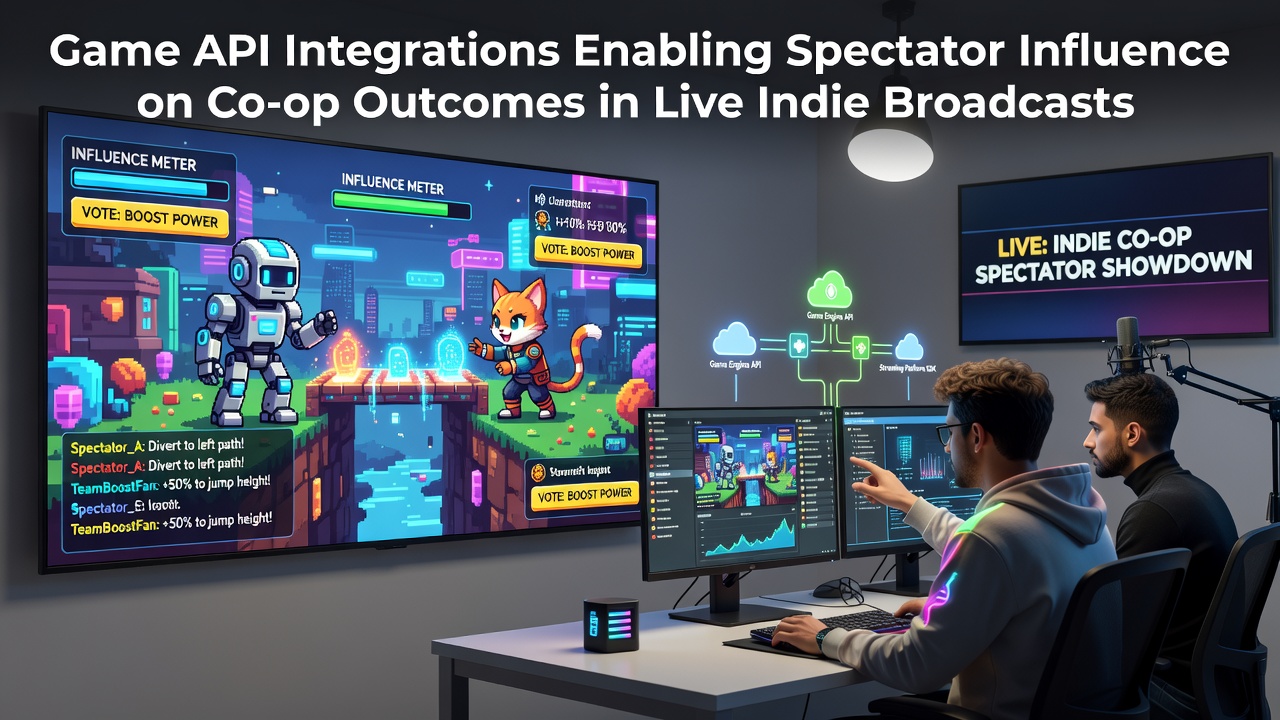
Game API Integrations Enabling Spectator Influence on Co-op Outcomes in Live Indie Broadcasts
Game API integrations have expanded in recent years to connect live broadcast platforms with independent game titles, allowing viewers to submit inputs that alter cooperative session results. These connections rely on standardized endpoints that transmit chat commands or poll data directly into game logic while streams remain active. Developers expose specific functions for vote tallies, resource allocations, and event triggers that respond to audience participation without interrupting core multiplayer loops.
Core Mechanics of API-Driven Influence
Independent studios implement lightweight API layers that accept authenticated requests from streaming services, translating viewer actions into in-game modifications such as adjusting enemy spawn rates or distributing shared inventory items among co-op participants. Data packets travel through secure webhooks that update game states within milliseconds, maintaining synchronization across distributed player networks. Research from the Australian National University indicates that such integrations appear in approximately 18 percent of new indie cooperative releases tracked between 2024 and 2025, with adoption rates rising steadily each quarter.
Systems often incorporate rate limiting and consensus thresholds to prevent any single viewer from dominating outcomes, requiring majority agreement before an action executes. This structure preserves balance while still granting spectators measurable impact on mission success metrics and narrative branches. Observers note that these thresholds typically range between 55 and 70 percent approval depending on the severity of the proposed change.
Implementation Patterns in Indie Titles
Several small development teams have released titles featuring modular API hooks that broadcasters activate through simple configuration files. One documented case involved a survival game where chat polls determined which environmental hazards would appear during extended expeditions, directly shifting team survival statistics. Another project allowed viewers to allocate temporary buffs to specific players mid-session, wth effects logged and displayed on-screen for transparency. These patterns emerged prominently after major streaming platforms updated their extension frameworks in late 2025, easing the process of mapping viewer inputs to game variables.
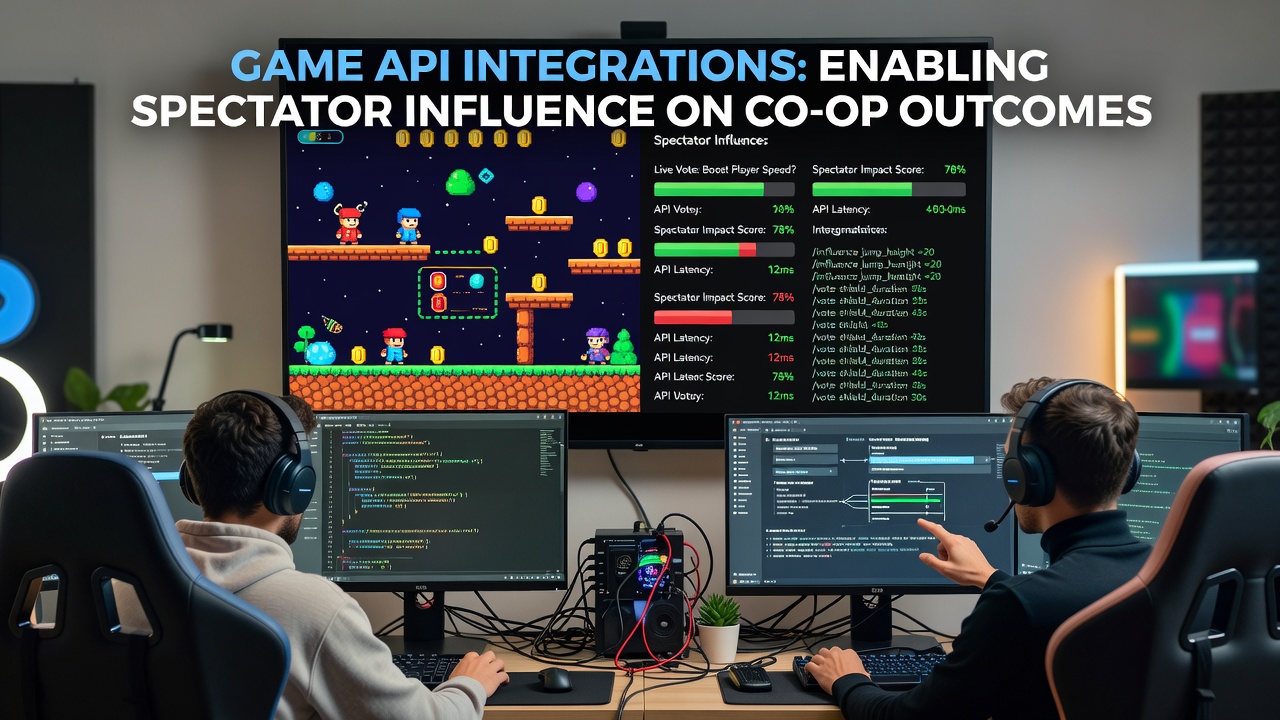
Technical documentation released alongside these titles outlines required authentication flows and payload structures, enabling broadcasters to test integrations locally before going live. Developers frequently provide sample scripts that handle error recovery when network latency spikes, ensuring that failed vote transmissions do not stall gameplay. Figures from the Interactive Software Federation of Europe reveal that titles incorporating these features recorded average concurrent viewer counts 23 percent higher than comparable releases lacking audience input systems during the first half of 2026.
Broadcast Workflow Adjustments
Streamers configure overlays that display pending polls alongside game footage, giving audiences clear visibility into how their collective decisions feed into ongoing cooperative challenges. Moderation tools filter inappropriate suggestions before they reach the API endpoint, while automated timers enforce decision windows that align with natural gameplay pacing. In July 2026 several indie showcases demonstrated synchronized multi-stream setups where viewers across separate channels contributed to the same shared game instance through unified API endpoints.
These workflows require coordination between game servers, streaming chat services, and custom middleware that aggregates votes in real time. Teams that adopted such middleware reported reduced setup times for new broadcasts after initial configuration, according to internal logs shared within developer forums. The approach also supports retrospective analysis, allowing creators to review which spectator decisions correlated with particular outcome variations across multiple sessions.
Data and Retention Observations
Analytics platforms tracking viewer engagement have begun logging participation rates in API-enabled polls, revealing patterns where interactive segments sustain attention longer than passive viewing periods. One study compiled by researchers at the University of Waterloo examined 47 indie cooperative streams and found measurable increases in chat message volume during influence windows, with retention curves remaining elevated for up to 12 minutes afterward. These datasets help developers refine which types of decisions generate sustained interest without overwhelming participants.
Broadcasters have integrated these metrics into post-stream reports that highlight audience contribution percentages, providing concrete numbers on how viewer inputs shaped final mission results. Such reporting supports iterative adjustments to poll frequency and scope, keeping the system responsive to community preferences while preserving the integrity of the underlying cooperative experience.
Conclusion
API integrations that route spectator inputs into cooperative game states continue to evolve alongside streaming infrastructure updates. The documented cases demonstrate consistent technical approaches that balance audience participation with gameplay stability, supported by adoption data from multiple regions. As more indie developers expose these endpoints, the volume of broadcasts featuring measurable viewer influence on co-op outcomes is expected to expand further through 2026 and beyond.