Exploring Adaptive Lighting Setups That Reduce Eye Strain for Viewers Watching Extended Strategy Game Sessions
Parker Hansen · Aug 8, 2026
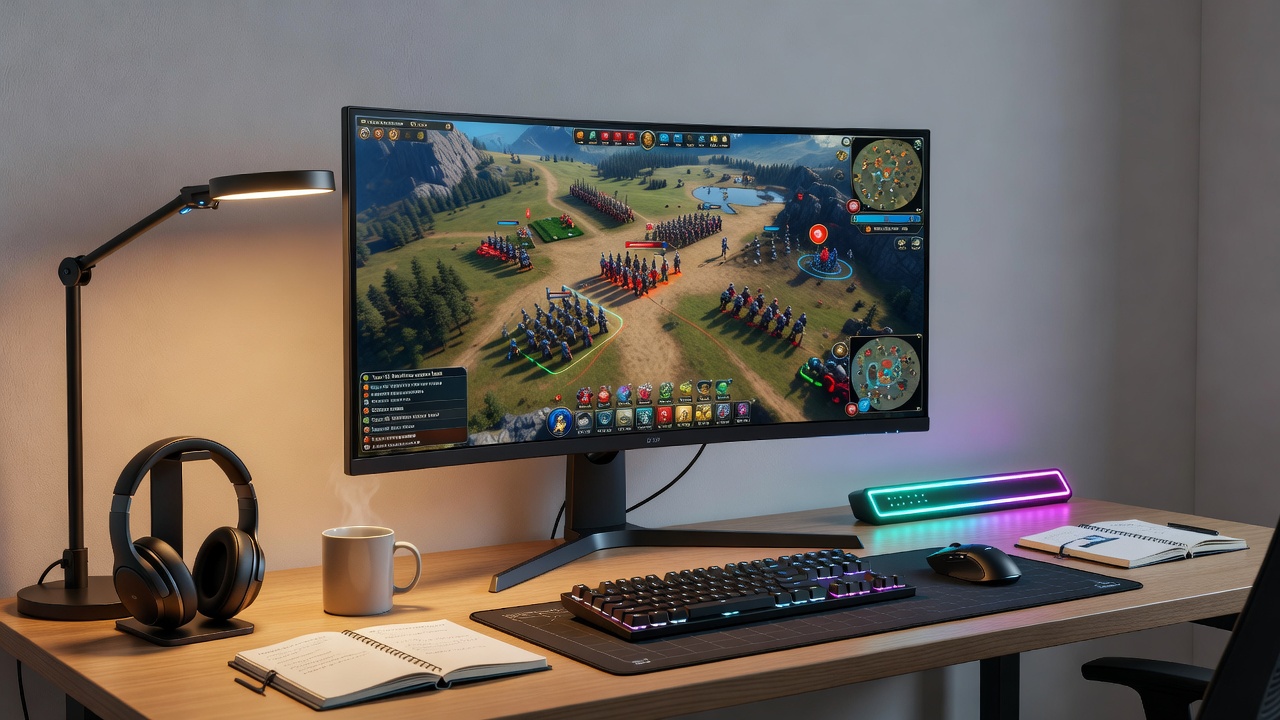
Exploring Adaptive Lighting Setups That Reduce Eye Strain for Viewers Watching Extended Strategy Game Sessions
Strategy game broadcasts often stretch across several hours and demand sustained visual focus from viewers tracking unit movements, resource bars, and minimap updates on bright displays. Adaptive lighting systems address this demand by adjusting ambient illumination in real time to match on-screen content, and researchers have measured corresponding drops in reported eye discomfort during extended viewing periods. These setups typically combine LED strips mounted behind monitors with sensors or software that sample pixel data and shift color temperature and intensity accordingly.
Core Components of Adaptive Lighting Systems
Modern installations rely on three main elements that work together: addressable LED arrays positioned at the rear bezel of the display, a control hub that receives video signals or screen-capture data, and algorithms that translate dominant hues into backlight values. Data collected by the Illuminating Engineering Society indicates that matching backlight chromaticity to average screen color reduces the contrast ratio between the display and surrounding surfaces, thereby lowering the frequency of pupil-size fluctuations. Viewers who add these systems report fewer instances of dryness and blurred vision after sessions that exceed three hours, according to aggregated optometry clinic records from multiple regions.
Application to Strategy Game Viewing Patterns
Strategy titles frequently alternate between dark tactical overlays and brightly lit battlefield maps, creating rapid luminance shifts that strain the visual system when room lighting remains static. Adaptive controllers detect these changes within milliseconds and raise or lower output so the wall behind the monitor stays within a narrow luminance band. Studies conducted at Australian research institutions found that participants watching recorded matches maintained steadier blink rates when bias lighting tracked the game feed, while fixed lighting conditions produced measurable increases in squinting and head repositioning. The same trials noted that cooler color temperatures around 5000 K proved most effective during daytime broadcasts, whereas warmer 3000 K settings aligned better with evening streams.
Implementation Steps Observed in Current Setups
Technicians begin by mounting a 5-volt LED strip along the top and sides of the monitor frame, ensuring the diodes face the wall rather than the viewer. Software running on the viewing PC samples HDMI or DisplayPort output at regular intervals, calculates average RGB values, and transmits commands via Wi-Fi or USB. Calibration routines prompt users to set maximum and minimum brightness thresholds so that sudden explosions or menu transitions do not flood the room with excessive light. In August 2026 several broadcast venues adopted updated firmware that incorporates ambient-light sensors mounted on the desk, allowing the system to factor in existing room illumination before applying corrections.
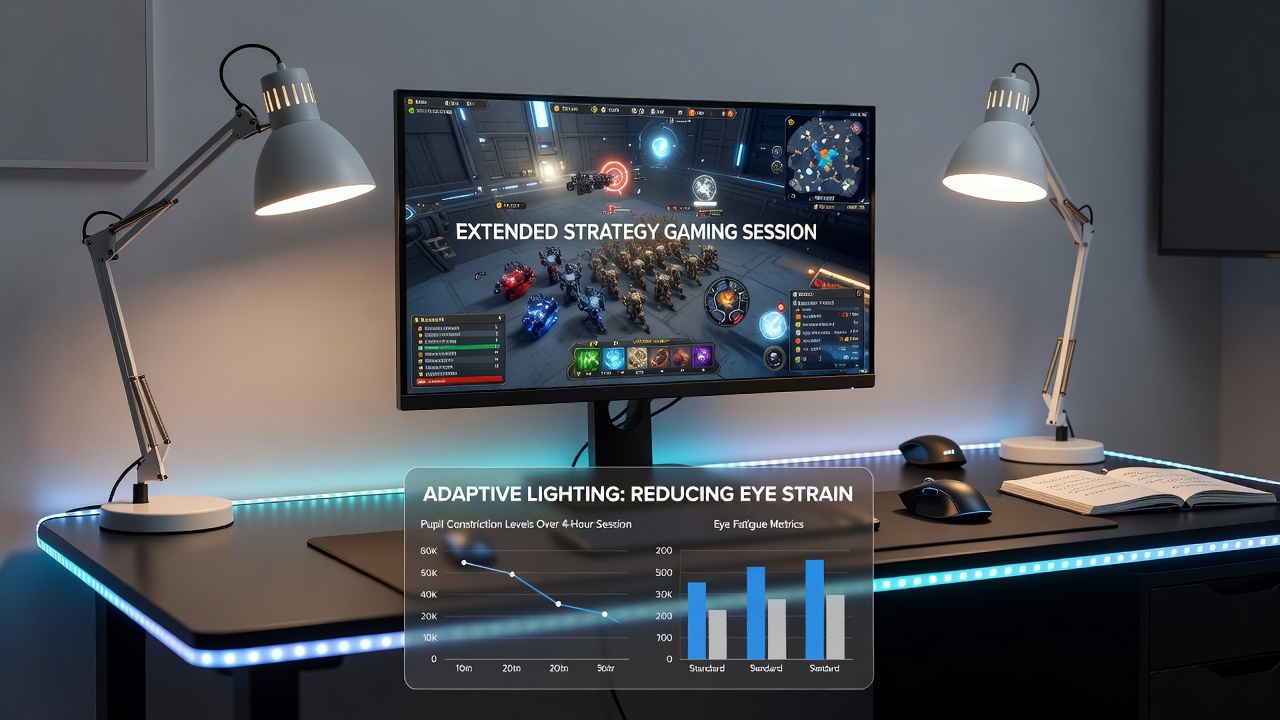
Power consumption figures compiled by Canadian energy agencies show that well-calibrated adaptive arrays draw less than 15 watts during typical use, which remains lower than many fixed bias-light solutions running at constant output. Integration with existing smart-home platforms lets viewers schedule presets that activate automatically when a stream begins, eliminating manual adjustments between matches.
Research Findings on Visual Comfort Metrics
Controlled experiments published in ergonomics journals tracked eye-movement patterns and subjective comfort scores across two-hour strategy sessions. Groups using adaptive backlighting exhibited smaller variations in fixation duration and reported lower scores on visual-fatigue questionnaires compared with control groups under standard overhead lighting. European Union-funded projects examining display environments reached similar conclusions, noting that dynamic systems reduced the need for viewers to increase screen brightness to compensate for perceived dimness in dark scenes. Observers note that these benefits appear most pronounced when the lighting response time stays under 200 milliseconds and when color accuracy remains within Delta-E values below three.
Maintenance and Calibration Practices
Regular firmware updates address drift in LED output and refine sampling algorithms to handle new game engines. Users clean the LED diffusers monthly to prevent dust accumulation that can alter perceived color temperature. Professional installers recommend annual recalibration using colorimeters to verify that the system still matches factory targets after extended operation. Data from service logs indicate that setups maintained according to these schedules continue to deliver consistent performance beyond the two-year mark.
Conclusion
Adaptive lighting configurations provide measurable support for viewers engaged in prolonged strategy game sessions by stabilizing ambient luminance and chromaticity around the display. Documented reductions in reported strain, combined with modest power requirements and straightforward integration, position these systems as practical additions to dedicated viewing environments. Continued refinement of sensor placement and response algorithms is expected to further align lighting behavior with the specific visual demands of real-time strategy and turn-based titles.