Examining Real-Time Translation Tool Integration in Global Esports Commentary Sessions
Zara Franke · Jul 2, 2026
Examining Real-Time Translation Tool Integration in Global Esports Commentary Sessions
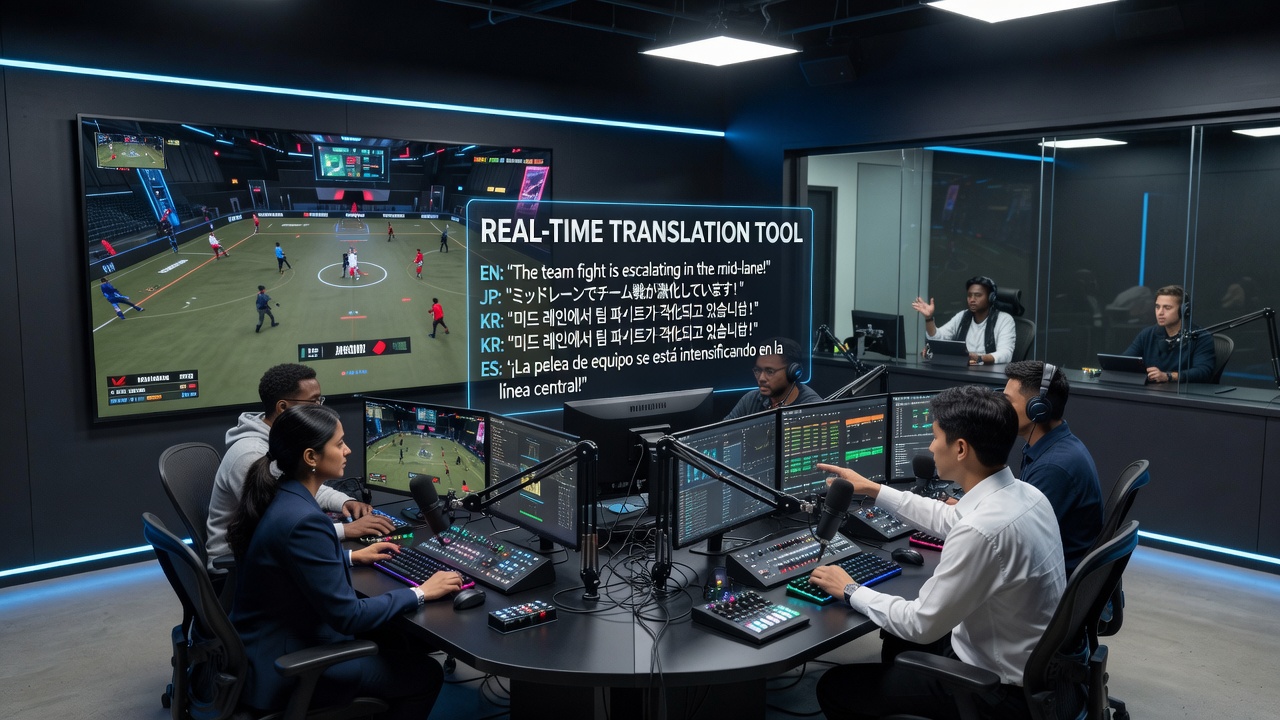
Global esports events now draw millions of viewers across dozens of languages, and real-time translation tools have become essential for commentary teams that want to reach those audiences without delays. These systems convert spoken commentary into multiple target languages almost instantly, allowing non-English speakers to follow high-stakes matches while commentators continue their natural delivery. Data from major tournaments shows that platforms integrating such tools see measurable increases in concurrent viewers from non-native regions, particularly during extended series that run late into the night for some time zones.
Technical Foundations of Current Systems
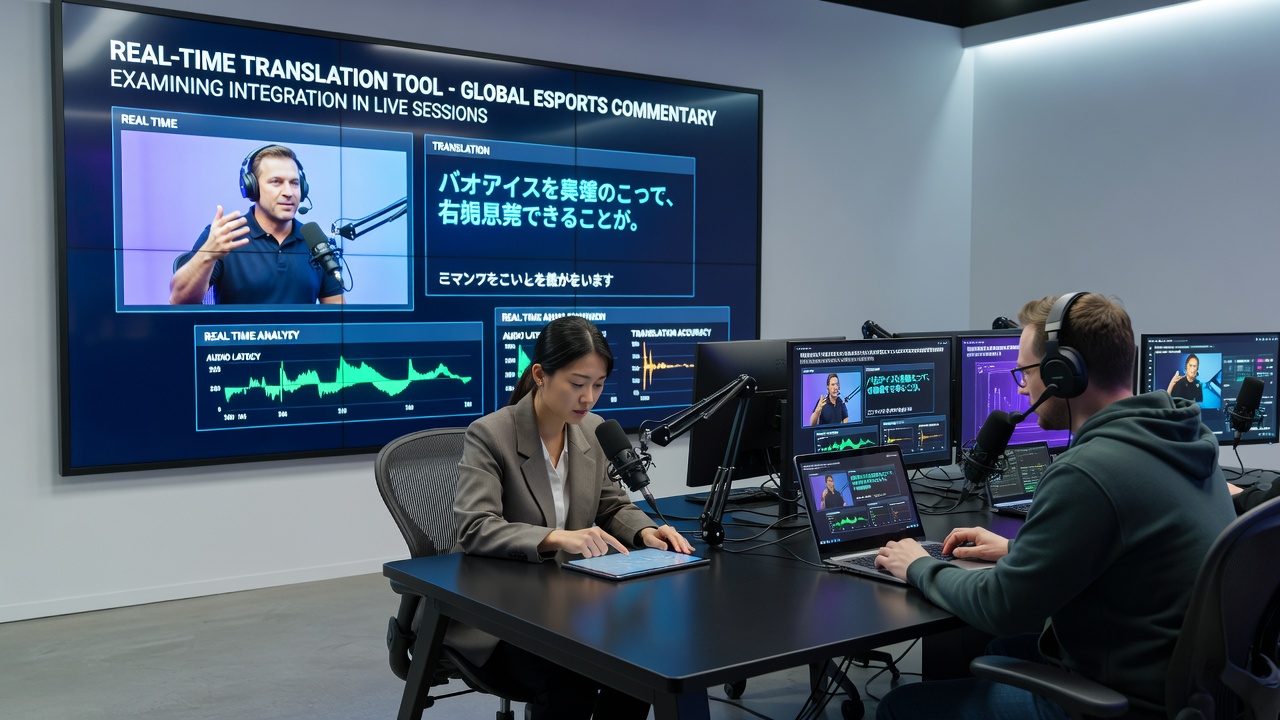
Modern real-time translation pipelines combine automatic speech recognition, neural machine translation, and text-to-speech synthesis in a single low-latency chain. Engineers at several tournament organizers have tuned these stacks to handle domain-specific vocabulary such as ability names, map callouts, and player slang that rarely appear in general training data. Latency measurements reported at the 2025 World Esports Championship averaged 1.8 seconds from English utterance to translated audio output, down from 4.2 seconds recorded in 2023 implementations. Developers achieve these gains through edge-deployed models and optimized tokenization that reduces reprocessing when commentators repeat key phrases.
Adoption Patterns Through Mid-2026
By July 2026 several regional leagues had standardized translation overlays on their primary broadcast feeds. European circuits adopted a unified API layer that supports eight core languages, while North American organizers focused on Spanish and Portuguese streams to capture growing Latin American audiences. Asian leagues, meanwhile, prioritized Korean-to-Chinese and Japanese-to-English pairs because those combinations consistently rank among the highest-demand pairs in viewer analytics. Observers note that smaller independent productions still rely on volunteer translators, yet the gap in audio quality between professional and grassroots broadcasts has narrowed as open-source toolkits mature.
Handling Esports-Specific Language Challenges
Game-specific terminology creates persistent edge cases for translation engines. Terms like “flash,” “ult,” and “macro” carry precise meanings inside competitive play that literal translations often distort. Research teams at several universities have compiled esports corpora exceeding 2 million annotated utterances to fine-tune models, and early results indicate a 17 percent reduction in mistranslation rates for ability names. Accent variation among commentators adds another layer of complexity; systems trained primarily on North American English show higher error rates when processing Australian or Singaporean speakers. Tournament organizers now run pre-event calibration sessions where commentators record sample lines so the recognition layer can adapt to individual vocal patterns.
Viewer Engagement Metrics and Regional Reach
Analytics platforms tracking subtitle and dubbed audio usage report that 34 percent of international viewers in 2025 opted for translated commentary tracks rather than original audio with subtitles. A joint study conducted by researchers at the University of Melbourne and the Canadian Esports Research Network found that viewers who switched to real-time translated audio stayed in streams 11 minutes longer on average than those using static subtitles. These figures come from aggregated data across four major titles and more than 180,000 unique sessions. Retention gains appear strongest during play-by-play segments where timing and tone matter more than visual cues alone.
Operational Workflows Inside Production Booths
Production crews integrate translation tools directly into existing audio mixing consoles so that directors can monitor both original and translated feeds simultaneously. A dedicated language coordinator typically reviews flagged mistranslations in real time and can trigger fallback subtitle cards when confidence scores drop below preset thresholds. This hybrid approach keeps the human element present while still leveraging automation for speed. In July 2026 several broadcasts tested fully automated fallback systems during lower-stakes matches, and the results showed acceptable accuracy for casual viewers though professional teams still preferred human oversight for championship finals.
Future Development Directions
Hardware acceleration on broadcast servers continues to push end-to-end latency lower, while new model architectures trained on multilingual esports datasets are expected to improve handling of rapid code-switching between English and other languages mid-sentence. Industry groups such as the Global Esports Federation have begun publishing interoperability guidelines so that smaller organizers can plug their commentary feeds into the same translation networks used by larger leagues without custom integration work. These standards also address data privacy requirements when viewer language preferences are logged for personalization.
Conclusion
Real-time translation integration has shifted from experimental add-on to core infrastructure component in global esports coverage. Continued refinement of speech models and production workflows supports broader language coverage without sacrificing the pace that defines live commentary. As adoption spreads to additional regions and titles, the measurable impact on viewer retention and geographic reach provides clear evidence that these tools will remain central to international broadcast strategies.