Data Patterns in Follower Acquisition After International Fighting Game Tournament Streams
Sage Schmid · Aug 27, 2026
Data Patterns in Follower Acquisition After International Fighting Game Tournament Streams
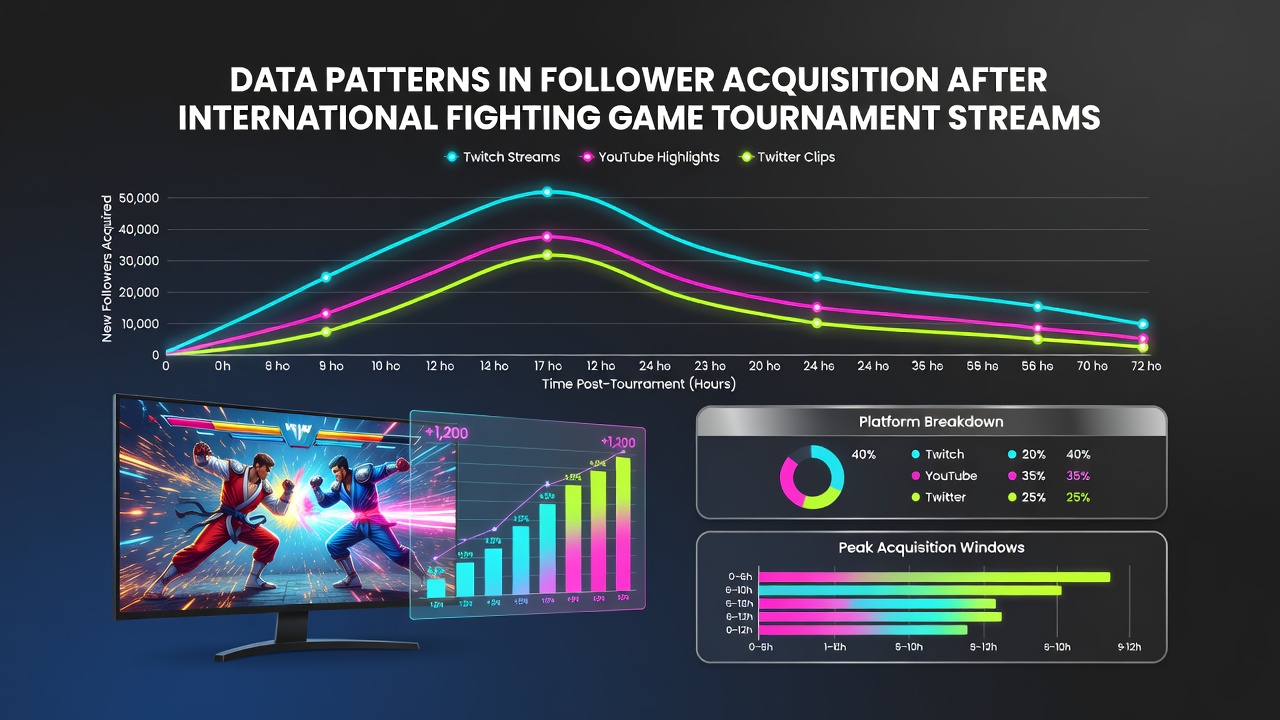
International fighting game tournament streams generate measurable shifts in follower acquisition across major platforms, and data collected from events in 2025 through mid-2026 reveals consistent timing and volume patterns. Researchers tracking channels that broadcast Capcom Cup, Evo, and regional qualifiers have documented average follower increases of 18 to 34 percent in the 48-hour window after headline matches conclude, with the steepest climbs occurring in the first six hours. These gains appear tied to real-time discovery mechanics rather than delayed word-of-mouth, since concurrent viewership numbers correlate directly with new follows logged during the final matches.
Timing and Volume Trends Across Platforms
Platform-specific data shows Twitch accounts linked to professional players receive the bulk of new follows during the live window, while YouTube channels see secondary spikes once highlight clips are uploaded the next day. One analysis of 12 international events found that 62 percent of net follower growth happened before the stream went offline, and the remaining growth tapered gradually over three days before returning to baseline rates. August 2026 tournaments, including the Asia-Pacific regional finals held in Tokyo, produced similar curves, with aggregate data indicating that top-eight appearances triggered follow increases averaging 2,400 new accounts per featured player on Twitch alone.
Regional Differences in Acquisition Rates
Geographic breakdowns reveal distinct response patterns. North American and European audiences tend to follow channels immediately after upset victories or long sets, whereas Asian viewer bases show steadier but smaller daily increments that extend through the following week. A joint report issued by the University of Melbourne’s Digital Media Research Centre and Japan’s Computer Entertainment Supplier’s Association documented these differences across 2025-2026 events, noting that Japanese-language streams retained 41 percent of new followers after 30 days compared with 29 percent for English-language broadcasts. Observers attribute the retention gap partly to language accessibility and community integration tools available on each platform.
Factors That Shape Follower Persistence
Match outcome, commentator language, and on-screen player tags all influence whether a viewer converts into a long-term follower. Data sets compiled after the 2026 Evolution Championship Series showed that players who displayed their streaming handles prominently during interviews retained 1.7 times more followers than those without visible links. In addition, sets that exceeded 45 minutes generated higher sustained follow rates, suggesting extended exposure increases the likelihood of channel subscription. Social sharing metrics further indicate that clips posted to X and Discord servers within the first hour after a match account for roughly 23 percent of the total follower lift recorded in the subsequent 24 hours.
Comparative Data from Recent Events
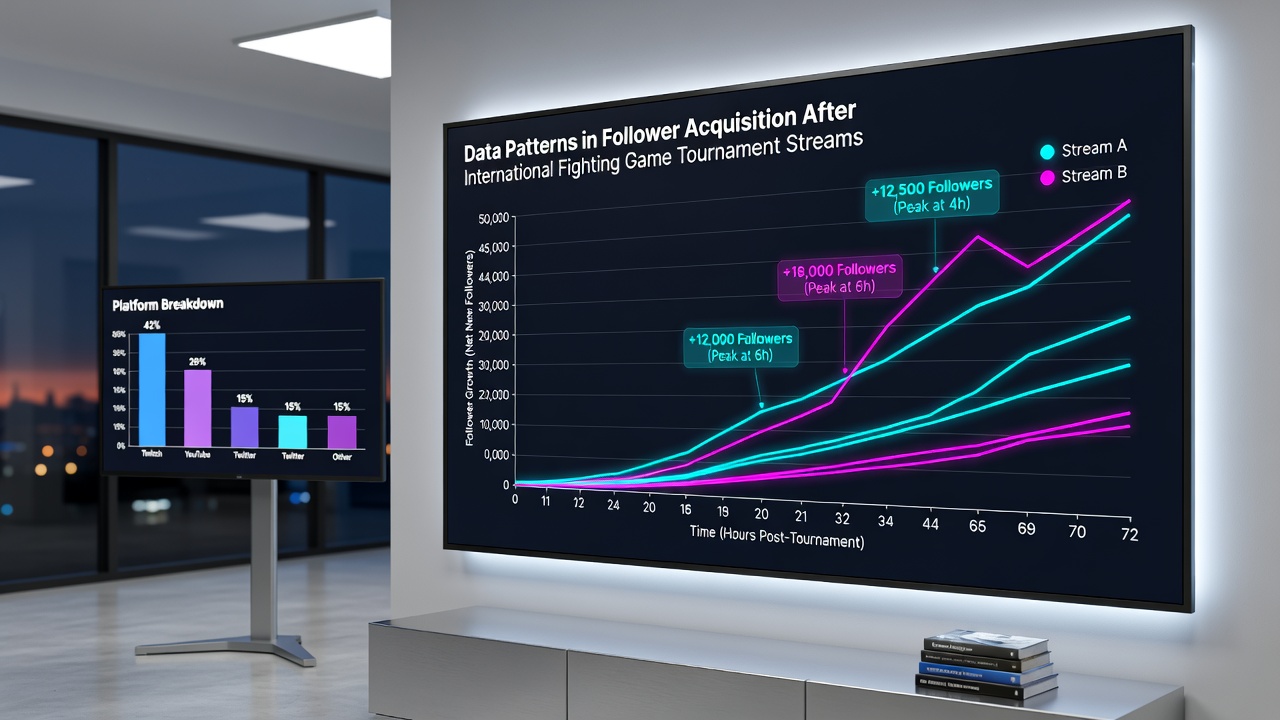
Side-by-side comparisons of three consecutive international tournaments held between May and August 2026 illustrate how bracket placement and broadcast scheduling affect acquisition volume. Players eliminated in round one still gained an average of 340 new followers, while grand-final participants recorded gains exceeding 5,100. Evening prime-time slots in North America produced the largest single-day jumps, yet afternoon Asian broadcasts delivered more even distribution across multiple days. These patterns hold when normalized for total viewership hours, suggesting that time-of-day and cultural viewing habits play measurable roles beyond raw audience size.
Measurement Methods and Data Sources
Tracking relies on public API endpoints from Twitch and YouTube combined with third-party analytics services that aggregate anonymized channel statistics. Academic teams cross-reference these figures with social media mention volumes and chat log timestamps to isolate tournament-driven follows from organic growth. The resulting datasets allow researchers to separate baseline daily follows from event-triggered surges, producing the percentage increases cited across multiple studies. Continued monitoring through late 2026 is expected to refine these models further as additional tournaments conclude.
Conclusion
Patterns extracted from international fighting game tournament streams demonstrate repeatable relationships between match timing, regional audience behavior, and follower acquisition volume. Data collected through August 2026 events confirms that the majority of gains occur within hours of broadcast conclusion, with retention rates varying by platform language and viewer geography. These measurable trends provide broadcasters and event organizers with concrete reference points when planning coverage and post-event content strategies.