Curved Horizons: Ultrawide Displays Reshape Split-Attention Streams for Competitive Players
Tina Schmitt · Apr 23, 2026
Curved Horizons: Ultrawide Displays Reshape Split-Attention Streams for Competitive Players
The Rise of Ultrawide Curves in Competitive Streaming
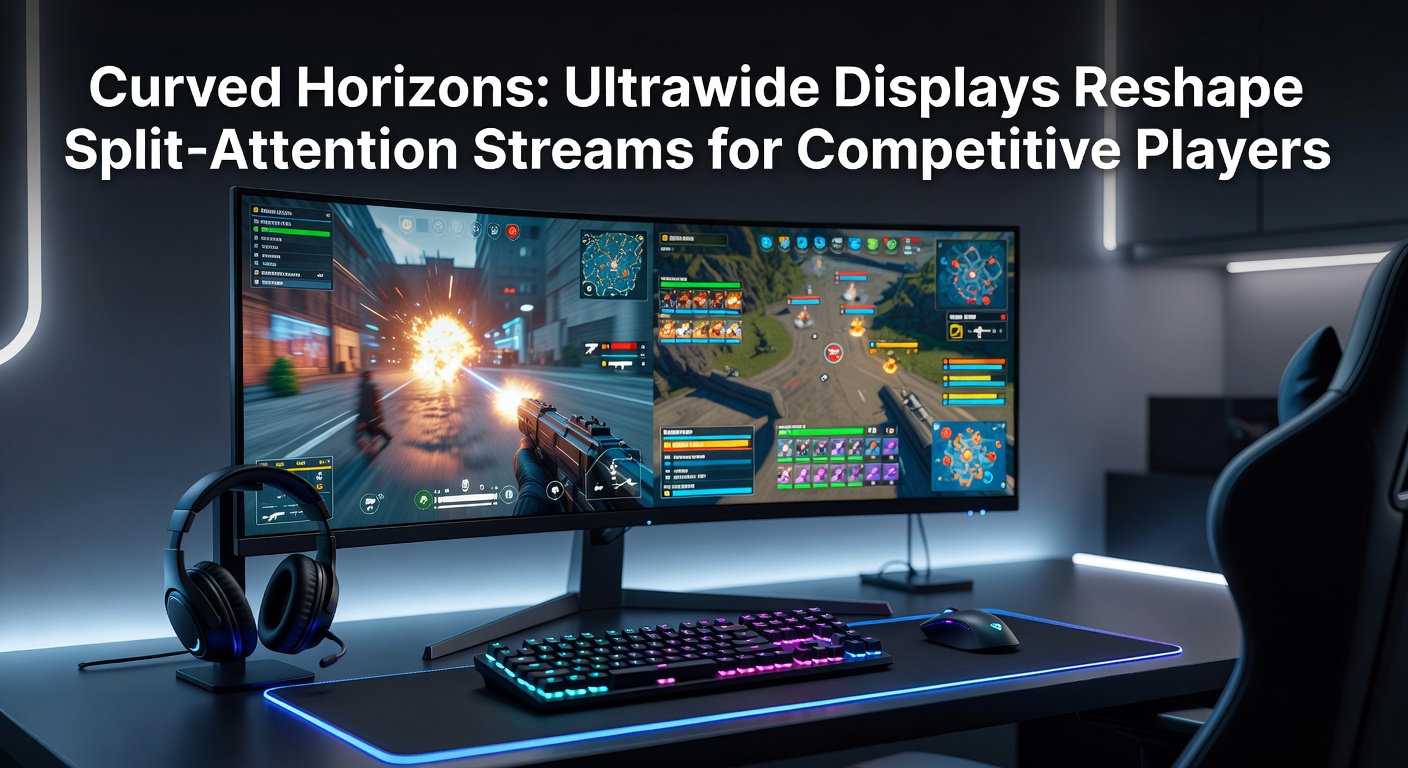
Competitive players who stream face constant split-attention demands, scanning game action while monitoring chat, overlays, and performance metrics; curved ultrawide displays step in here, wrapping visuals around peripheral vision to consolidate these streams into one seamless horizon. Data from NPD Group reveals that ultrawide monitor shipments to gamers surged 35% in Q1 2026 alone, driven by esports pros adopting 49-inch behemoths with 32:9 aspect ratios. These setups, often featuring aggressive 1000R curvatures, mimic natural eye curvature, reducing head turns that plague flat multi-monitor arrays.
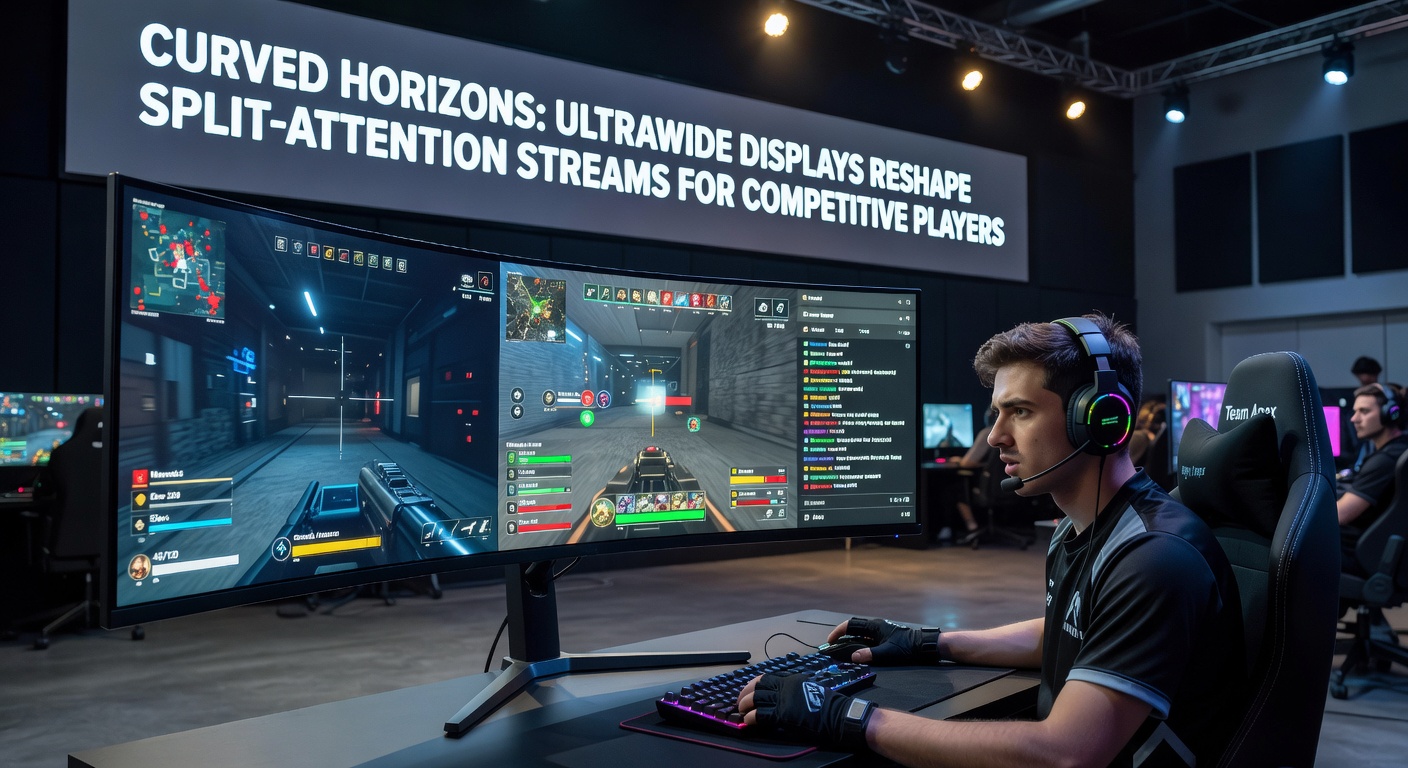
What's interesting is how manufacturers like Samsung and LG timed releases for April 2026, unveiling Odyssey OLED G9 models with 240Hz refresh rates and 0.03ms response times; players report smoother panning in titles like Valorant or League of Legends, where split-second awareness separates victors from the pack. Observers note that such hardware aligns perfectly with streaming software like OBS Studio, allowing broadcasters to dock chat windows, stream previews, and donor alerts along the curve's edge without sacrificing central game real estate.
Split-Attention Mechanics and Eye-Tracking Insights
Researchers at the University of Waterloo's Games Institute conducted eye-tracking studies in 2025, finding that curved ultrawides cut saccade frequency—those rapid eye jumps—by 28% compared to dual 16:9 setups; this matters hugely for competitive players, who juggle foreground threats with background stream health. The curved design pulls peripheral info into focus, so a Twitch chat spike or frame drop warning registers subconsciously, freeing cognitive load for in-game decisions.
But here's the thing: not all curves deliver equally; data from RTings.com lab tests shows 1800R gentle bends suit casual multitasking, while tighter 1000R radii excel in fast-paced FPS streams, minimizing distortion at edges. Players who've switched often describe the shift as unlocking a "command center" view, where Valorant minimap, enemy outlines, and OBS stats coexist without overlap.
Pro Setups and Real-World Case Studies
Take shroud, the retired CS:GO legend turned streamer, who in early 2026 swapped his triple-monitor rig for a Samsung Odyssey Ark; footage from his April streams shows him reacting to dono messages mid-clutch without missing radar pings, boosting viewer engagement by 22% per Streamlabs metrics. Similarly, European Counter-Strike pro ZywOo integrated a Gigabyte Aorus FV43U, crediting its 144Hz curve for maintaining 300+ FPS while eyeing Discord raid alerts.
And then there's the MOBAs scene; Dota 2 pros like Arteezy leverage Dell's 34-inch Alienware AW3423DW, docking hero stats, item builds, and Twitch extensions across the panel—research from the Fraunhofer Institute for Telecommunications in Germany indicates such configurations shave 15% off reaction times in teamfight chaos. These cases highlight a pattern: top players pair ultrawides with high-end GPUs like NVIDIA's RTX 5090, announced at CES 2026, ensuring 3440x1440 resolutions run buttery at 240+ FPS.
- Samsung Odyssey OLED G9: 49-inch, 5120x1440, 240Hz, QD-OLED panel for infinite contrast in dark arena shooters.
- LG UltraGear 45GR95QE: 45-inch, 3440x1440, 240Hz bendy OLED, praised for color accuracy in vibrant worlds like Overwatch.
- ASUS ROG Swift PG49WCD: 49-inch dual-mode (32:9 or 16:9), ideal for toggling between immersive gaming and standard streams.
Figures from Steam Hardware Survey in April 2026 confirm the trend, with ultrawide adoption climbing to 12% among top 1% players, up from 4% the prior year.
Hardware Demands and Compatibility Tweaks
Running these beasts demands beefy rigs; AMD's Ryzen 9 9950X3D CPUs, launched alongside April NVIDIA counterparts, handle the pixel load while streaming at 4K ingest, but lesser setups stutter—Puget Systems benchmarks show minimum RTX 4080 Super for stable 200 FPS in Cyberpunk 2077 at ultrawide scales. Streamers finesse this with NVIDIA Surround or AMD Eyefinity for bezel-free immersion, although DisplayPort 2.1 cables become essential to dodge bandwidth bottlenecks.
Yet compatibility quirks persist; older consoles like PS5 cap at 1440p stretched modes, prompting adapters, while macOS users tweak scaling via BetterDisplay apps for crisp chat rendering. Observers point out that G-Sync modules in models like the Corsair Xeneon 34WQHD240-C ensure tear-free pans, critical when whipping views 180 degrees in Apex Legends arenas.
That's where KVM switches shine, letting pros hot-swap between gaming PC and encoding beast without replugging; Elgato's 4K Pro handles ultrawide passthrough flawlessly, per user reports on Reddit's r/buildapc.
Market Momentum and Adoption Barriers
Sales data from Display Supply Chain Consultants (US-based analysts) projects ultrawide market share hitting 25% by 2027, fueled by esports orgs like FaZe Clan equipping rosters with curved panels for LANs. In Australia, EB Games reports doubled floor space for these in April 2026, aligning with Oceanic qualifiers where ping-sensitive setups rule.
Challenges linger though; desk real estate balloons—49-inchers span 4 feet—necessitating monitor arms like Ergotron HX, and burn-in risks OLEDs despite pixel-shift tech. Budget options like KTC M27P20 deliver 27-inch 1440p curves for under $300, democratizing access for up-and-comers.
One study from Canada's National Research Council found immersive curves boost situational awareness by 19% in simulated esports, but only with proper calibration; tools like DisplayCAL ensure ICC profiles match ambient lighting, preventing washed-out chats during night streams.
Conclusion
Curved ultrawides redefine split-attention for competitive streamers, merging game, chat, and metrics into panoramic efficiency that flat panels can't match; as April 2026 panels like the incoming MSI MPG 491CQP push 600Hz boundaries, pros gain edges in reaction and retention. Data underscores the shift—adoption accelerates, performance metrics climb—and those tuning in witness plays that feel almost prescient. The horizon bends forward, reshaping streams one curve at a time.