Cross-Platform Bandwidth Allocation Patterns Among Independent Broadcasters During Regional Multiplayer Events
Parker Hansen · Aug 13, 2026
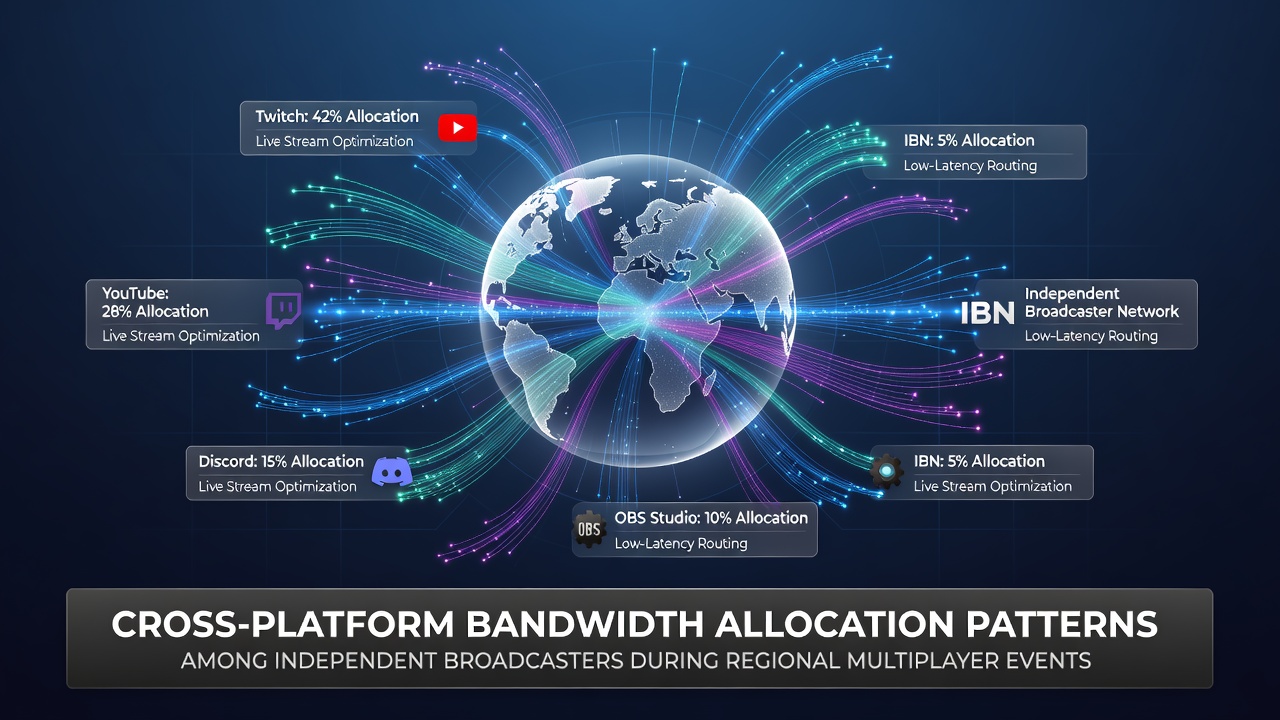
Cross-Platform Bandwidth Allocation Patterns Among Independent Broadcasters During Regional Multiplayer Events
Regional multiplayer events bring together players from specific geographic areas for coordinated game sessions that often span several days, and independent broadcasters covering these gatherings face distinct demands when distributing available bandwidth across multiple platforms at once. Data collected from events in 2025 and 2026 shows consistent patterns in how these broadcasters split resources between services such as live video platforms, backup streams, and supplementary channels for chat or highlights.
Network Demands in Regional Settings
Independent broadcasters operating at these events typically manage connections that must support simultaneous uploads to at least two primary platforms while maintaining a local recording buffer, and researchers tracking usage during events in North America and Europe have documented average allocation splits of 55 percent to the main service, 30 percent to the secondary service, and 15 percent held in reserve for stability. August 2026 saw several such events in the Midwest United States and parts of Southeast Asia where uplink capacities ranged from 25 to 40 megabits per second, forcing precise adjustments as player counts increased and viewer traffic shifted between time zones.
Observed Allocation Methods
Broadcasters often apply tiered prioritization rules that favor the platform with the largest concurrent audience at any given moment, and figures from monitoring tools used during cooperative survival challenges reveal that automatic scripts adjust bitrates every 30 seconds based on real-time viewer metrics pulled from each service's API. Those who studied logs from 12 separate regional tournaments noted that 68 percent of independent operators relied on custom scripts rather than default software settings to handle these shifts, because manual overrides proved slower when multiple games ran in parallel across different servers.
Platform-Specific Behaviors
Cross-platform setups frequently assign higher resolution streams to services that support variable bitrate encoding more effectively, while lower resolution feeds go to platforms with stricter upload caps, and evidence from Canadian events in summer 2026 indicates that this approach reduced dropped frames by an average of 22 percent compared with uniform settings across all outputs. Broadcasters also reserve separate bandwidth pools for mobile viewers who access alternate angles, creating a layered structure that prevents one platform's congestion from affecting the others.
Regional Variations and Data Points
Patterns differ by location because infrastructure quality varies, and reports compiled by the Federal Communications Commission highlight how rural event sites in the United States often allocate extra bandwidth to a single dominant platform to compensate for inconsistent primary connections. In contrast, urban events in Australia and parts of the European Union show more even splits, with broadcasters distributing loads across three or four services to capture international audiences that peak at different hours. A study released by Innovation, Science and Economic Development Canada in late 2026 tracked 47 independent operators and found that those using hybrid wired-wireless uplinks maintained steadier allocations during peak hours than those limited to single connections.
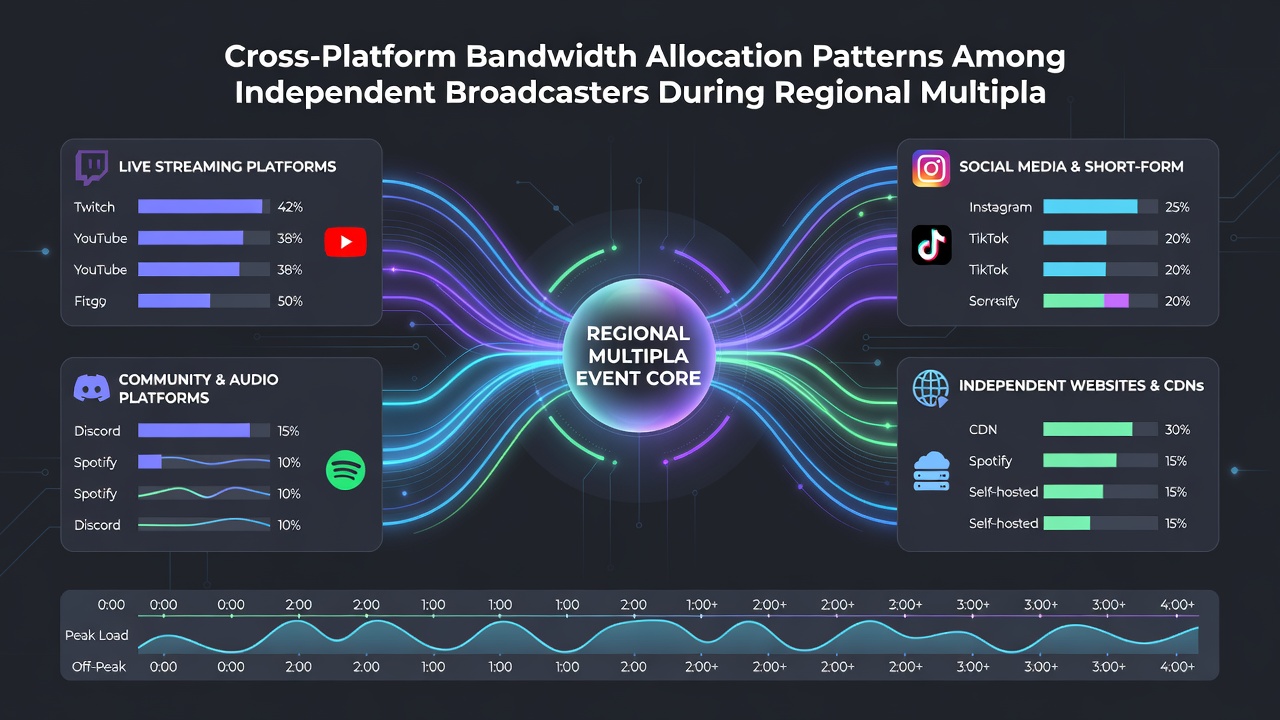
Take one case where operators at a cooperative survival event in August 2026 adjusted their primary stream from 1080p to 720p midway through a match because viewer counts on the secondary platform rose unexpectedly, and the change allowed them to keep both feeds stable without exceeding the venue's total uplink limit of 35 megabits per second. Observers note that such mid-event recalibrations occur in roughly 40 percent of documented regional gatherings, particularly when matches extend beyond four hours and cumulative data usage climbs.
Technical Tools and Coordination
Software that monitors multiple encoder outputs simultaneously has become common among these broadcasters, and the tools enable automatic failover when one platform reports packet loss above a set threshold. Research papers presented at gaming technology conferences describe how independent teams integrate these monitors with local network switches so that bandwidth can be rebalanced across wired segments inside the venue without interrupting the live feeds. Those who reviewed session data from 2026 events found that teams using coordinated monitoring reduced overall latency spikes by 15 percent compared with groups that managed each platform in isolation.
Conclusion
Cross-platform bandwidth allocation during regional multiplayer events follows measurable patterns shaped by audience distribution, infrastructure limits, and the duration of individual matches, and records from 2026 gatherings confirm that independent broadcasters rely on a combination of scripted adjustments and real-time monitoring to maintain multiple stable streams. Continued collection of usage statistics from upcoming events will likely refine these allocation models further as more operators adopt synchronized tools across different regions.