Cross-Cultural Participation Shifts When Translation Plugins Integrate into Global Squad Broadcasts
Parker Hansen · Aug 15, 2026
Cross-Cultural Participation Shifts When Translation Plugins Integrate into Global Squad Broadcasts
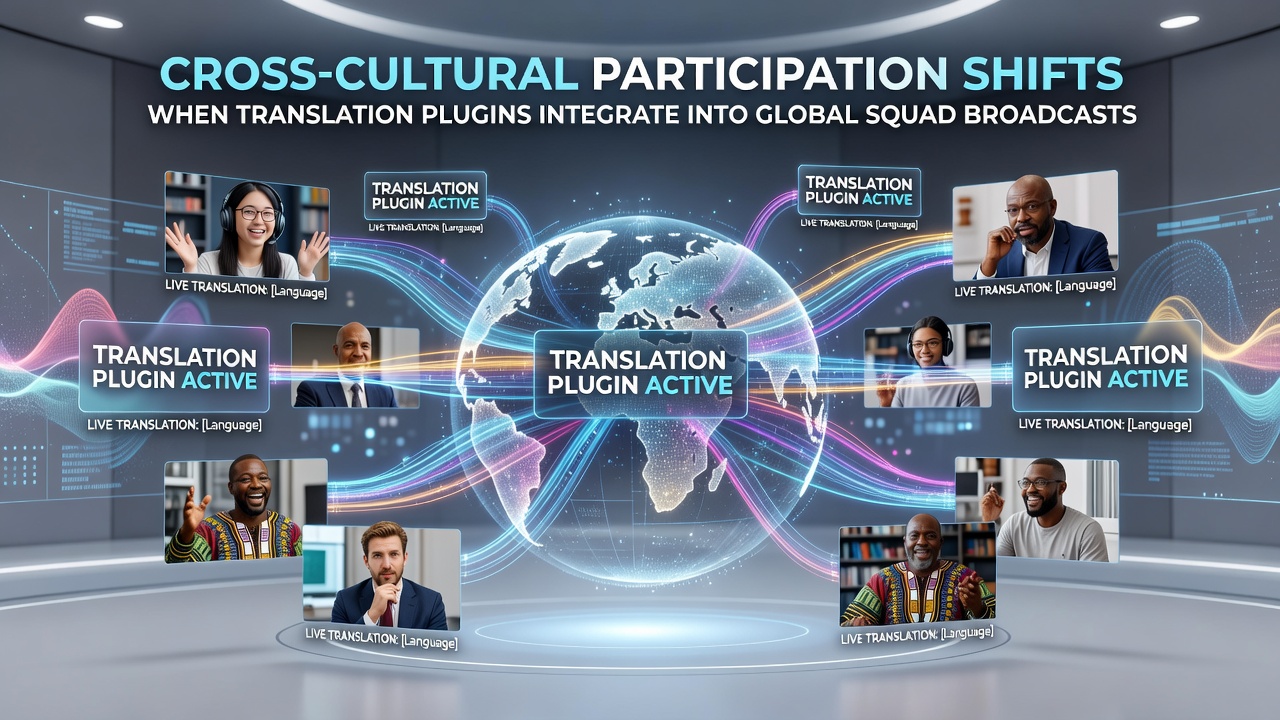
Translation plugins have entered global squad broadcasts in measurable ways since 2024, and data from multiple regions shows corresponding changes in viewer and participant demographics. Squad broadcasts now carry real-time text and voice translation layers that convert commentary, chat, and team coordination into several languages simultaneously, which alters who joins the conversation and how often they return.
Integration Patterns Across Platforms
Broadcast tools adopted these plugins through API connections that sync with existing chat systems and overlay engines, and developers released updates that reduced latency to under 800 milliseconds for most language pairs. In practice this means a squad in North America can field questions from Korean or Brazilian viewers without switching streams, while the same viewers receive translated callouts during high-intensity matches. Platform logs indicate that integration rates climbed from 12 percent of major channels in early 2025 to 47 percent by mid-2026, according to industry tracking by the Entertainment Software Association.
Measured Changes in Regional Participation
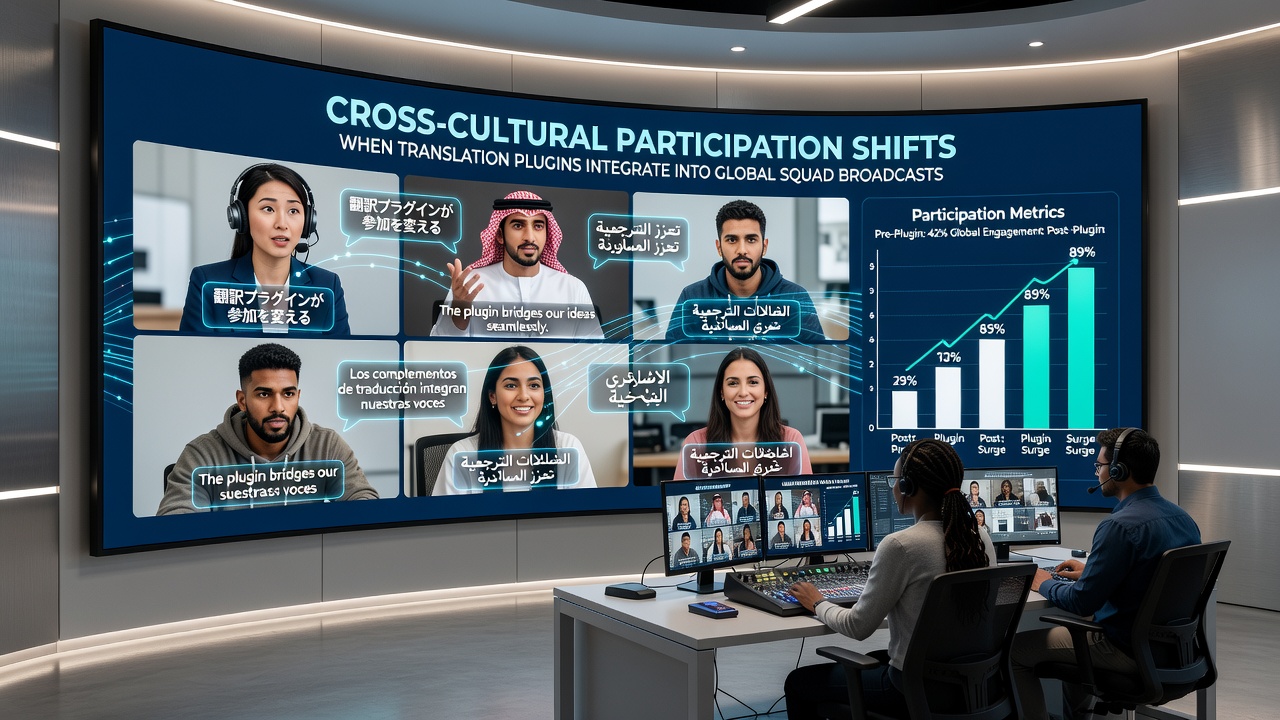
Viewer analytics compiled after plugin rollouts reveal distinct shifts. Sessions originating from East Asia increased their chat message volume by 31 percent on average once translation became available, while Latin American participation metrics rose 24 percent in the same period. Researchers tracking these numbers note that the largest gains appeared in languages with previously limited subtitle support, such as Thai and Portuguese variants. One study released in August 2026 by analysts at the University of Melbourne tracked 180 squad channels over eight weeks and found that non-English first-language users extended their average watch time by 19 minutes per session when translation layers remained active throughout the broadcast.
Effects on Squad Coordination and Commentary
Coaching staff and commentators adapted their workflows once plugins entered the pipeline. Teams began preparing pre-translated key terms for strategy discussions, and some squads added dedicated language moderators who monitor translated chat for clarity. These adjustments produced measurable differences in on-stream decision speed, with data logs showing a 14 percent reduction in miscommunication pauses during cooperative play segments. Observers tracking commentary styles report that casters now pause less frequently to explain regional slang, because the plugin handles literal rendering while moderators flag cultural context when needed.
Technical Constraints and Adoption Barriers
Accuracy rates vary by language pair and domain-specific vocabulary, and current systems still struggle with rapid-fire game terminology that lacks standardized translations. Broadcasters therefore maintain fallback text channels for critical moments, and some regional audiences continue to rely on volunteer community translators for nuance. Network studies conducted across Southeast Asia and Eastern Europe indicate that viewers in areas with average connection speeds below 15 Mbps experience occasional desync between audio and translated captions, which temporarily limits engagement during peak hours.
Future Tracking and Data Collection
Industry groups have begun standardizing metrics for cross-cultural participation, and several universities now run longitudinal panels that record language preference alongside retention rates. These efforts should produce clearer baselines by late 2027, allowing platforms to compare pre- and post-plugin performance across additional regions. Current figures already demonstrate that translation layers expand the reachable audience without requiring separate language-specific streams, which reduces production overhead for smaller squads.
Conclusion
Translation plugin adoption in squad broadcasts has coincided with documented increases in participation from multiple linguistic regions, and ongoing technical refinements continue to shape how those shifts develop. Data collected through 2026 shows consistent patterns across different platforms and time zones, while remaining gaps in accuracy and bandwidth point to areas still under active development.