Cloud Rendering Services Unlock Remote Access for High-Demand Game Broadcasts in Underserved Regions
Parker Hansen · May 16, 2026
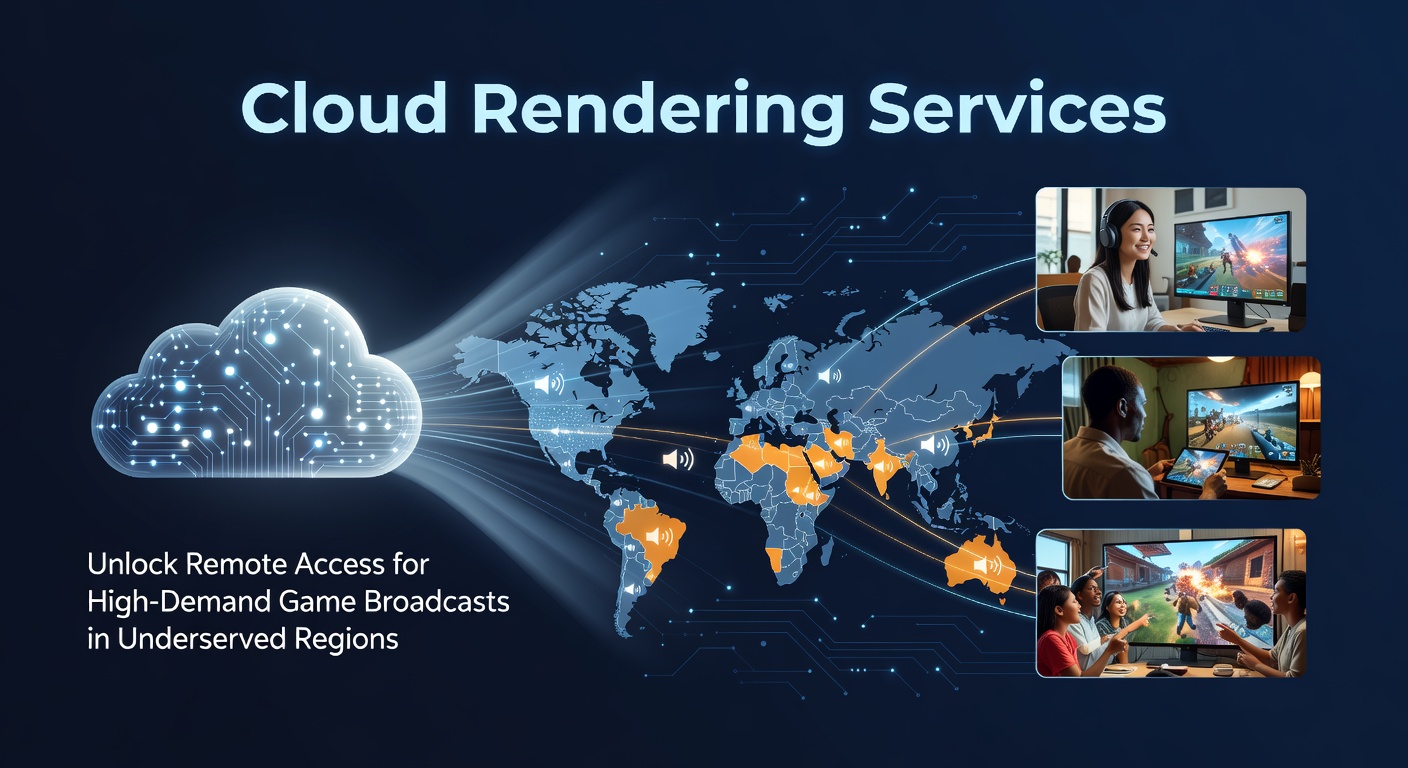
Cloud Rendering Services Unlock Remote Access for High-Demand Game Broadcasts in Underserved Regions
Cloud rendering services have expanded access to high-demand game broadcasts in regions where traditional infrastructure falls short, allowing creators to deliver 4K streams without relying on local hardware clusters. Data from industry reports shows these platforms offload rendering tasks to remote data centers equipped with GPU arrays, which then stream compressed frames back to broadcasters and viewers alike. In May 2026, adoption rates climbed sharply in parts of Southeast Asia and rural Latin America as providers rolled out edge nodes closer to underserved markets.
How Cloud Rendering Supports Broadcast Workflows
Game developers and streamers connect to virtual machines that handle real-time ray tracing and physics calculations, while the broadcaster manages only input devices and encoding settings. This separation reduces the need for high-end local PCs, which often remain unavailable in areas with limited electricity grids or import restrictions on specialized components. Research from the International Telecommunication Union indicates that latency between cloud instances and end users dropped below 35 milliseconds in optimized networks during early 2026 trials, enabling smoother play sessions that translate directly into broadcast quality.
Platforms achieve this through adaptive bitrate algorithms that adjust output based on available upload speeds at the source location. When a streamer in a remote Australian outback community initiates a session, the system routes rendering to the nearest regional cluster rather than a central facility thousands of kilometers away. Observers note that this routing cuts packet loss during peak evening hours, preserving frame consistency for audiences watching on mobile devices.
Regional Access Patterns Emerging in 2026
Underserved markets show distinct usage spikes tied to local events and time zones. In parts of sub-Saharan Africa, cloud-rendered broadcasts of major esports tournaments reached viewers who previously experienced frequent buffering on standard connections. A study published by researchers at the University of Cape Town found that average session durations increased by 22 percent when participants switched from local rendering to cloud alternatives, primarily because hardware failures became less frequent.
Service providers have introduced tiered pricing that scales with regional demand, offering lower entry points for creators in lower-bandwidth zones. This model aligns with infrastructure grants issued by the Canadian Radio-television and Telecommunications Commission, which support connectivity projects that complement cloud delivery rather than compete with it. Broadcasters report that the combination allows consistent scheduling even when terrestrial networks experience outages lasting several hours.
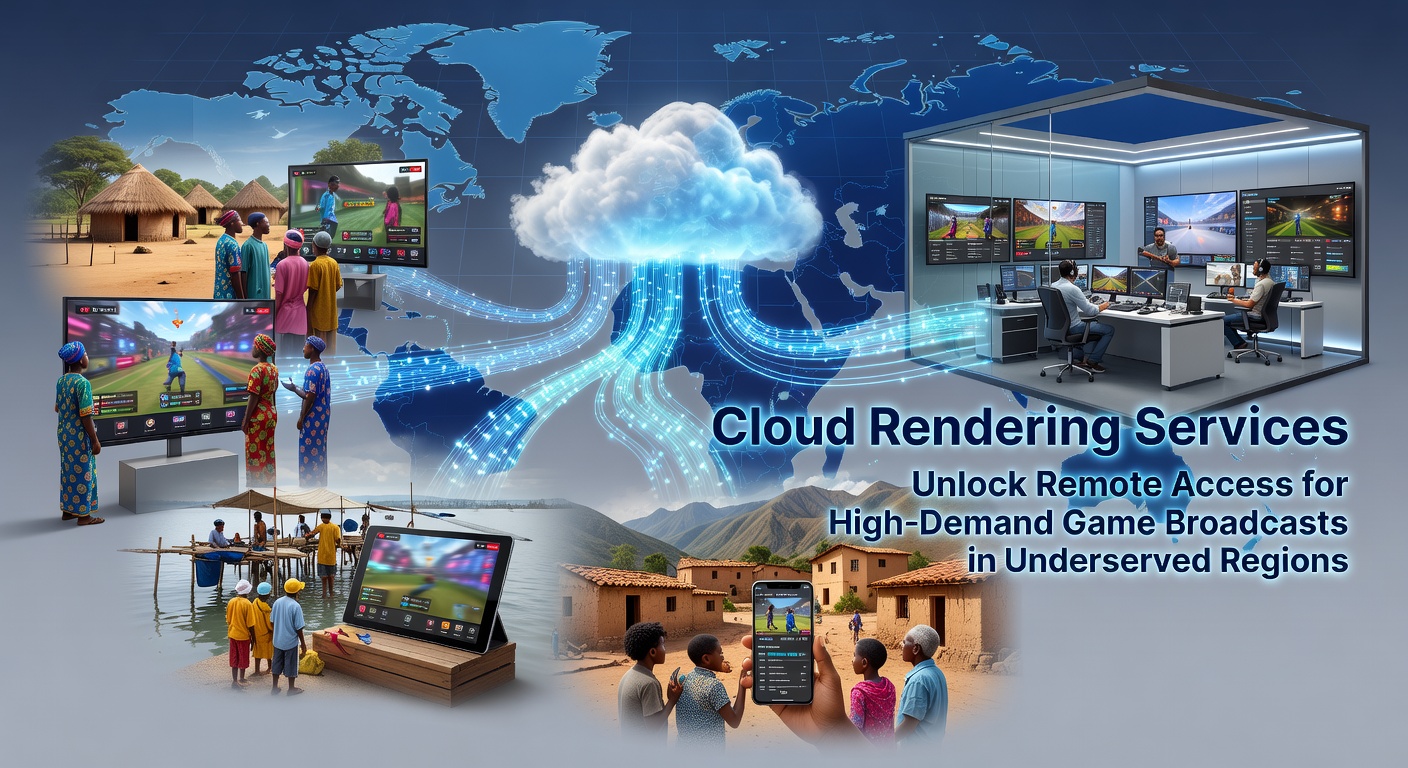
Technical Integration with Existing Tools
Most cloud platforms integrate directly with common streaming software through plugin APIs, so users maintain familiar workflows for overlays, chat management, and multi-camera switching. The rendering farm handles the game engine output while the local machine composites additional graphics layers before final encoding. Engineers at major providers have documented cases where this hybrid approach maintained 60 frames per second delivery across connections averaging 8 Mbps upload, a threshold common in many developing regions.
Security protocols include end-to-end encryption of rendered frames and session tokens that expire after each broadcast. These measures address concerns raised in policy papers from the Australian Department of Infrastructure, Transport, Regional Development, Communications and the Arts, which emphasize data protection for distributed creative work. Broadcasters in pilot programs noted fewer interruptions from external interference once encryption layers were enabled by default.
Bandwidth Efficiency and Scalability
Cloud rendering compresses visual data before transmission, which proves especially valuable in regions where spectrum allocation remains limited. Rather than pushing full-resolution assets across the network, the service sends only the final viewport, reducing overall data volume by up to 70 percent according to internal benchmarks shared by several providers. This efficiency supports simultaneous broadcasts from multiple remote locations without saturating shared backhaul links.
Scalability comes from containerized workloads that spin up additional GPU instances during high-viewer events. During a May 2026 charity marathon streamed from rural Indonesia, the platform automatically allocated extra nodes when concurrent viewers exceeded 150,000, maintaining stable quality across the entire duration. Those managing the event relied on standard consumer laptops for control inputs while the cloud handled the heavy visual processing.
Future Infrastructure Considerations
Continued expansion depends on partnerships between cloud providers and local telecommunications operators to place more edge facilities near population centers that currently lack them. Government-backed connectivity programs in the European Union have begun including clauses that prioritize gaming and media traffic, creating precedents other regions may follow. The result is a growing network where high-demand broadcasts become feasible even as underlying physical infrastructure catches up at its own pace.
Conclusion
Cloud rendering services continue to bridge gaps for game broadcasts in underserved regions by shifting computational demands away from local constraints. As more edge locations come online and integration with existing tools improves, the model supports broader participation without requiring immediate upgrades to every household connection. Data collected through mid-2026 shows measurable gains in reach and reliability that align with ongoing infrastructure investments worldwide.