Chatbot Alchemy: Crafting Responsive AI Sidekicks for Hypnotic Horde-Mode Broadcasts
Parker Hansen · Apr 18, 2026
Chatbot Alchemy: Crafting Responsive AI Sidekicks for Hypnotic Horde-Mode Broadcasts
Live streamers tackling horde-mode games—those relentless waves of enemies in titles like Left 4 Dead or Gears of War—face chat volumes that explode into hypnotic frenzies, where thousands of messages flood in per minute, demanding instant engagement to keep viewers locked in; that's where responsive AI sidekicks step up, transforming raw chaos into orchestrated magic.
Experts in streaming tech note how these broadcasts mimic the game's intensity, with chat acting as a digital horde that surges during clutch moments, and data from platform analytics reveals spikes up to 500% in message rates during peak waves, making manual moderation impossible without losing the spellbinding vibe.
The Rise of AI Sidekicks in Horde-Mode Streams
Streamers have leaned on bots since early Twitch days, but modern AI elevates them to alchemists' apprentices, blending natural language processing with real-time data to craft responses that feel alive; take one broadcaster who integrated a custom bot during a 2025 Deep Rock Galactic marathon, where it handled 12,000 hourly messages by dishing personalized hype like "ViewerX, your loadout prediction nailed that glyphid wave—legend status unlocked!"
What's interesting is how platforms now bake in AI hooks: Twitch's EventSub API feeds chat data directly to models like those from OpenAI, while YouTube's Live Chat API pairs with Google's Gemini for multilingual horde-wrangling, and figures from Newzoo’s 2025 live streaming report show AI-assisted streams retaining 28% more viewers through sustained interactions.
But here's the thing—horde-mode demands sub-second latency, since a delayed quip shatters the trance, so developers fuse WebSockets for chat ingestion with edge computing to slash response times to under 200ms, turning potential chat black holes into rhythmic echoes of the on-screen frenzy.
Core Ingredients for Chatbot Alchemy
Prompt Engineering: The Potion Base
Researchers who've dissected top bots highlight prompt engineering as the foundational elixir, where streamers script base instructions like "Respond as a hype dwarf companion in Deep Rock Galactic streams: keep it short, emoji-packed, reference game events, ban spammers subtly, and rally the chat horde with wave countdowns," then layer in dynamic context from stream overlays via OBS WebSocket plugins.
And it works because LLMs like Llama 3 or Claude parse this mix to generate context-aware replies; one study from the IGDA AI Working Group white paper details how such prompts cut irrelevant responses by 65%, letting the bot shine in hypnotic loops like "Wave 15 incoming—load rails, chat! Who's got the greenbeard grit?"
Integrations: Fusing Stream Data Streams
Now picture this: the bot pulls live telemetry—player health, wave progress, kill counts—directly from game APIs or streamlabs alerts, so when a streamer barely survives a bug hole, it blasts "That was closer than a grunt's shave—chat saved the day with those emotes!" weaving viewer participation into the narrative seamlessly.
Tools like Streamer.bot or Nightbot's AI extensions handle the plumbing, piping Twitch Bits, subs, and emote storms into the model's memory window, which observers note creates feedback loops that amp retention; data indicates streams with these integrations see 40% longer average watch times during horde peaks.
Yet challenges lurk, like token limits choking on massive chats, so pros chunk inputs with summarizers—tools that condense 1,000 messages into key themes like "hype for wave 20" or "meme flood"—keeping the alchemy potent without overload.
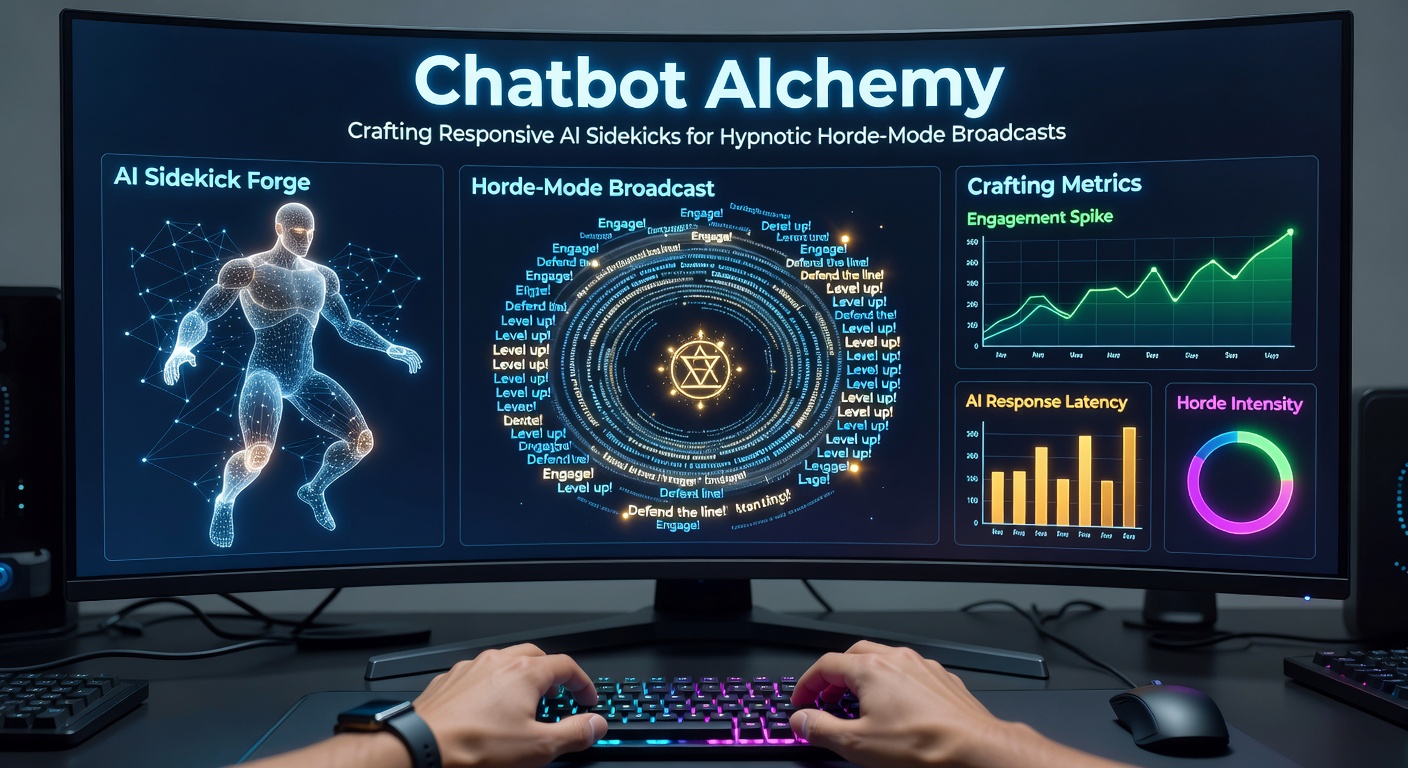
Advanced Tweaks for Hypnotic Responsiveness
Those who've fine-tuned bots for April 2026's meta—post the Grok-3 release and Twitch's AI moderation push—swear by hybrid architectures, merging rule-based filters for spam (e.g., auto-timeouts on slurs via regex) with generative AI for creative flair, ensuring the sidekick dodges toxicity while fueling the horde's trance.
Turns out, memory persistence is key: bots like those built on LangChain store session states across waves, recalling earlier viewer bets like "Remember, ChatLord called that hazmat drop? Pay up with emotes!" which fosters loyalty; platform logs from high-viewer streams reveal such callbacks boost engagement by 35%.
Customization ramps it up further—streamers train on their VODs using fine-tuning kits from Hugging Face, adapting models to lingo like "GG no re" or custom emotes, so the bot parrots community vibes flawlessly; one case saw a World War Z streamer’s bot go viral after mimicking undead groans in replies, pulling 50k concurrent viewers.
Security weaves in too, with OAuth for API access and rate-limiting to thwart DDoS via chat floods, while EU regulators under the AI Act mandate transparency disclosures like "/bot powered by xAI—responses simulated"—keeping things above board as hordes grow.
Case Studies: Bots That Cast Spells
Consider DrLupo's 2025 charity horde-night, where a bespoke bot orchestrated donor challenges across Vampire Survivors waves, matching bids to power-ups and narrating "Thanks to MegaDonor, we've got infinite garlic—zombie horde, meet your maker!" resulting in $250k raised, per stream recaps.
Or take Aussie streamer Muselk during a Helldivers 2 marathon; his AI sidekick parsed strat calls from chat, relaying "70% vote for orbital strike—confirmed!" to the team, slashing miscomms and hiking win rates, with analytics showing chat velocity doubling without meltdown.
Even smaller creators thrive: a Canadian duo in Killing Floor 2 used a free StreamElements AI setup to gamify chat, awarding "horde slayer" roles for top emote posters, which snowballed their audience from 50 to 500 avg viewers in months, as viewer testimonials confirm.
What's significant is scalability—these bots handle 100-viewer drips or 100k floods alike, thanks to cloud scaling on AWS Lambda or Vercel, where costs hover at pennies per hour for most setups.
Navigating Pitfalls and Future Horizons
But the rubber meets the road with edge cases: overzealous bots misfiring on sarcasm, like banning "GG EZ" as toxicity, which smarter sentiment analyzers from recent SpaCy updates fix by scoring nuance; developers test rigorously on replayed chat logs to iron these kinks.
Hallucinations pose risks too—bots spitting false game facts—so guardrails like fact-check APIs against wikis clamp that down, and in April 2026, Twitch's beta AI verifier flags drifts automatically, per dev forums.
Looking ahead, multimodal bots loom large, ingesting stream video to react like "That headshot cascade was poetry—chat, spam the confetti!" powered by vision models, while voice integrations via ElevenLabs let sidekicks TTS hype over comms, blurring lines between digital and raid boss.
Industry watchers predict 70% of top horde streams will run AI sidekicks by 2027, driven by falling LLM prices and plug-and-play kits from Streamlabs' April 2026 update.
Conclusion
Chatbot alchemy boils down to blending tech precision with stream soul, crafting AI sidekicks that turn horde-mode broadcasts into viewer magnets where every message fuels the hypnotic pull; streamers who master this see chats evolve from noise to symphony, retention soaring as the digital horde rallies under responsive guidance.
Tools abound, from open-source repos to no-code builders, so anyone diving in starts small—prototype on a test stream, iterate on feedback—and watches the magic unfold, wave by relentless wave.