Chat Command Choreography: Scripting Automated Responses to Maintain Flow in High-Volume Interactive Sessions
Zara Franke · May 23, 2026
Chat Command Choreography: Scripting Automated Responses to Maintain Flow in High-Volume Interactive Sessions
High-volume interactive sessions rely on structured scripting of automated responses to keep viewer engagement steady without overwhelming moderators or hosts, and data from industry reports shows that platforms handling thousands of simultaneous messages benefit when commands trigger predefined replies in sequence. Observers note that this approach, often called chat command choreography, coordinates triggers so common queries receive instant handling while complex ones route to human oversight, and the result maintains conversational momentum across extended broadcasts.
Core Mechanics Behind Automated Command Systems
Scripting begins with mapping frequent viewer inputs to specific outputs, such as greeting commands that reply with welcome messages or poll triggers that collect votes automatically, while integration with chat APIs ensures responses align with session timing. Researchers at various academic institutions have documented how these mappings reduce latency in response delivery, and one study from a Canadian university highlighted that well-choreographed scripts cut moderator workload by up to 40 percent during peak hours. Platforms like streaming software suites allow creators to define conditional logic, so a single command might spawn follow-up prompts based on audience size or time elapsed since the last interaction.
Those who implement these systems often start by logging chat data over several sessions to identify patterns, then build scripts that handle routine tasks such as command lists, help requests, or giveaway entries, and this preparation lets hosts focus on core content delivery. What's interesting is how layered scripts can chain responses: an initial viewer command activates a secondary automated check that confirms eligibility before issuing a tailored reply, and such chaining prevents repetitive loops that disrupt flow.
Scaling for Peak Audience Volumes
When sessions attract large crowds, as seen in major esports events scheduled through May 2026, the volume of incoming messages can spike dramatically, and choreography scripts become essential for filtering noise. According to figures from the Interactive Software Federation of Europe, interactive broadcasts in competitive gaming saw average concurrent chat activity rise 25 percent year over year, which underscores the need for automated handling of repetitive entries. Scripts can prioritize commands by category, routing entertainment-related requests through quick replies while flagging technical issues for separate queues, and this tiered structure keeps the main conversation channel active.
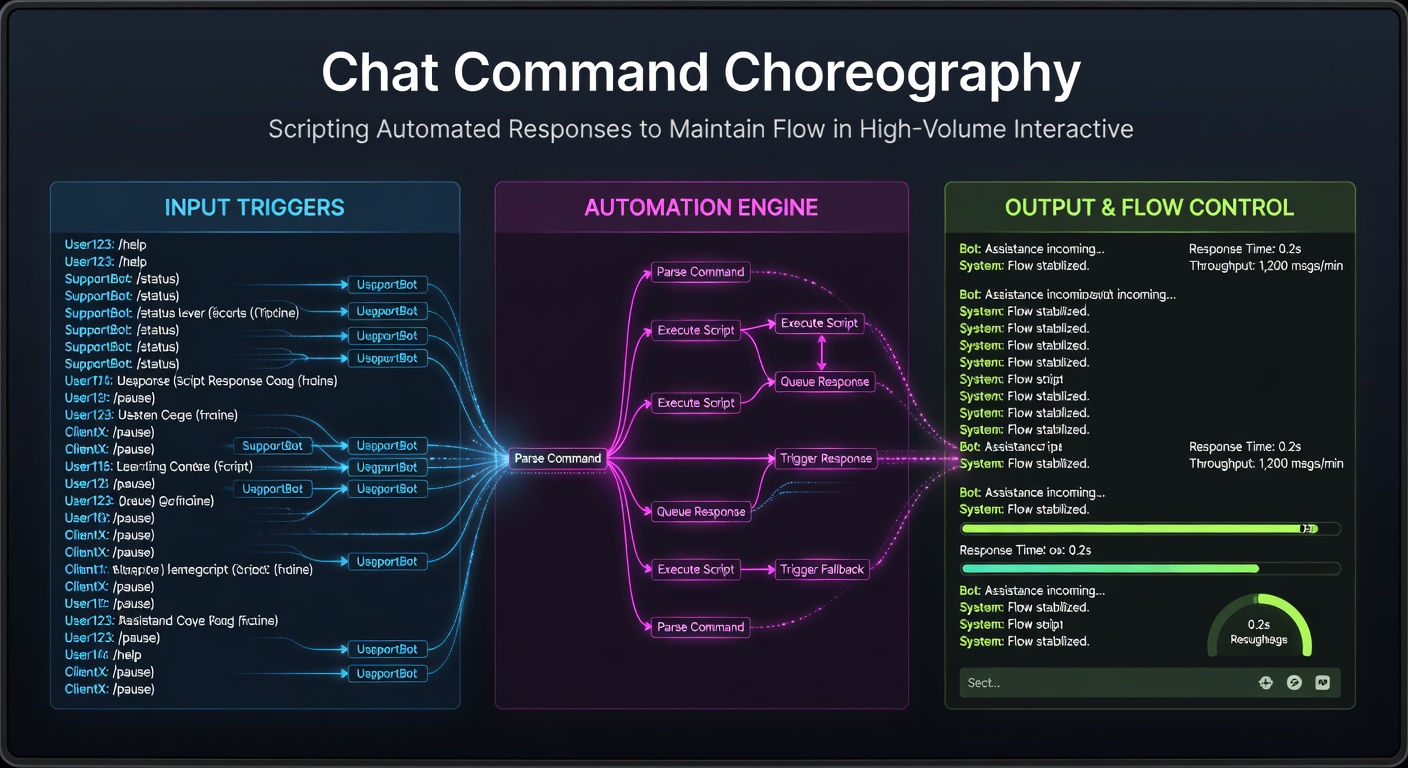
People who've examined these setups report that timing parameters play a key role, because responses must feel natural rather than mechanical, so delays of a few seconds between chained replies help mimic human pacing. Tools from established development frameworks support rate limiting to avoid flooding the chat window, and integration with external databases allows personalized responses when viewer accounts match stored profiles. Yet the effectiveness depends on regular testing, since outdated scripts can produce mismatched replies that break immersion during live segments.
Implementation Strategies Across Platforms
Developers typically embed command choreography into existing broadcast tools through plugins or custom code, and this flexibility lets teams adapt scripts for different audience demographics without rebuilding entire systems. One approach involves defining command hierarchies where basic queries trigger surface-level replies while deeper commands unlock additional automated layers, and such organization supports smooth transitions between segments like Q&A blocks and gameplay highlights. Data indicates that sessions using these methods sustain higher retention rates because viewers receive consistent feedback without noticeable pauses.
Industry groups have shared case examples where scripted systems handled giveaways and polls across multiple languages by pulling from translation modules, and this capability proves useful for international audiences tuning into events around May 2026. Maintenance routines include periodic audits to update command libraries based on emerging viewer habits, which prevents script obsolescence and keeps the choreography aligned with current trends. Those managing large-scale operations often combine these scripts with analytics dashboards that track command usage frequency, providing clear metrics for refining future iterations.
Conclusion
Chat command choreography through scripted automation delivers measurable support for maintaining flow when interactive volumes climb, and its application across gaming and entertainment broadcasts continues to evolve with platform capabilities. Observers continue to track how refined scripting techniques integrate with emerging tools, while data from regulatory and research bodies shows ongoing adoption in high-demand environments. This structured method ensures that sessions remain responsive and coherent even as audience participation expands.