Balancing Resource Allocation Between Local Hardware Processing and Network Bandwidth in Distributed Player Broadcasting Networks
Tina Schmitt · Aug 4, 2026
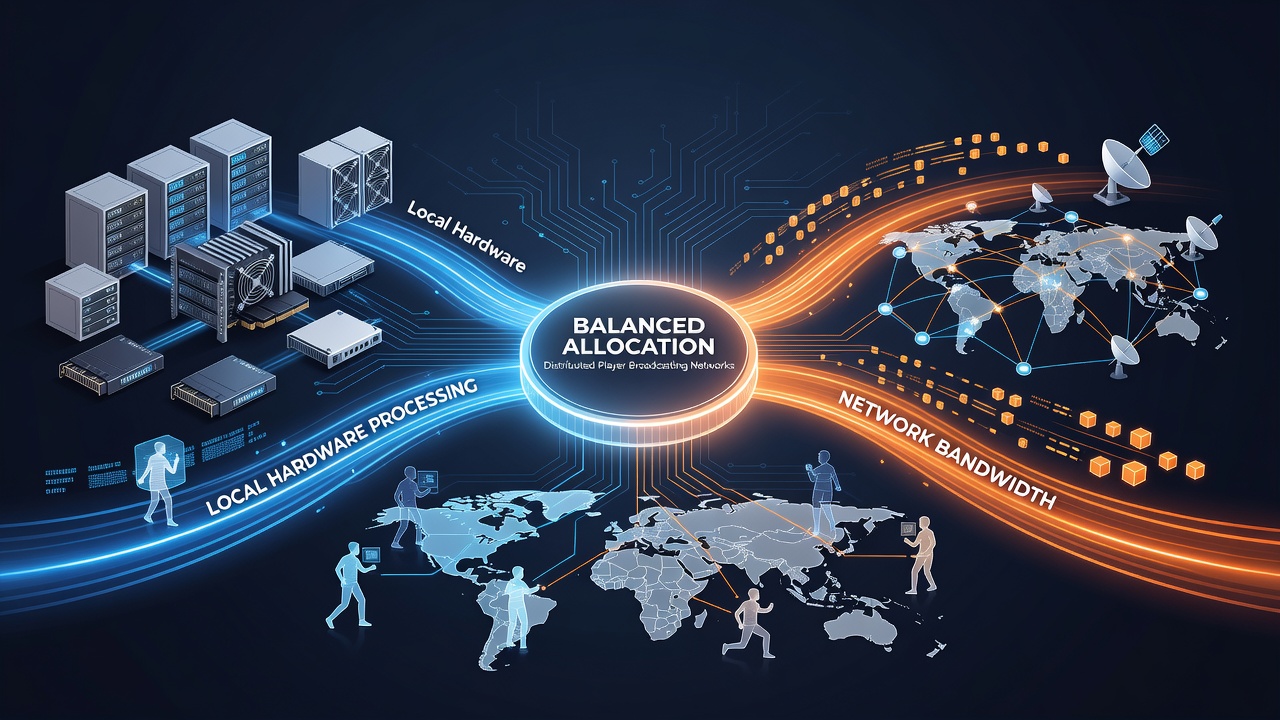
Balancing Resource Allocation Between Local Hardware Processing and Network Bandwidth in Distributed Player Broadcasting Networks
Distributed player broadcasting networks rely on coordinated sharing of processing tasks across multiple devices, where local hardware handles encoding and rendering while network connections manage data distribution to viewers and fellow participants. Researchers have observed that this setup requires precise allocation because excessive local computation can overload device resources, whereas heavy reliance on bandwidth leads to latency spikes during peak usage periods. Data from multiple studies shows that systems achieving equilibrium maintain stable frame delivery rates above 60 frames per second across varied connection qualities.
Core Components of Resource Distribution
Local hardware processing typically involves GPU-accelerated encoding, audio mixing, and scene composition performed directly on participant devices, and these operations reduce the volume of raw data that must travel across the network. Network bandwidth, by contrast, carries compressed streams to remote viewers and synchronizes state information among distributed nodes. Observers note that when hardware resources fall short, such as during extended sessions with multiple overlays active, the system shifts more tasks to remote servers, which in turn increases bandwidth demand and can create bottlenecks in regions with limited infrastructure.
Studies conducted in 2025 across North American testbeds revealed that networks incorporating dynamic allocation algorithms adjusted encoding bitrates in real time based on available GPU cycles and measured throughput. Those who've examined these implementations report that hybrid models, where edge devices perform initial compression before handing off to peers, cut overall bandwidth consumption by up to 35 percent without sacrificing visual fidelity. The approach works because local processing filters redundant information early, leaving the network to transmit only essential updates.
Technical Strategies for Equilibrium
Engineers deploy several methods to maintain balance, including adaptive bitrate ladders that scale according to both device thermal limits and available upload capacity. One common technique involves monitoring packet loss alongside CPU and GPU utilization metrics, then reallocating encoding passes to neighboring nodes when thresholds are exceeded. Research indicates that such peer-assisted models performed consistently during large-scale cooperative events held throughout 2025 and into the first half of 2026.
Additional approaches center on codec selection and pre-processing filters applied locally before transmission. Systems that employ hardware-accelerated H.265 or AV1 encoding on capable devices reduce payload sizes significantly, freeing bandwidth for synchronization traffic among players. Figures from field tests coordinated by international standards groups show that devices equipped with modern integrated graphics maintained acceptable quality even when network conditions fluctuated between 10 and 25 megabits per second upload speeds.
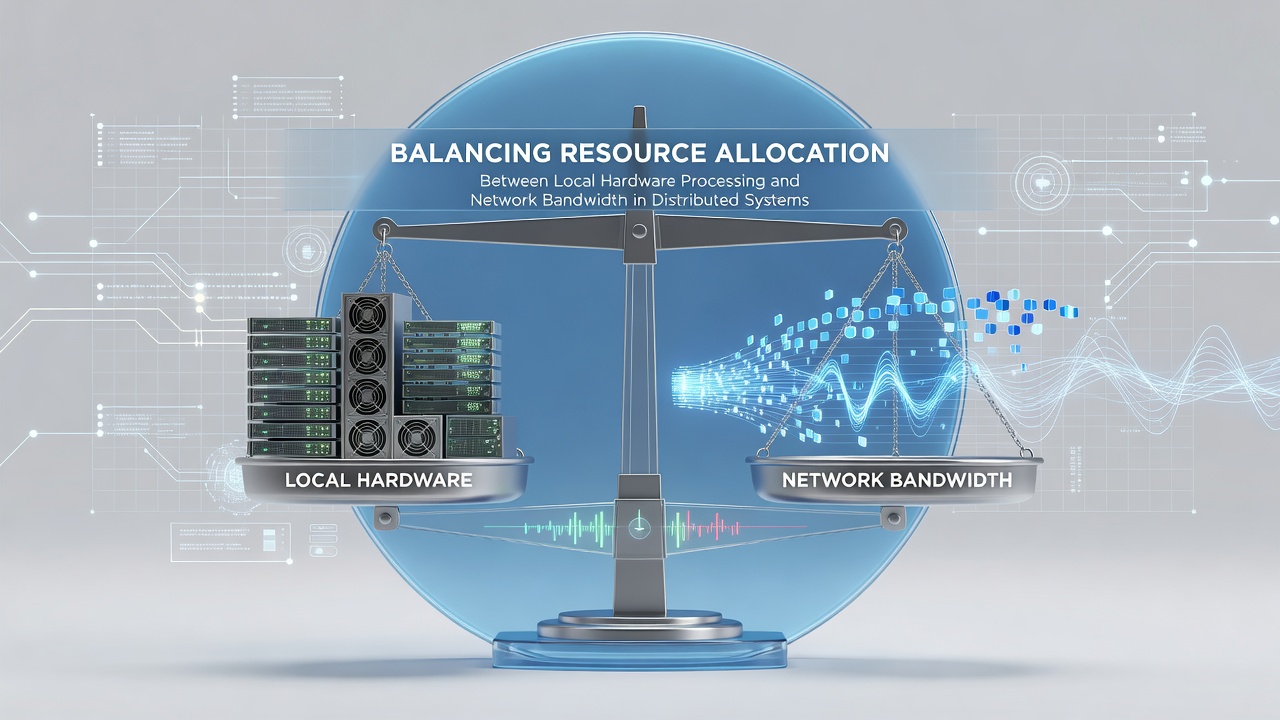
Regional Data and Implementation Patterns
Analyses from the National Institute of Standards and Technology highlight how urban test environments in North America achieved tighter resource balancing than rural counterparts due to differences in baseline connectivity. Meanwhile, European research coordinated through ETSI working groups documented similar patterns in multi-country trials completed by August 2026, where latency-sensitive survival game sessions benefited most from localized preprocessing. Those trials measured end-to-end delay reductions averaging 18 milliseconds when allocation decisions incorporated both hardware telemetry and real-time bandwidth probes.
Implementation varies further by device type, with mobile participants often favoring lighter local processing to preserve battery life and shifting compression duties to nearby stationary nodes. Data collected during these mixed-device scenarios demonstrates that predictive scheduling, which anticipates bandwidth drops based on historical usage, prevents abrupt quality degradation more effectively than reactive methods alone.
Conclusion
Effective balancing in distributed player broadcasting networks emerges from continuous measurement of hardware capabilities alongside network conditions, allowing systems to distribute workloads without creating single points of failure. Evidence gathered through 2026 indicates that networks adopting these coordinated strategies sustain higher viewer retention during extended broadcasts while accommodating heterogeneous device fleets. Ongoing refinements in allocation logic continue to draw from cross-regional datasets that track both processing efficiency and transmission reliability under diverse operating constraints.