Analyzing Chat Sentiment Shifts During Unexpected In-Game Events in Survival Multiplayer Broadcasts
Parker Hansen · Jul 7, 2026
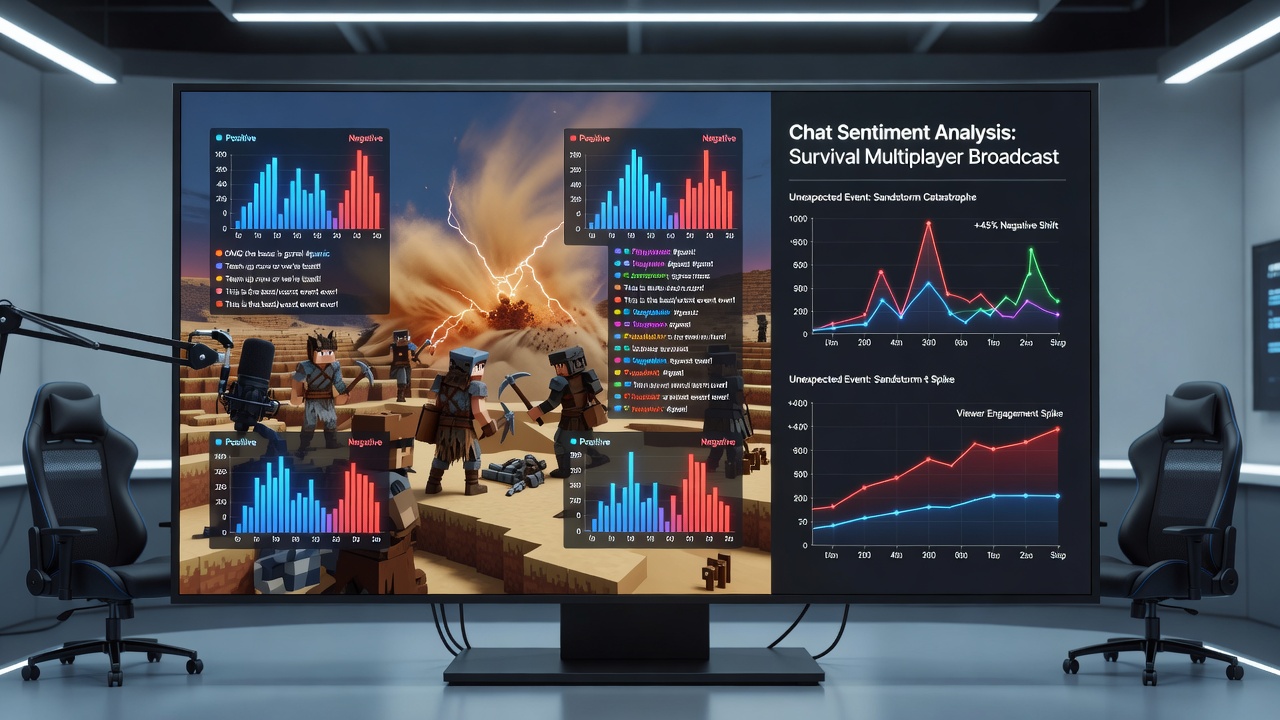
Analyzing Chat Sentiment Shifts During Unexpected In-Game Events in Survival Multiplayer Broadcasts
Survival multiplayer broadcasts often feature large audiences watching cooperative or competitive gameplay unfold in titles such as Rust, DayZ, and ARK: Survival Evolved, where unexpected in-game events trigger measurable changes in chat sentiment. Researchers track these shifts through natural language processing models applied to real-time message streams, focusing on polarity scores that range from strongly negative to strongly positive based on word clusters and emoji usage. Data collected during live sessions shows that events like sudden player betrayals or rare resource spawns produce rapid sentiment reversals within seconds, while routine progression maintains steadier neutral tones across viewer groups.
Patterns Observed in Live Chat Data
Analysts examine timestamped chat logs alongside game state logs to correlate specific triggers with sentiment fluctuations, revealing consistent patterns across different broadcaster audiences. For instance, an ambush by hostile players frequently elevates negative sentiment markers such as frustration-related terms, whereas discovery of high-value loot correlates with spikes in positive exclamations and celebratory phrases. Studies conducted on broadcasts exceeding 10,000 concurrent viewers demonstrate that these shifts occur faster in survival genres than in other multiplayer formats because the persistent world mechanics amplify the stakes of each interaction. Observers note that regional viewer demographics influence baseline sentiment levels, with audiences from high-engagement regions displaying quicker transitions between emotional states during the same event types.
Methods for Tracking Real-Time Sentiment Changes
Specialized software pipelines ingest chat data from platform APIs, apply preprocessing steps to remove spam and standardize language, then feed cleaned text into sentiment classifiers trained on gaming-specific corpora. These classifiers assign continuous scores rather than binary labels, allowing detection of subtle gradations such as cautious optimism shifting toward outright skepticism when an event outcome remains uncertain. Validation against human-coded samples achieves accuracy rates above 85 percent according to benchmarks published by the Entertainment Software Association, which provides industry-wide standards for audience analytics tools. Integration with game telemetry further refines the analysis by linking exact in-game coordinates and timestamps to corresponding chat bursts, creating synchronized datasets that support longitudinal comparisons across multiple streams.
Impact of Specific Event Categories
Unexpected deaths of prominent streamers during group expeditions generate pronounced negative sentiment waves that persist for several minutes, often accompanied by calls for tactical adjustments in subsequent gameplay. Conversely, environmental hazards such as sudden storms or wildlife attacks produce mixed sentiment profiles where initial alarm gives way to collective problem-solving language once recovery begins. In July 2026, several high-profile survival broadcasts documented these dynamics during coordinated server events that introduced new raid mechanics, with chat logs showing sentiment recovery times averaging under four minutes when broadcasters maintained clear verbal updates. Industry reports from the Interactive Games and Entertainment Association highlight how such rapid recoveries correlate with sustained viewer retention across extended sessions.
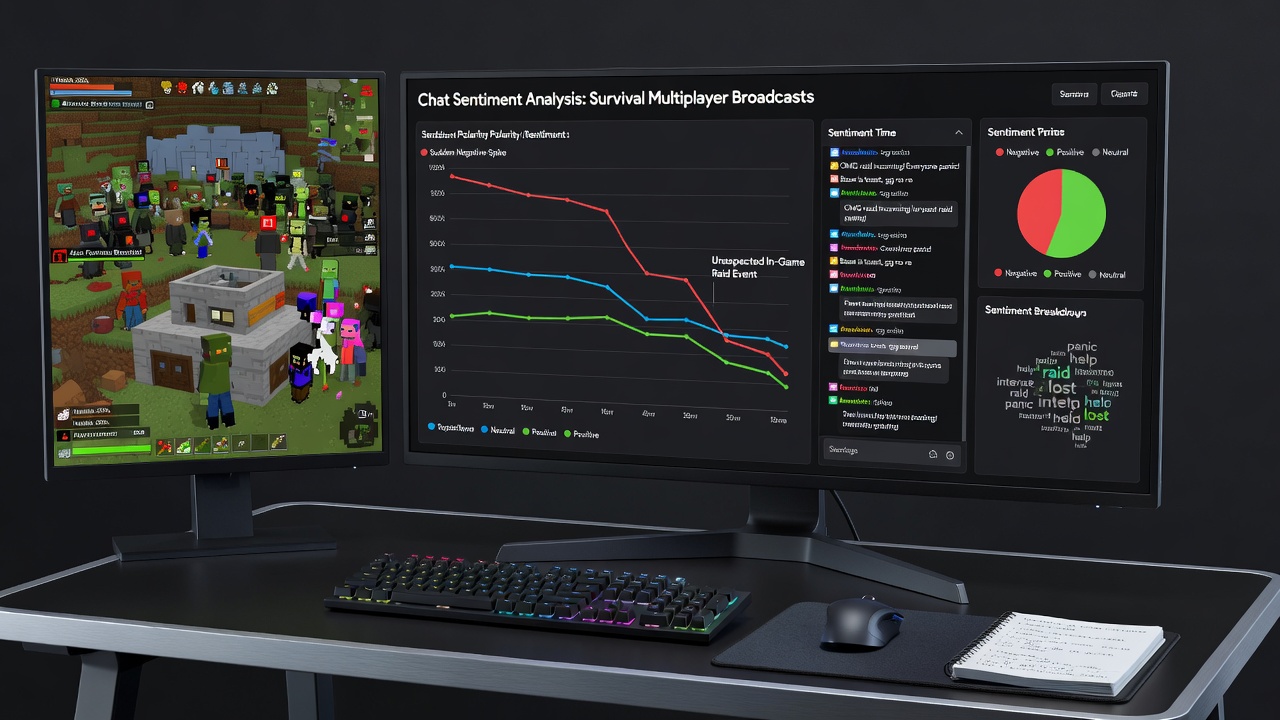
Quantitative models further break down sentiment into subcategories including excitement, tension, and camaraderie, each responding differently to the same stimulus. Tension markers rise sharply during stealth sequences interrupted by detection events, while camaraderie expressions increase when teams successfully regroup after setbacks. These granular breakdowns enable broadcasters and researchers to identify which event subtypes most strongly influence overall audience mood trajectories over the course of a multi-hour stream.
Applications in Broadcast Production and Research
Production teams incorporate live sentiment dashboards that flag threshold crossings, prompting on-screen responses or gameplay pivots designed to rebalance audience engagement. Academic researchers utilize aggregated datasets from public broadcasts to study emergent social dynamics in virtual environments, comparing sentiment patterns across different survival titles and viewer time zones. A collaborative project involving institutions in Canada and Australia has compiled cross-regional archives that demonstrate consistent global responses to core event types despite variations in commentary language and cultural context. These resources support development of predictive algorithms capable of forecasting sentiment trajectories minutes ahead based on early chat indicators, offering potential utility for both entertainment platforms and psychological studies of online group behavior.
Conclusion
Chat sentiment analysis during survival multiplayer broadcasts provides structured insight into how audiences process unexpected in-game developments through measurable linguistic and temporal patterns. Continued refinement of classification techniques alongside expanded telemetry integration supports increasingly precise mapping of viewer reactions across diverse event categories and geographic audiences.