Adaptive Difficulty Algorithms Responding to Real-Time Chat Metrics in Co-op Survival Titles
Zara Franke · Aug 22, 2026
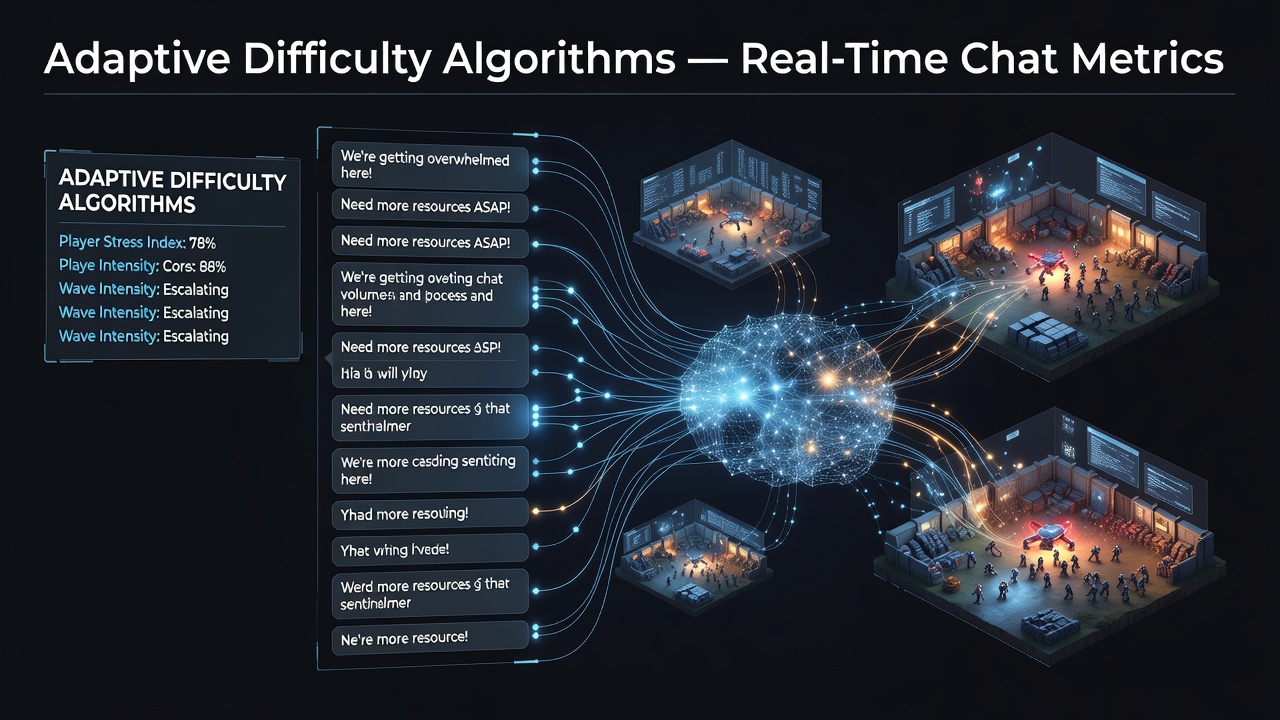
Adaptive Difficulty Algorithms Responding to Real-Time Chat Metrics in Co-op Survival Titles
Adaptive difficulty systems in co-op survival games now pull data directly from live chat streams, and developers integrate these metrics to scale enemy behavior, resource availability, and event frequency during broadcasts. Research from the University of Melbourne indicates that viewer engagement signals such as message volume, sentiment polarity, and emote frequency correlate with adjustments in spawn rates and AI aggression levels across multiple titles released between 2023 and 2025.
Core Mechanics Behind Chat-Driven Adjustments
Algorithms process incoming chat data through natural language processing pipelines that categorize messages into categories like excitement, frustration, or strategic discussion, then feed those scores into the game's backend servers within milliseconds. When positive sentiment spikes, systems often increase horde density or introduce environmental hazards, whereas sustained negative indicators trigger resource drops or temporary ally reinforcements to maintain session momentum.
Engineers at several studios have documented how these loops operate on dedicated cloud instances that separate viewer data streams from player inputs, allowing independent scaling without introducing latency for the core squad. Data from the Entertainment Software Association shows participation in co-op survival titles grew 18 percent year-over-year through mid-2026, with a notable portion of that increase tied to interactive broadcast formats.
Integration Patterns Across Popular Titles
Survival games such as those featuring persistent worlds and team-based defense mechanics have adopted modular APIs that expose difficulty parameters to external analytics platforms. One documented case involved a mid-2025 update where chat velocity thresholds directly modulated boss encounter timers, resulting in average session lengths extending by 12 minutes according to aggregated telemetry reports.
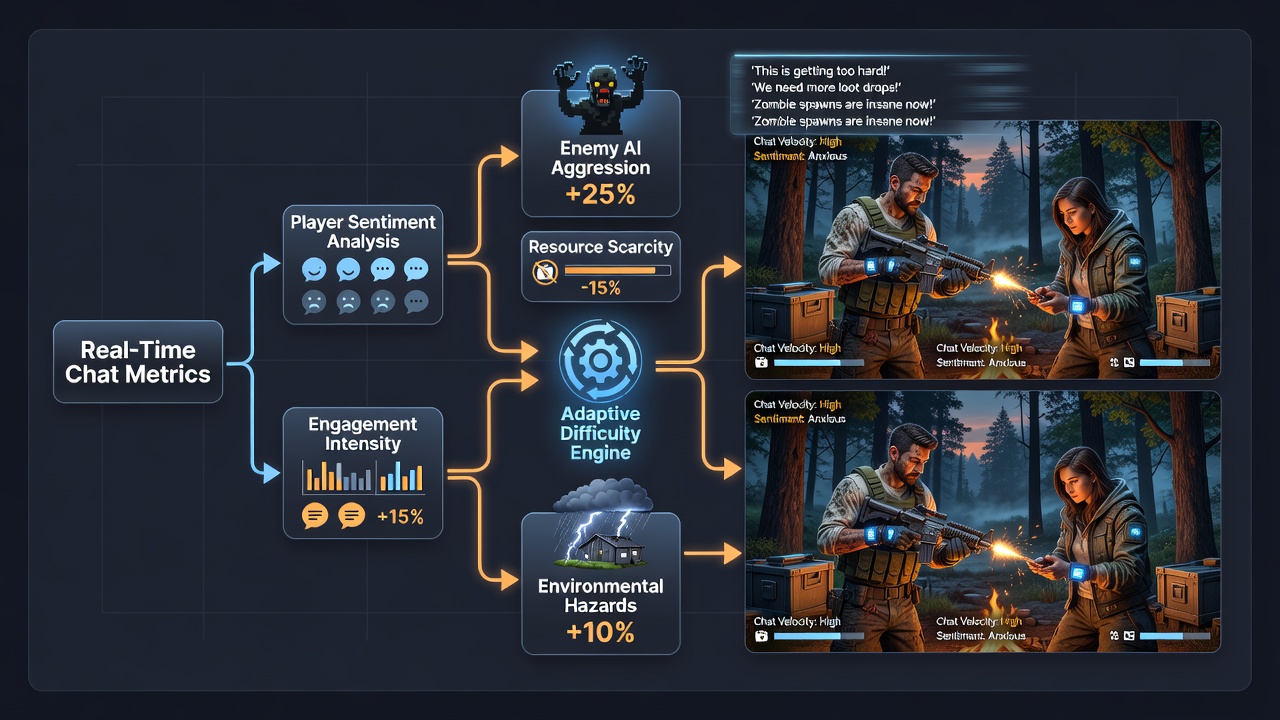
European research groups at the Technical University of Berlin examined synchronization between distributed player networks and chat overlays during August 2026 testing phases, finding that latency under 200 milliseconds preserved the intended feedback loop while higher delays produced noticeable mismatches between viewer input and in-game response. Those studies also tracked how regional dialect variations in commentary influenced sentiment classification accuracy, prompting developers to refine multilingual tokenizers.
Data Sources and Metric Weighting
Systems typically assign numerical weights to metrics including concurrent viewer count, average message length, and reaction emoji distribution, then normalize these against baseline session data collected during non-streamed play. Industry reports compiled by the Canadian Interactive Digital Entertainment Association reveal that titles implementing weighted chat models experienced a 9 percent reduction in early-session drop-off rates compared with static difficulty counterparts.
Cloud rendering services further enable remote teams to monitor these algorithms in real time, adjusting global parameters for broadcasts originating from regions with limited local infrastructure. Observers note that the ball remains in the developers' court when it comes to balancing viewer influence against core player agency, since excessive chat weighting can shift focus away from coordinated squad tactics.
Challenges in Implementation and Validation
Validation protocols require extensive A/B testing across both streamed and private sessions to isolate chat effects from natural player skill variance. Figures released by the Australian Games and Interactive Entertainment Association indicate that false-positive sentiment readings occur in roughly 7 percent of sessions, often during rapid-fire exchanges that include mixed sarcasm and genuine feedback.
Peer-to-peer resource sharing among smaller development teams has accelerated prototyping of these systems, allowing independent studios to borrow modular components tested in larger productions. Those who've examined the resulting datasets emphasize the need for transparent logging so that players can review how viewer data altered their specific runs.
Conclusion
Adaptive difficulty frameworks that respond to real-time chat metrics continue to evolve alongside improvements in sentiment analysis and low-latency networking. Evidence from multiple regional studies demonstrates measurable impacts on session duration and viewer retention, while ongoing refinements address classification accuracy across languages and viewer demographics. As co-op survival titles expand their broadcast integrations, the technical infrastructure supporting these algorithms remains a focal point for both academic researchers and industry practitioners.