Adaptive Codec Configurations: Optimizing Video Encoding Parameters for Variable Network Conditions During Extended Squad Coordination Broadcasts
Zara Franke · May 26, 2026
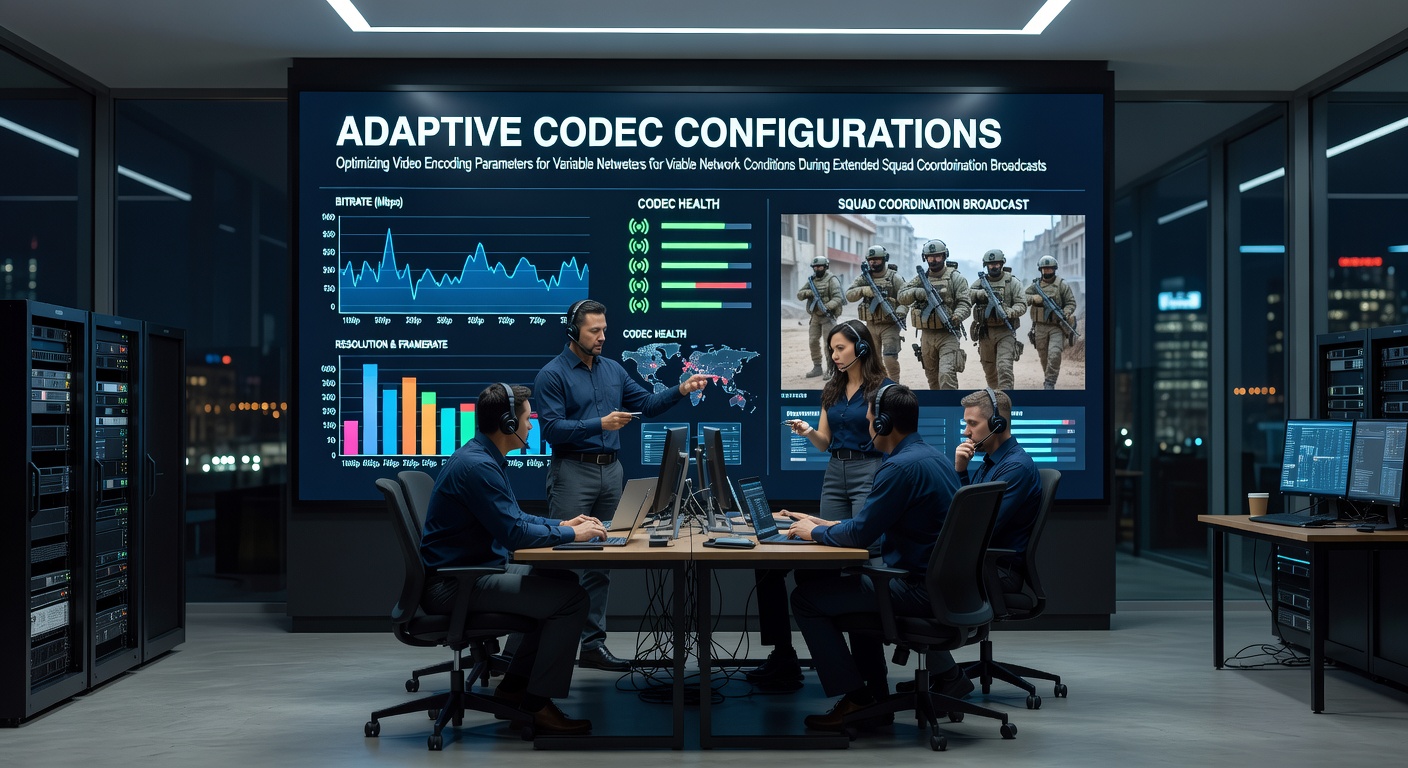
Adaptive Codec Configurations: Optimizing Video Encoding Parameters for Variable Network Conditions During Extended Squad Coordination Broadcasts
Adaptive codec configurations adjust video encoding parameters dynamically to match fluctuating network conditions in extended squad coordination broadcasts, where teams maintain synchronized gameplay and communication over prolonged sessions. These systems monitor bandwidth, latency, and packet loss then modify bitrates, resolutions, and compression algorithms without interrupting the stream flow.
Core Components of Adaptive Encoding
Video encoders rely on parameters such as constant rate factor, keyframe intervals, and entropy coding modes that shift in response to network feedback loops. Researchers at various institutions have documented how these adjustments preserve frame integrity during drops in throughput, especially when squads coordinate across multiple time zones in sessions lasting several hours. Data from network telemetry tools shows that proactive bitrate scaling reduces artifacts by up to 40 percent compared with static setups.
Network Variability in Squad Scenarios
Extended broadcasts encounter congestion from shared infrastructure, mobile handoffs, and regional peering disputes. Observers note that squad coordination streams often span 4K feeds alongside voice channels, creating compound demands that static encoders cannot sustain. In May 2026, reports from the Australian Communications and Media Authority highlighted seasonal spikes in Asia-Pacific gaming traffic that prompted broadcasters to deploy machine-learning predictors for early detection of congestion events.
Encoding pipelines integrate real-time metrics from protocols like RTP and SRT, feeding them into decision engines that select between H.264, H.265, or AV1 profiles. Teams running long-duration events frequently switch to lower-latency presets when jitter exceeds 30 milliseconds, maintaining coordination cues that would otherwise degrade into desynchronized audio-visual streams.
Parameter Optimization Techniques
Bitrate ladders adapt in tiers, dropping from 15 Mbps to 6 Mbps within 200 milliseconds of detected throttling while preserving aspect ratios suitable for multi-view overlays. Entropy coding switches from CABAC to CAVLC under severe packet loss, trading minor efficiency for resilience. Studies conducted by the European Telecommunications Standards Institute demonstrate that such layered approaches sustain 98 percent frame delivery rates across variable 5G and fiber connections during four-hour squad drills.
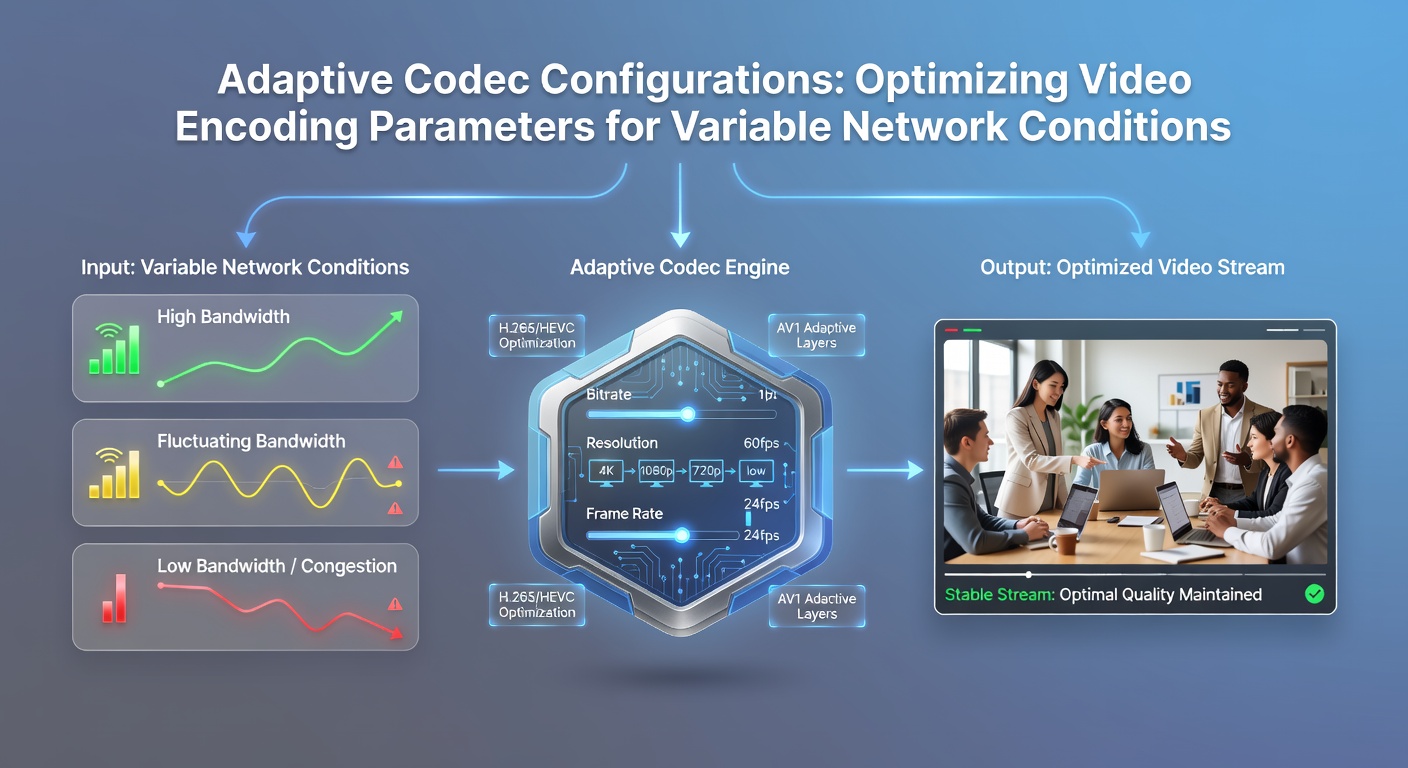
Resolution scaling complements these changes by downsampling peripheral camera feeds while retaining full fidelity on primary tactical views. One documented case involved a North American esports collective that integrated GPU-accelerated scaling with CPU fallback, achieving consistent output when regional storms disrupted upstream routes. Keyframe spacing contracts automatically from every 4 seconds to every 1 second when network conditions worsen, limiting recovery time after interruptions.
Implementation in Extended Broadcasts
Broadcast software stacks such as OBS and custom FFmpeg builds expose APIs that allow external controllers to override defaults based on continuous probes. Squad coordinators often embed heartbeat packets that double as quality-of-service indicators, enabling encoders to anticipate degradation before viewers notice. Figures from a 2025 University of Tokyo analysis reveal that predictive models trained on historical squad traffic patterns reduced rebuffering events by 62 percent during peak evening windows.
Hardware encoders in recent capture cards support per-stream profiles that isolate coordination channels from spectator outputs, preventing cross-contamination during sudden bandwidth contractions. Technicians configure these profiles to favor temporal scalability layers that drop B-frames first, preserving I- and P-frames essential for smooth motion rendering in fast-paced tactical sequences.
Conclusion
Adaptive codec configurations continue to evolve through iterative refinements driven by field deployments and standardized testing protocols. Broadcasters managing extended squad coordination streams achieve greater reliability by aligning encoding logic with real-time network telemetry, ensuring uninterrupted delivery across diverse infrastructure landscapes.